
Water and fire
Pool water features and fire bowls, for sound, light and movement
Moving water and open flame are the details guests remember. How well they perform depends on hydraulics, gas sizing and controls that nobody sees.
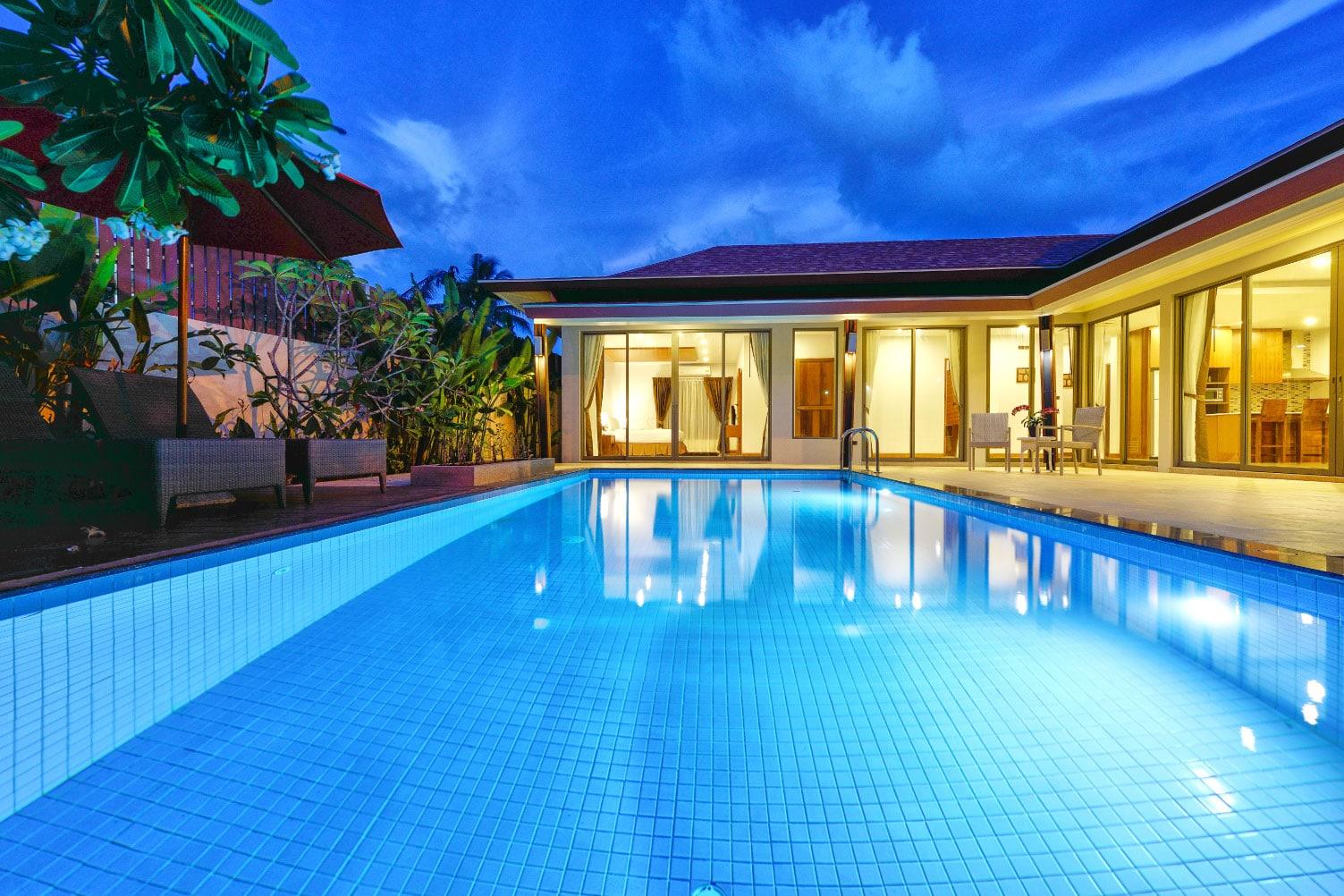
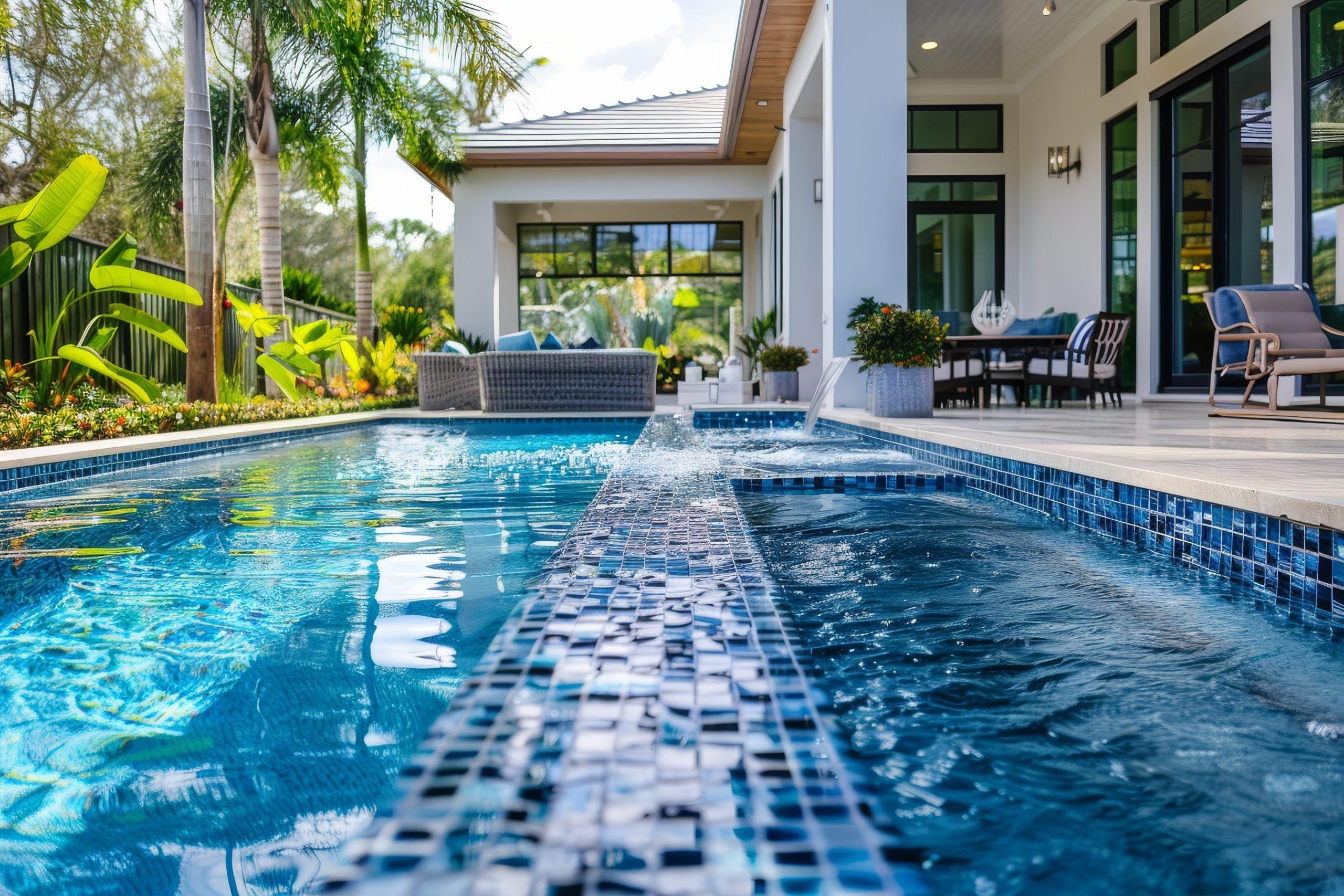
A pool water feature is plumbing that has to behave like sculpture. A sheer descent should fall as one clean sheet, not a ragged curtain. A bubbler on a sun shelf should hold its height when the spa jets come on. A fire bowl should light from your phone and stay lit in a sea breeze. In Southwest Florida, where pools run year round and evenings are spent outside, these features carry much of the backyard after dark.
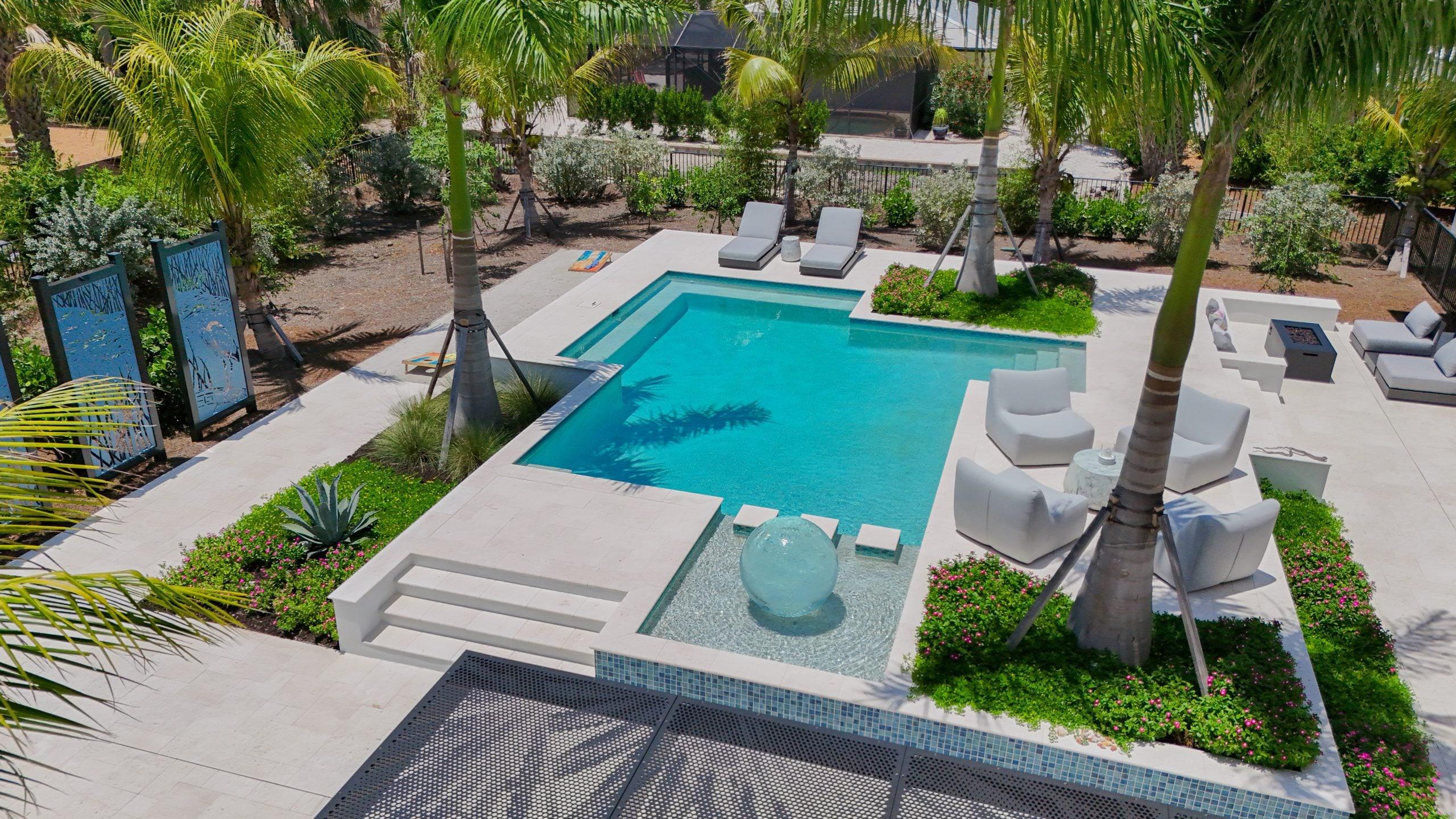
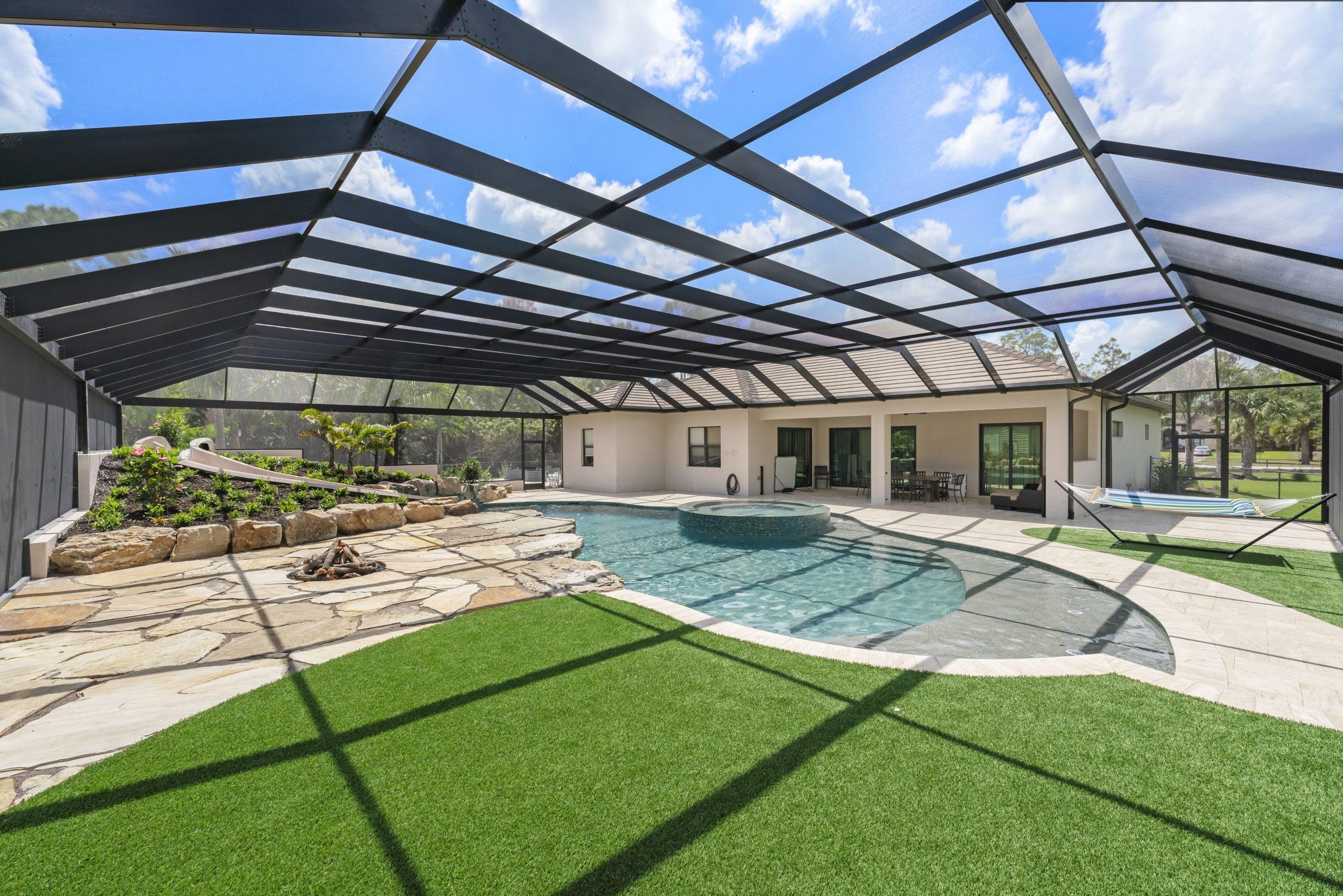
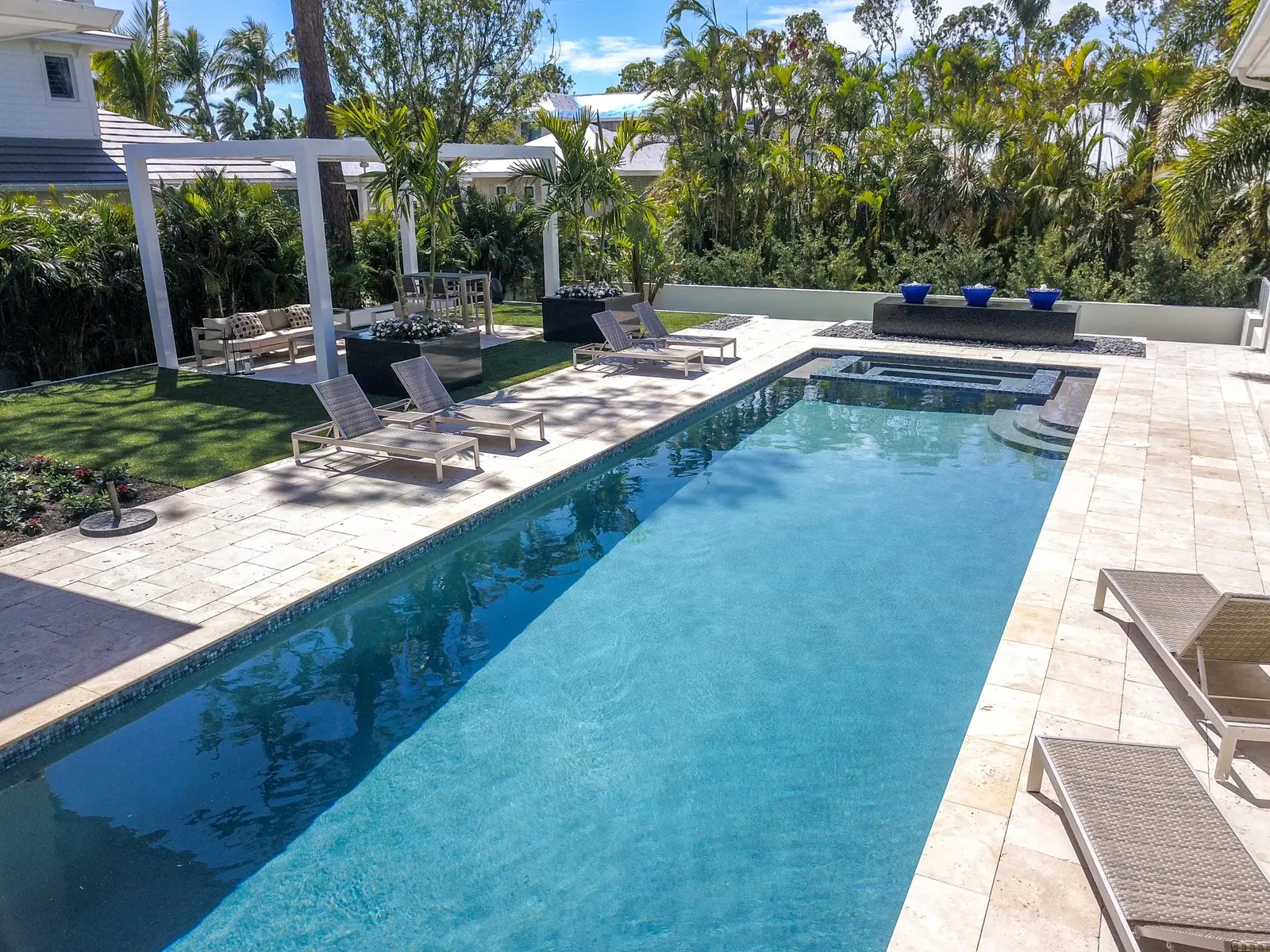
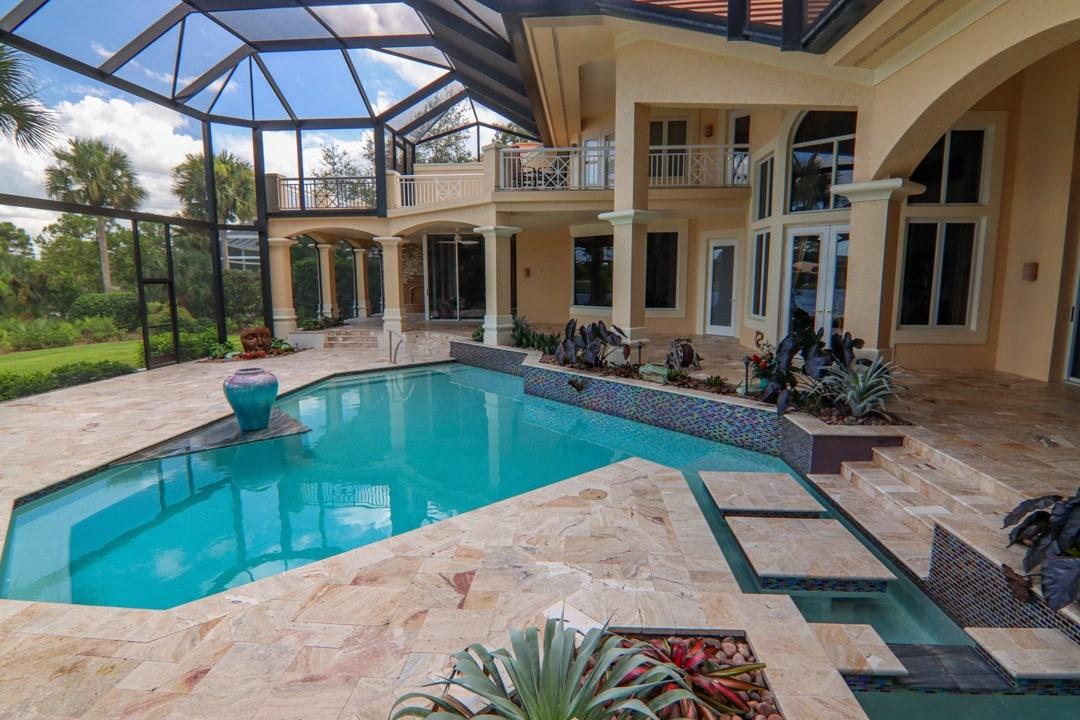
Lombardo Pools designs and builds water and fire features for new pools and renovations across Fort Myers, Naples and the islands. Among our own projects: a glass sphere fountain beside a modern pool on Sanibel Island, a black water wall topped with cobalt fire bowls behind a travertine lap pool and spa, and boulder waterfalls inside screened pools. Features are placed in the 3D design, where scale, placement and sight lines can be judged before construction.
- Water features
- Sheer descents, scuppers, rain curtains, bubblers, deck jets, rock waterfalls, fountains
- Fire features
- Fire bowls, linear fire troughs, fire-and-water bowls
- Fuel
- Natural gas or propane on a permitted, pressure-tested line
- Ignition
- Match-lit or electronic, with flame sensing available
- Control
- Dedicated pumps or valve circuits run from the pool automation
- Built for
- New pools and renovations across Southwest Florida
Fire features
Fire, from the water's edge to the garden
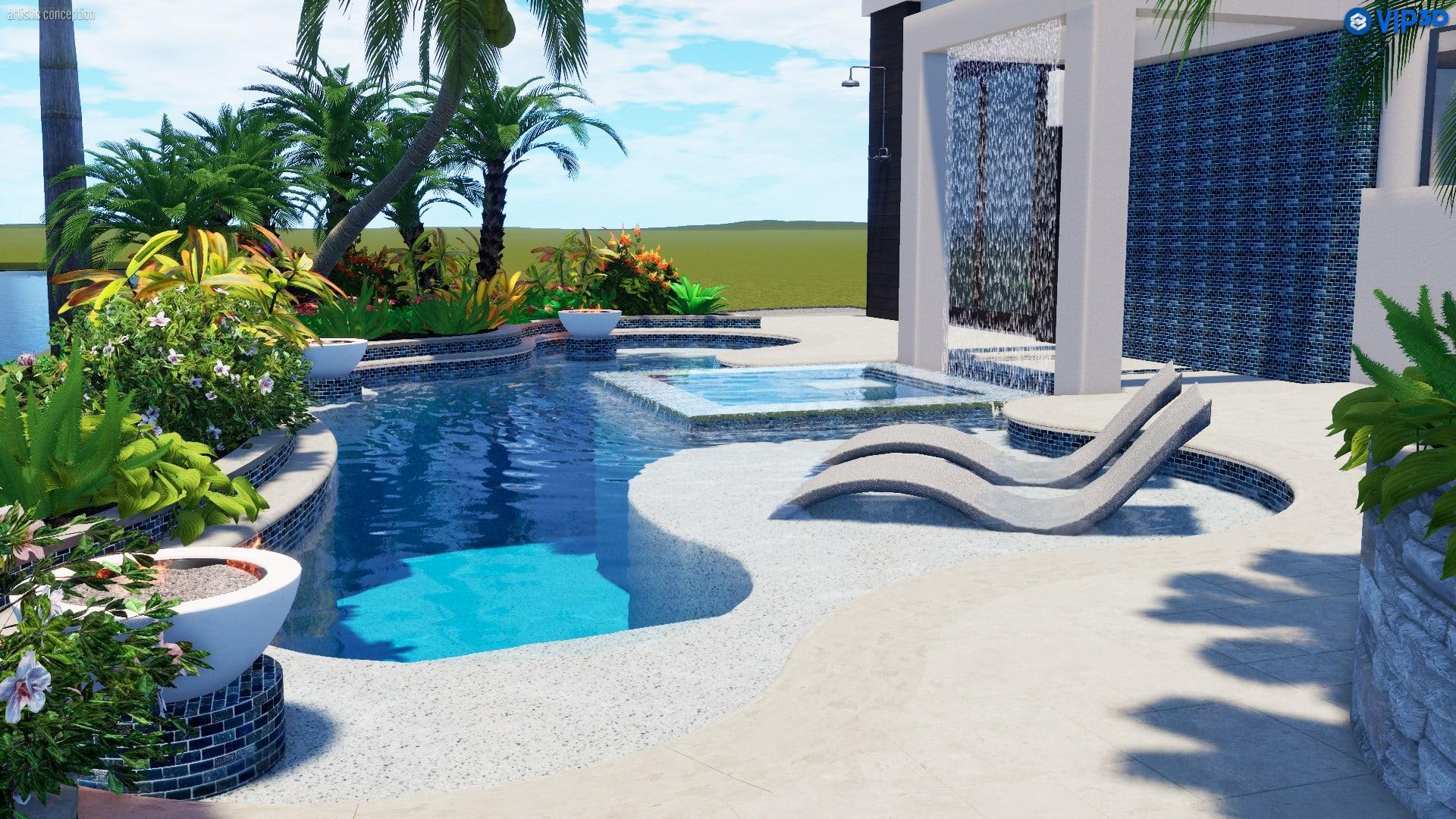
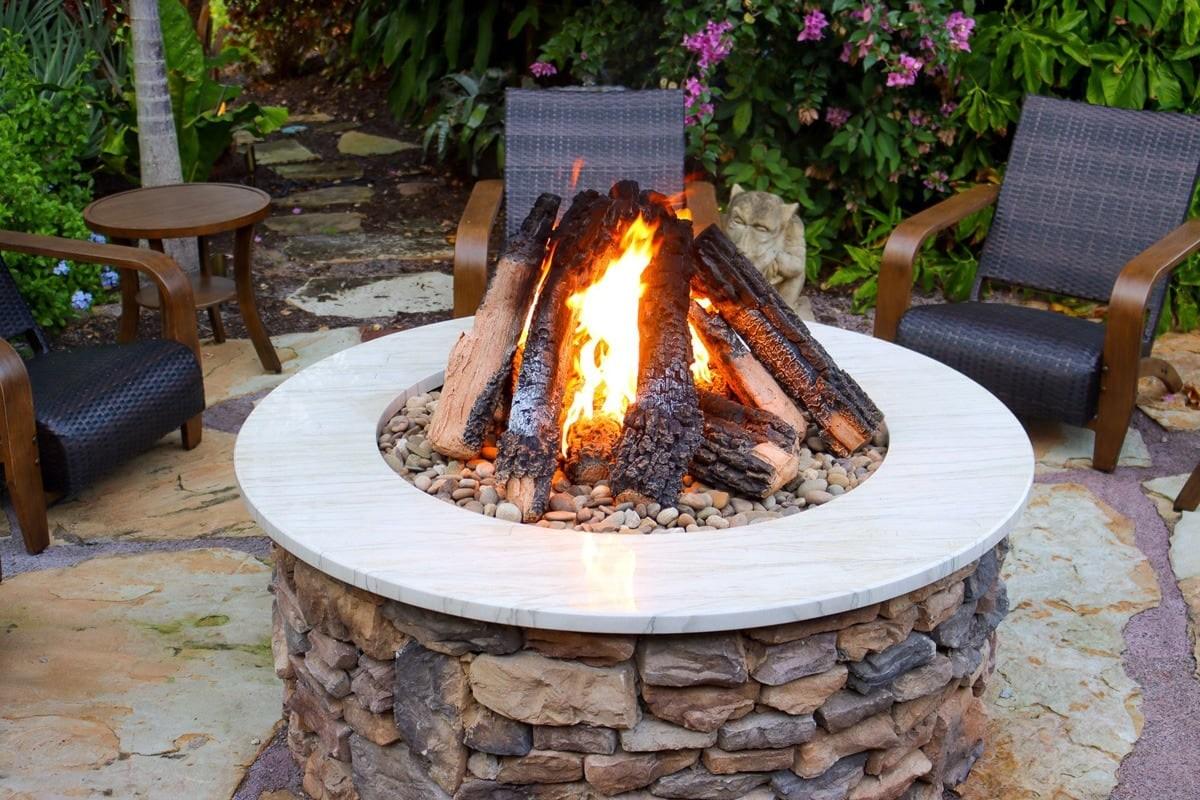
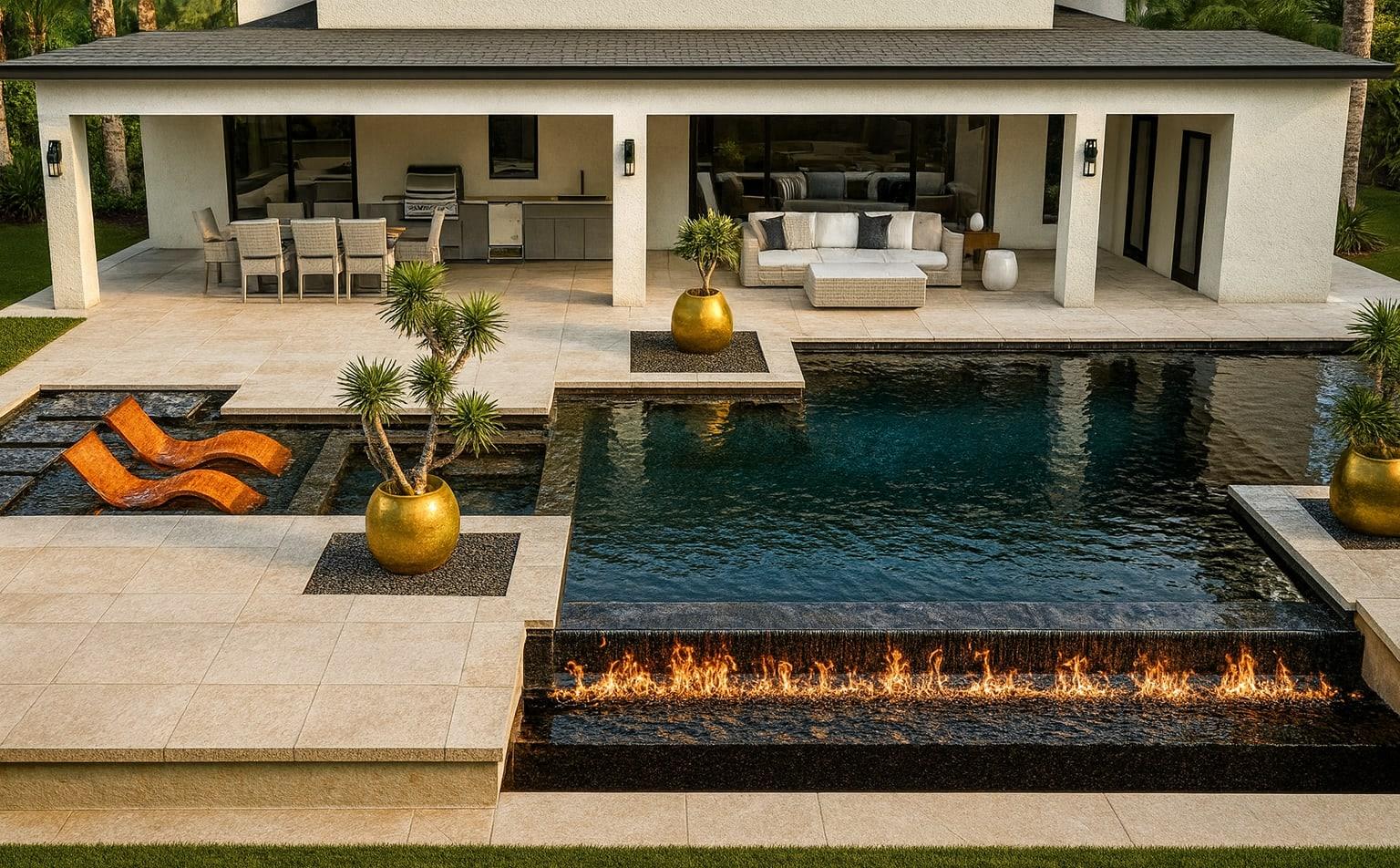
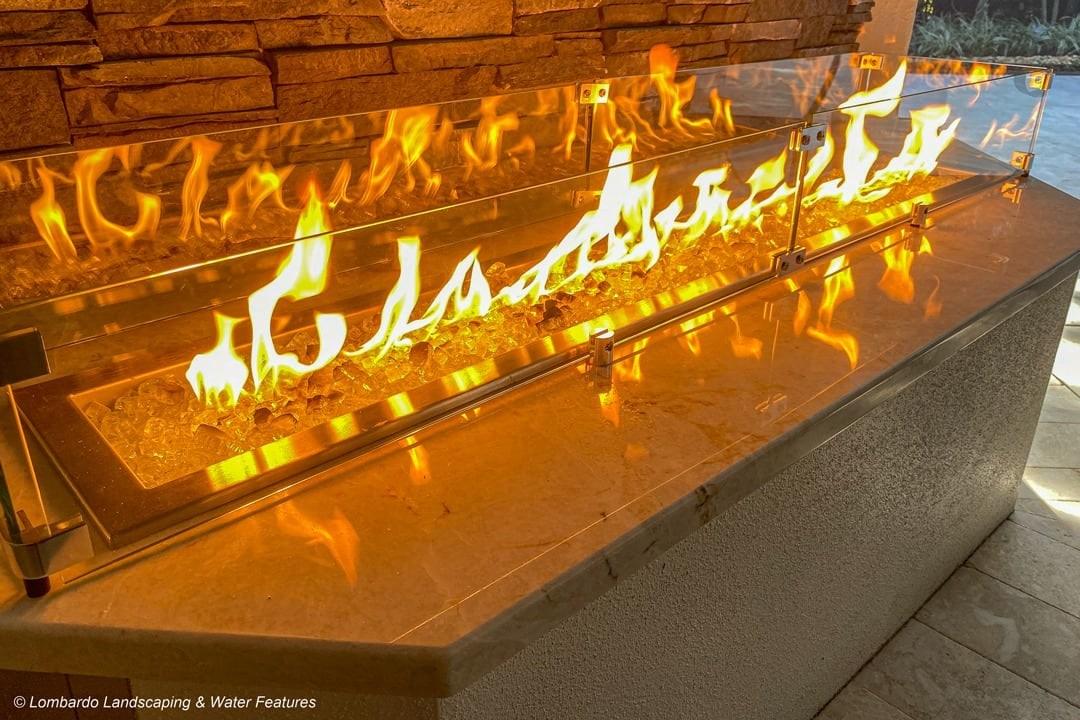
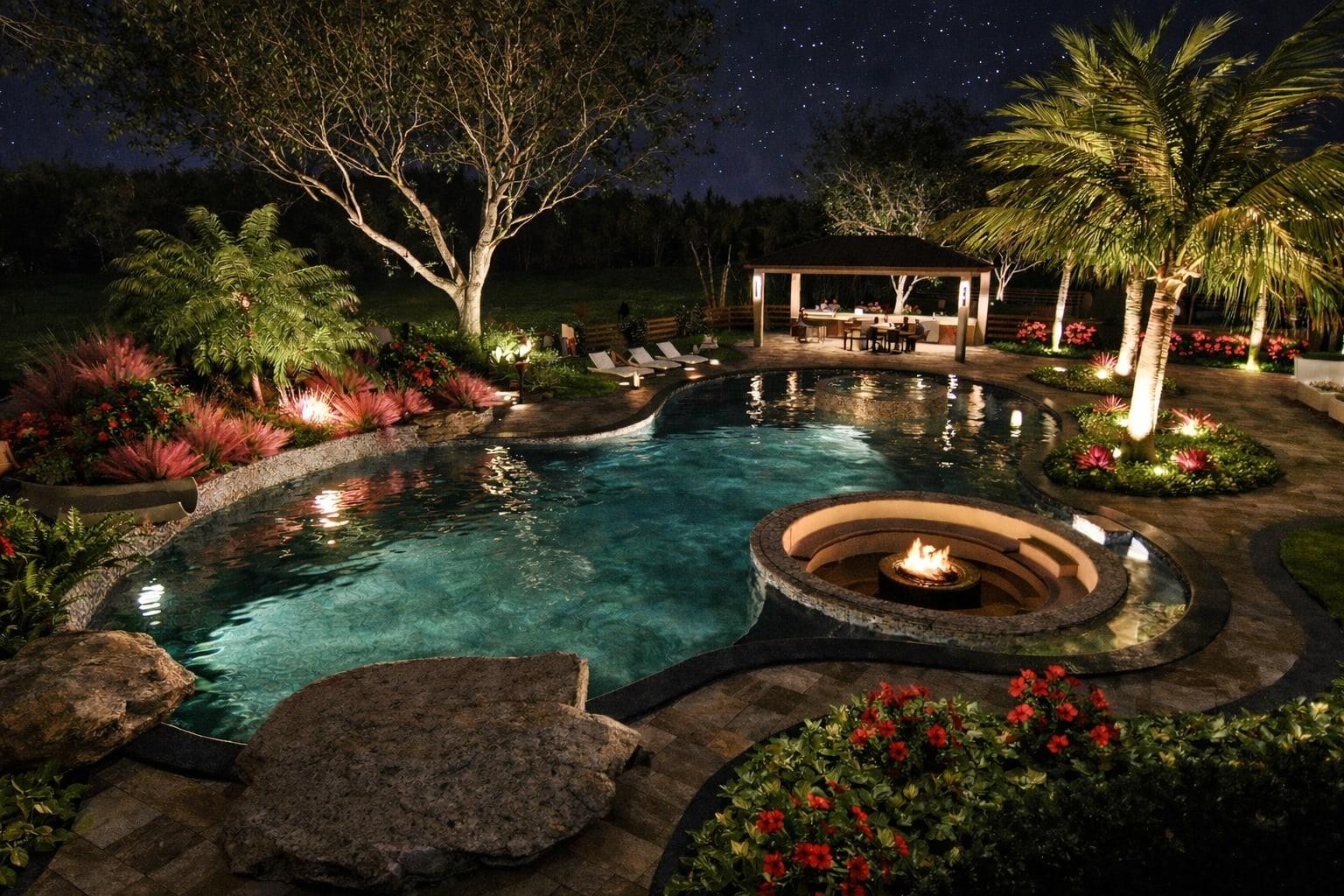
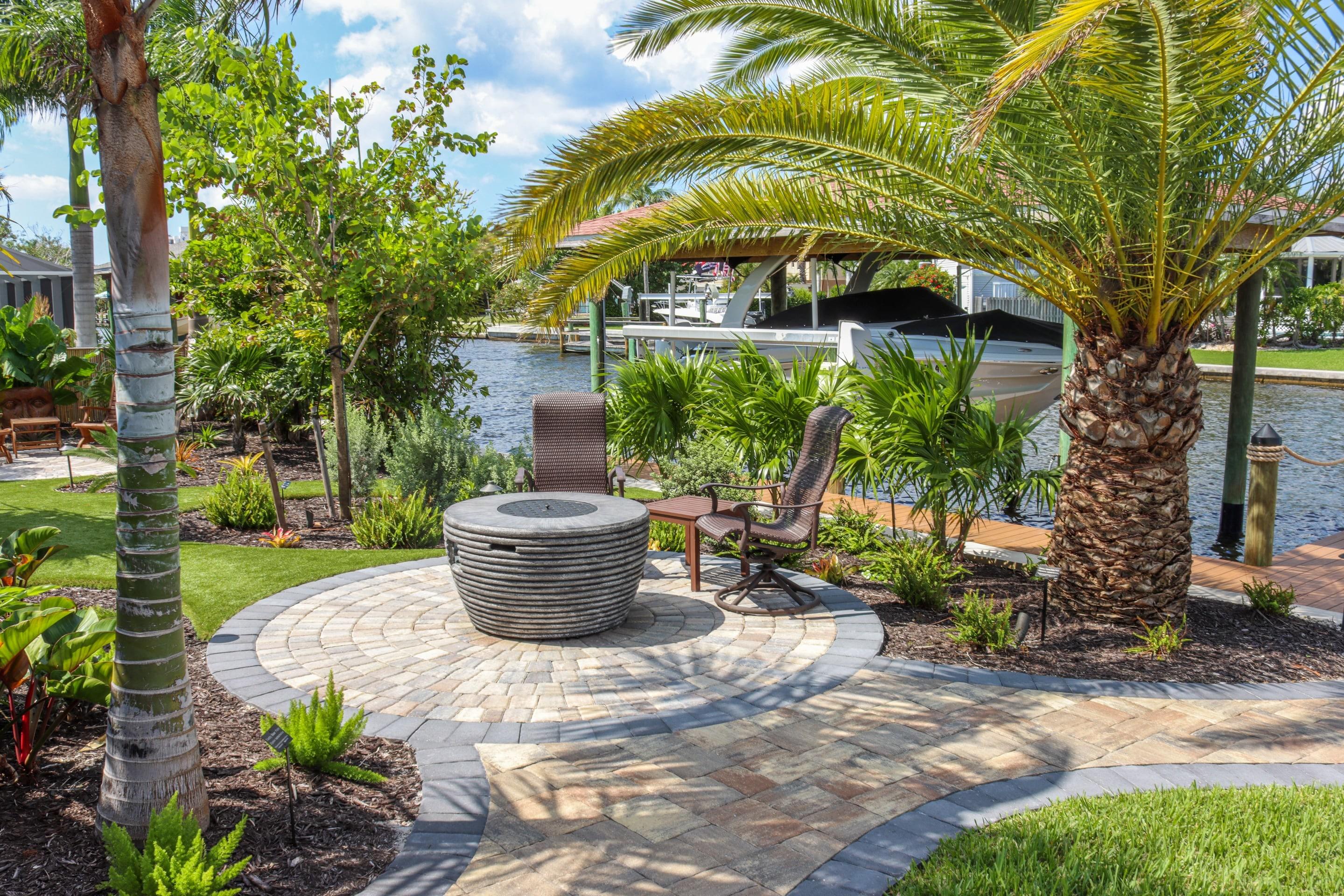
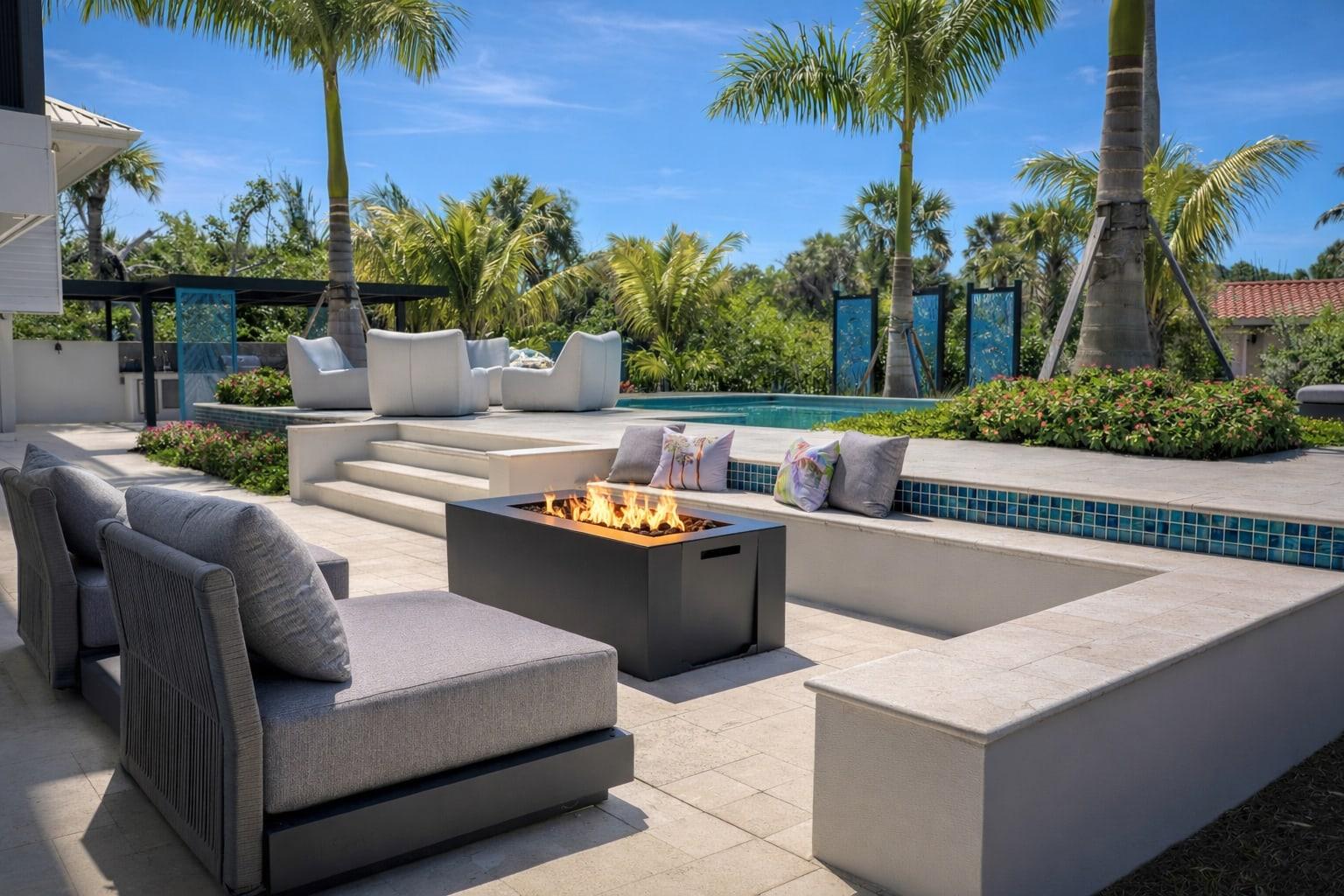
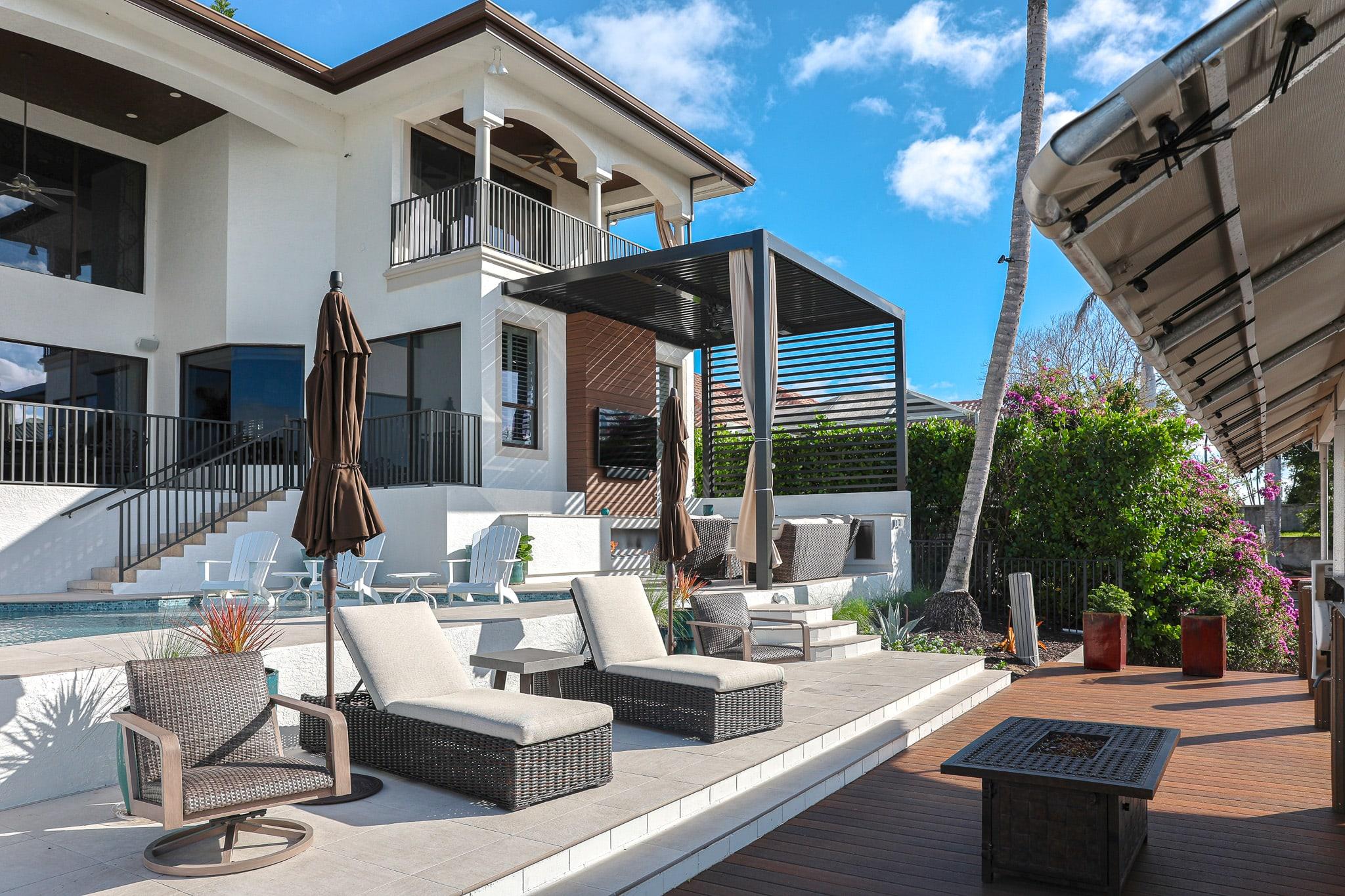
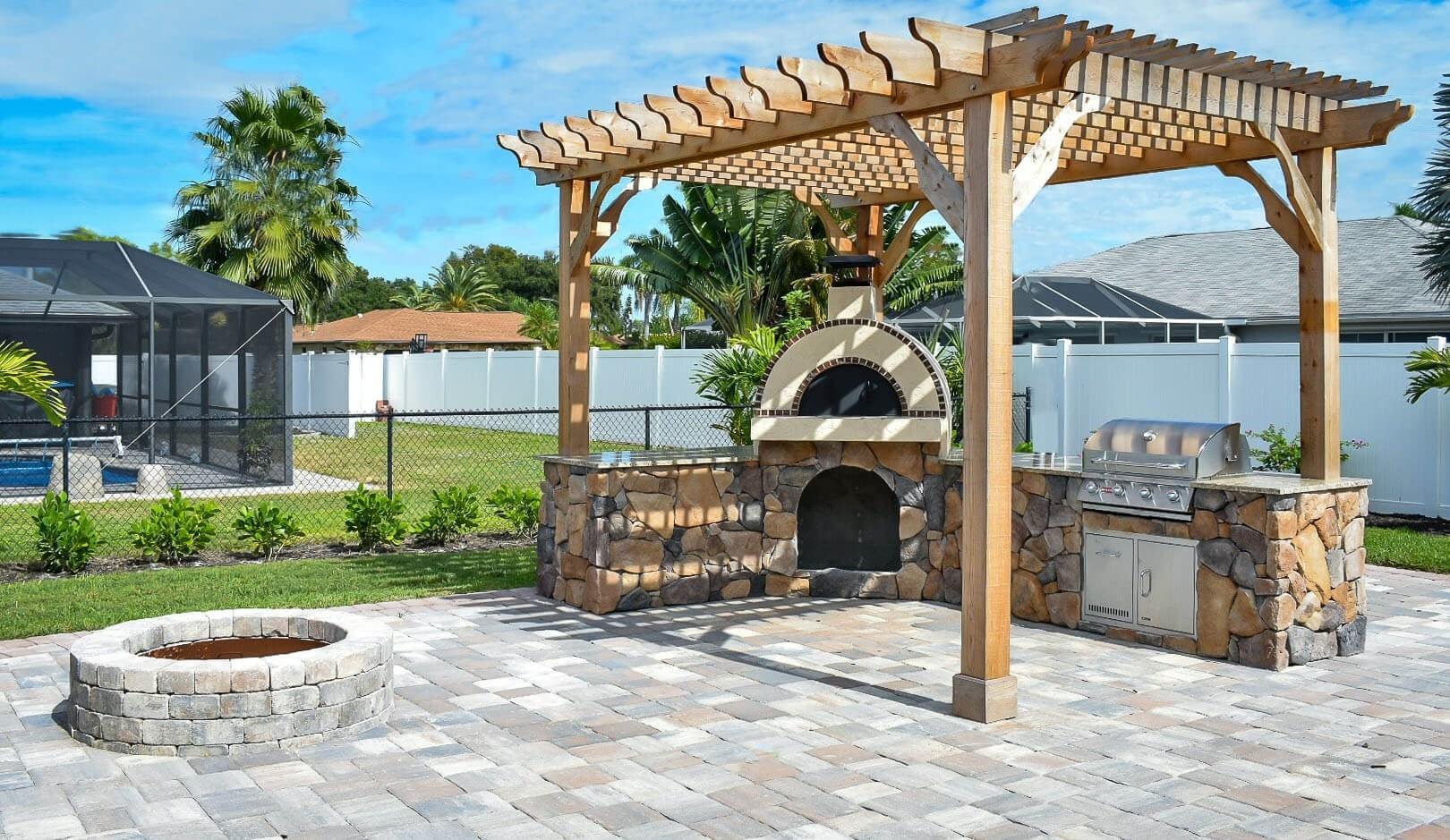
Fire tables on the pool deck, linear fire along a lanai wall, fire pits set into the water or a paver terrace, and fire screens that glow after dark. Built work and design renderings; select any image to see it full screen.
Fire features by Lombardo Pools and our sister company, Lombardo Landscaping. Images marked as design renderings are designs, not photographs of finished projects.
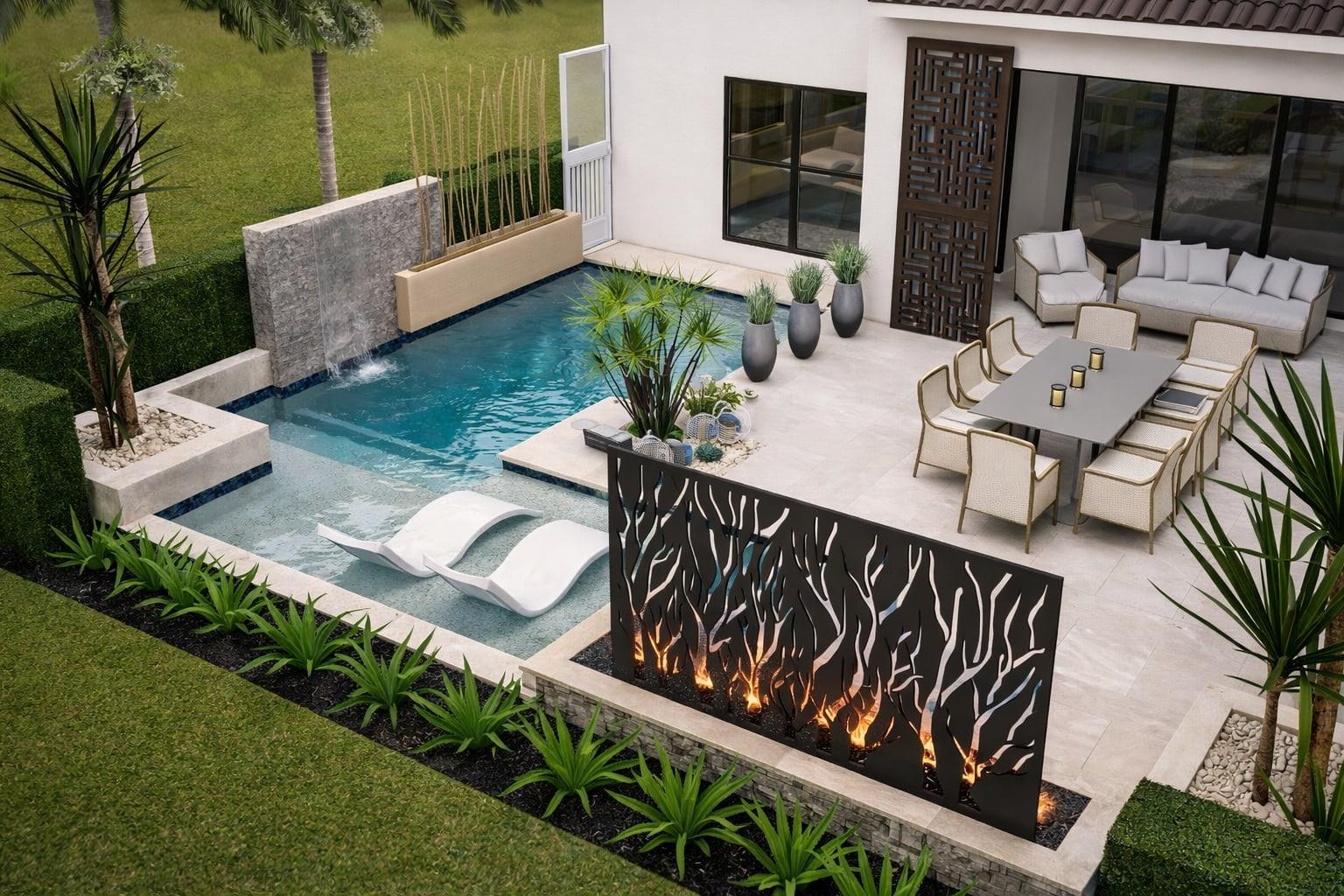
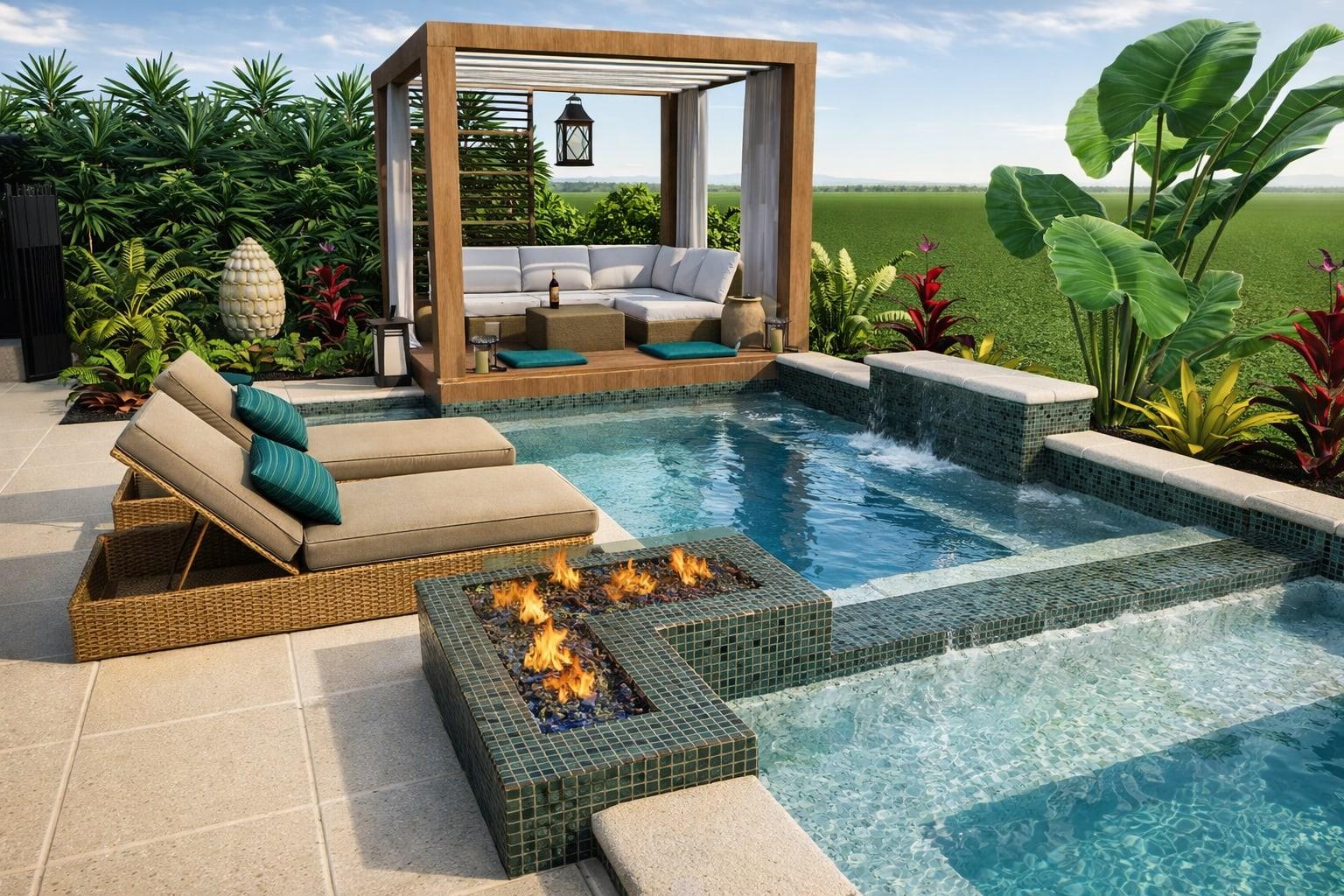
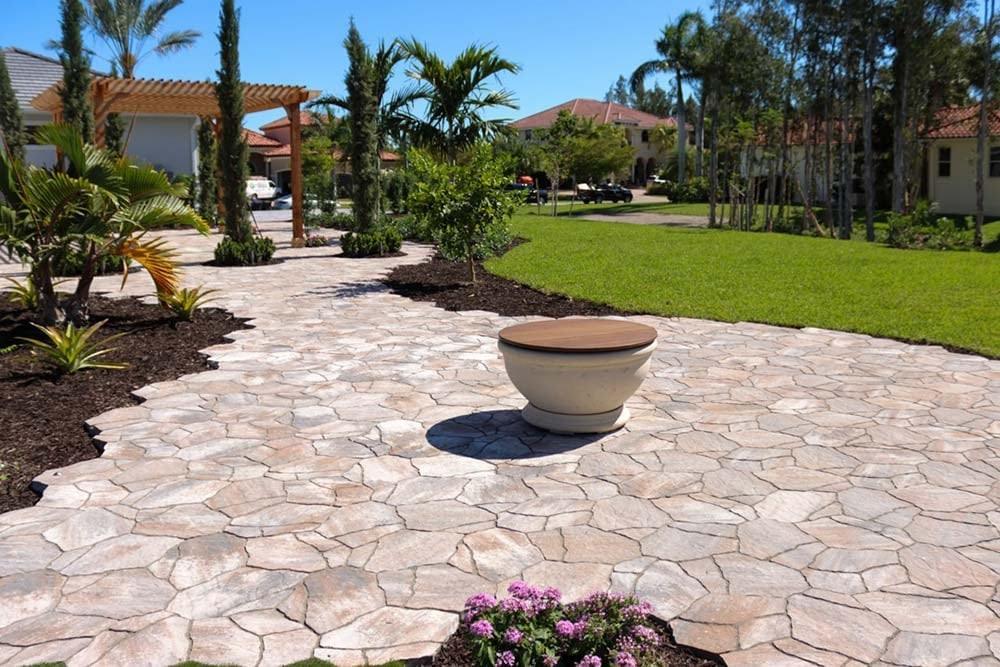
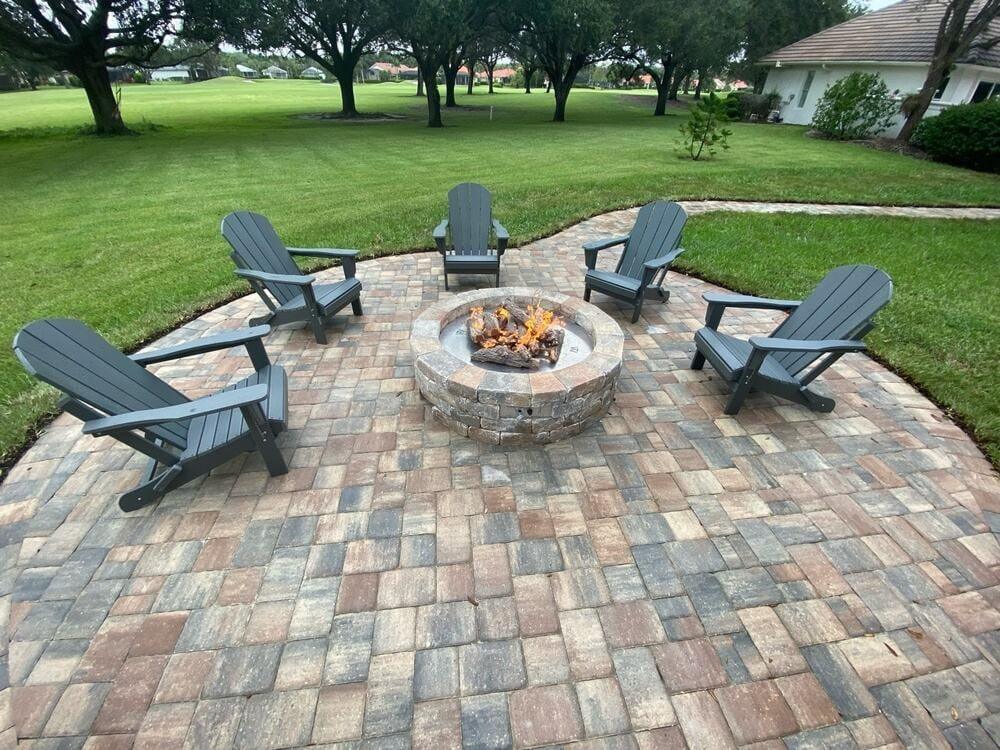
01
Pool water features, sorted by the way the water moves
Names drift from one builder to the next, so it helps to sort features by what the water actually does.
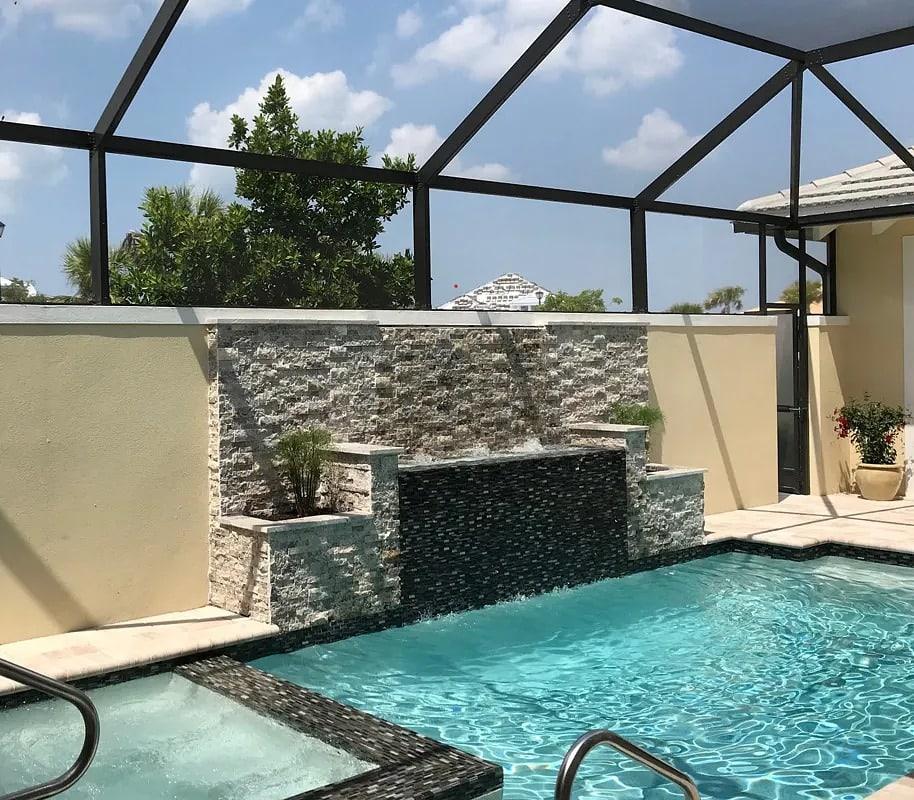
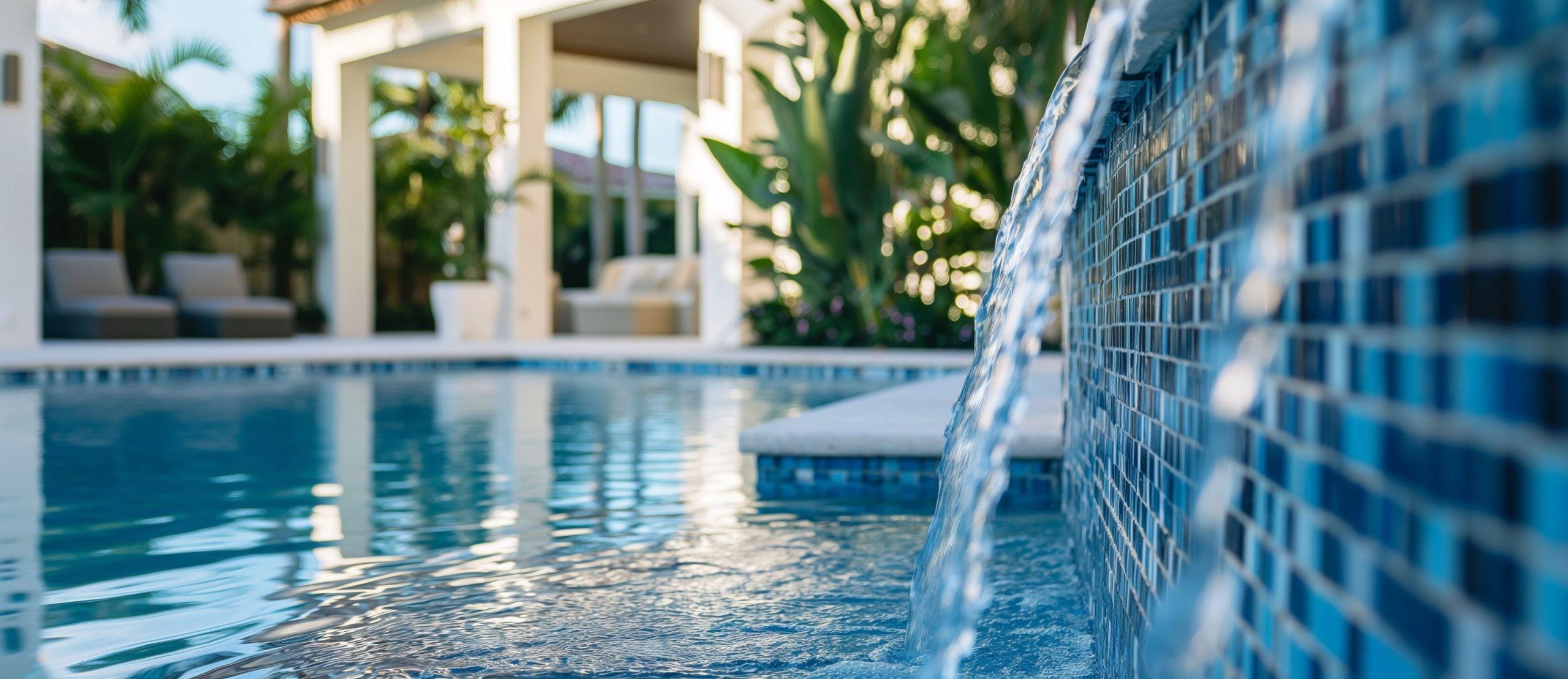
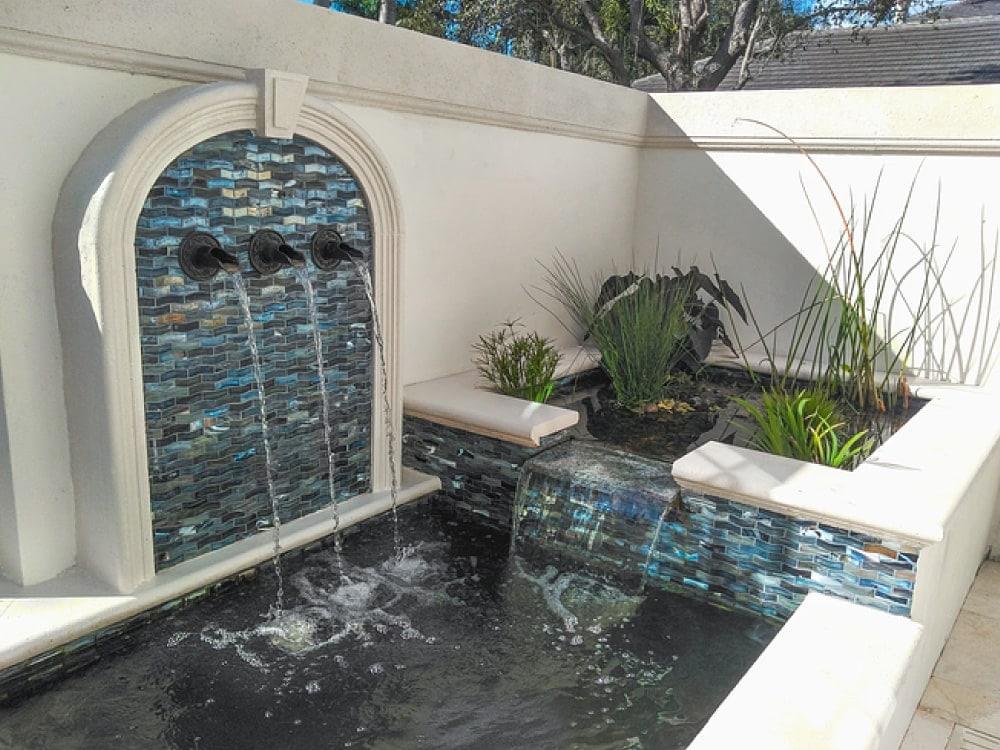
- Sheer descents release a smooth sheet from a lip set into a raised wall. They need a dead-level installation and steady flow, and they read most clearly against tile or stone that contrasts with the water.
- Scuppers are spouts in copper, stainless, stone or tile that pour a heavier stream. Set in a row along a wall, they add rhythm and more sound than a sheer descent.
- Rain curtains drop water from an overhead bar, often built into a beam or pergola over the pool, so swimmers can pass beneath.
- Bubblers push a low dome of water up through a sun shelf or tanning ledge. They are quiet, easy for children to enjoy and pleasant to sit beside.
- Deck jets arc water from the deck into the pool. Laminar versions throw a glass-clear stream that can be lit from inside.
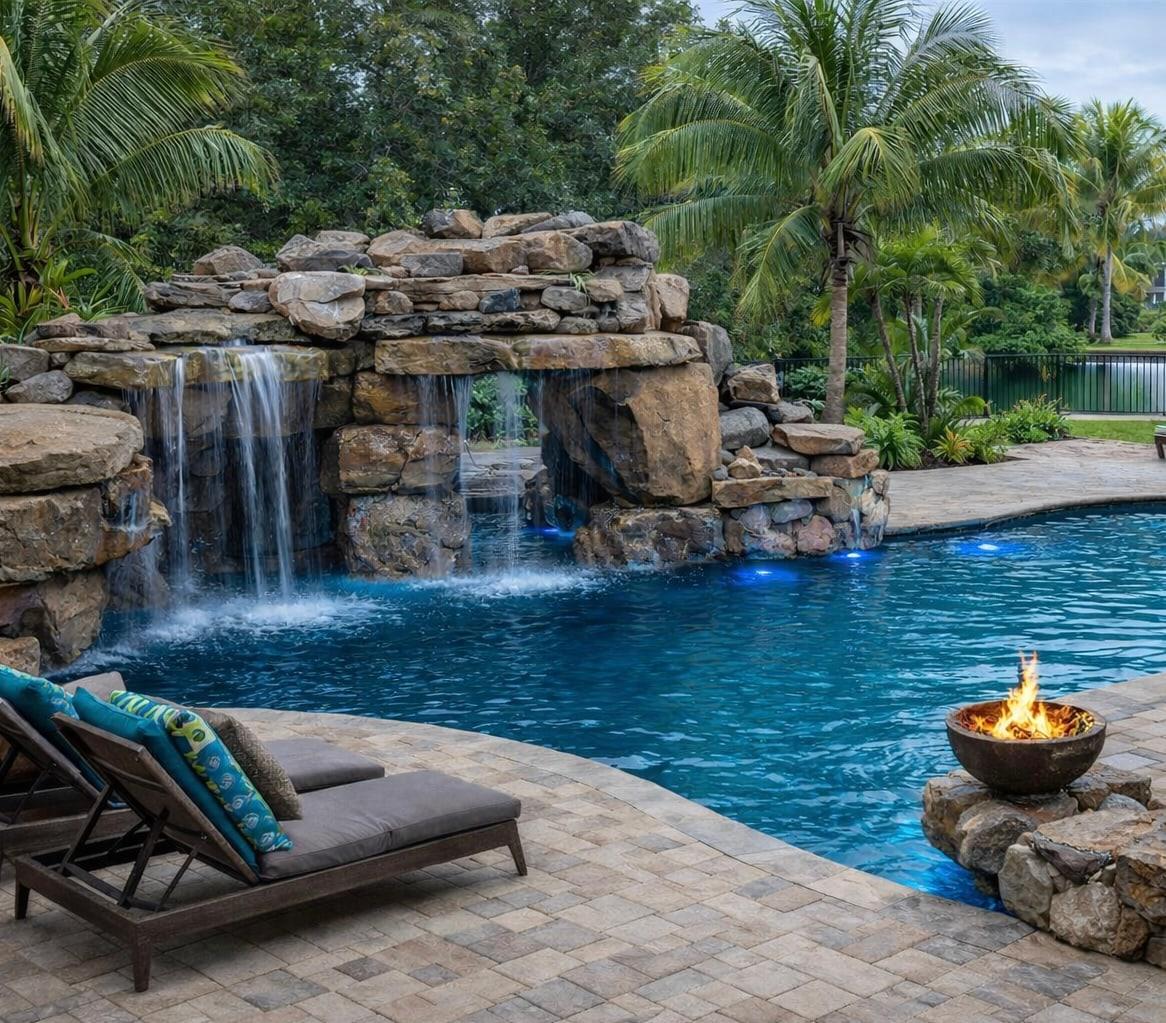
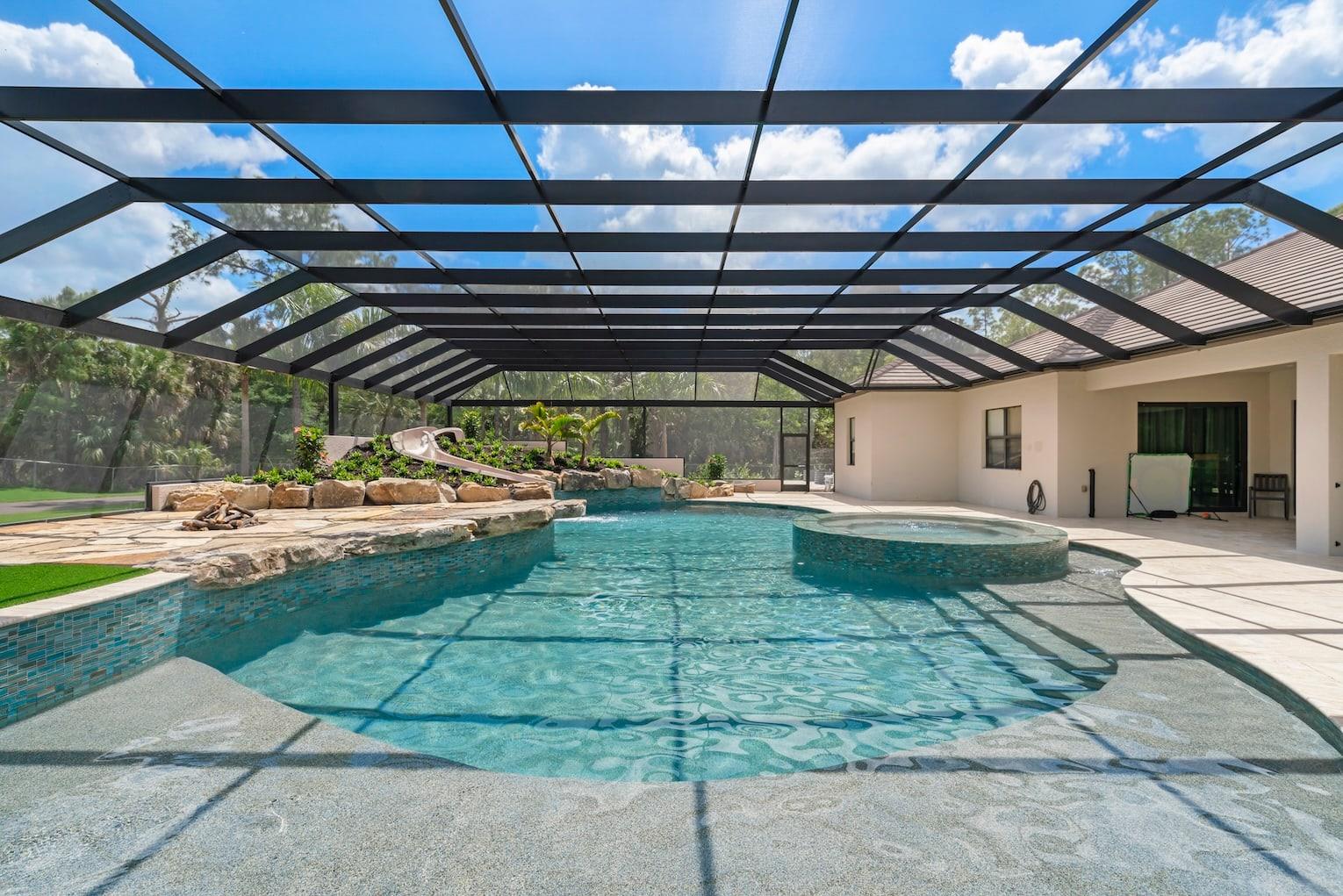
- Rock waterfalls and grottos use boulders or stacked stone, often with planting tucked in, as in a natural pool or grotto. They need careful waterproofing behind the stone and a base sized for the weight.
- Fountains and sculptural pieces include urns, spillover bowls and glass spheres, set at the waterline or on the deck.
02
Fire bowls, fire troughs and fire-and-water bowls
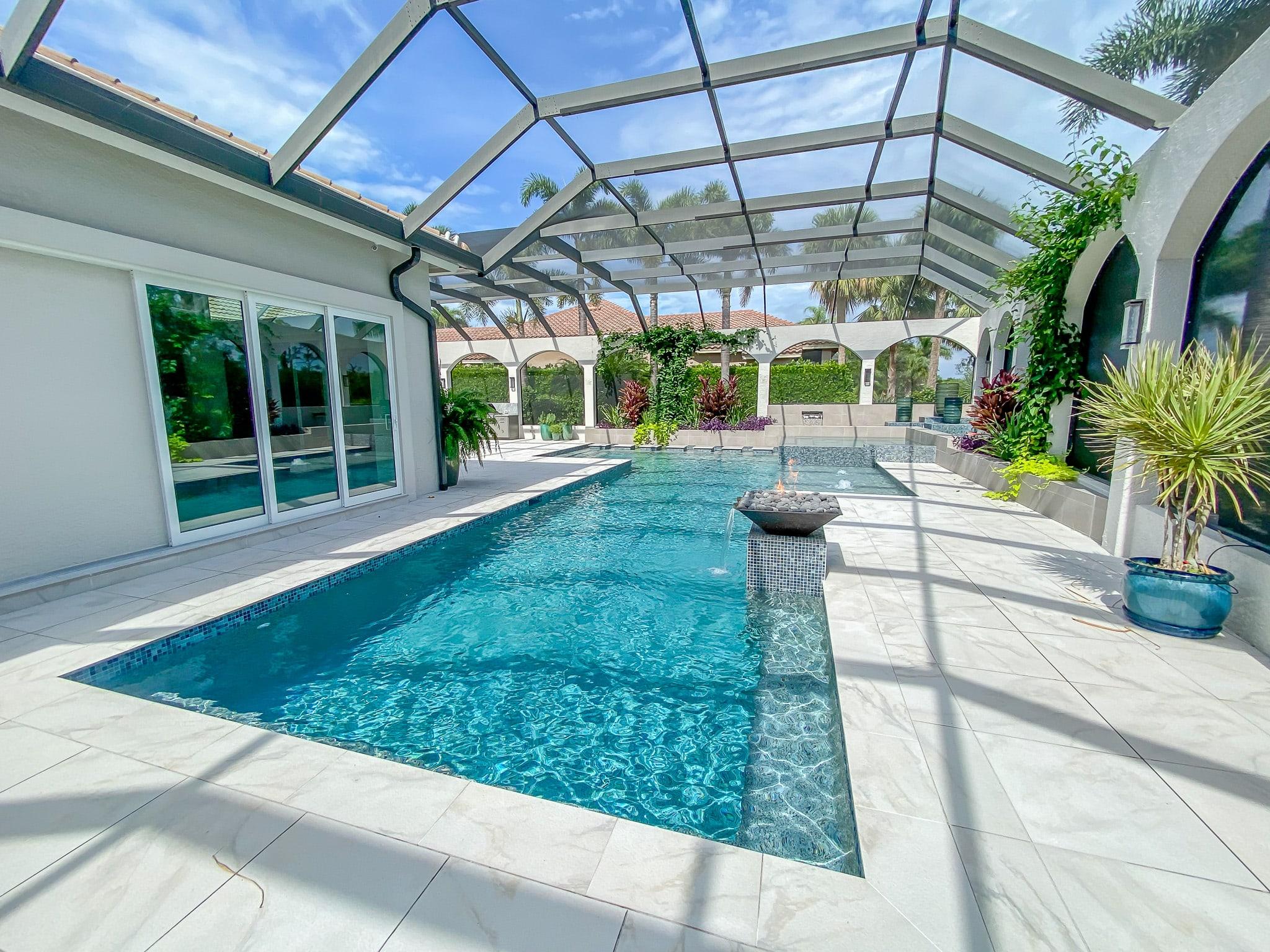
Fire belongs beside water in a Florida pool because it gives the deck a reason to stay lit after sunset, and the reflection doubles it. The usual forms are round or square fire bowls on pedestals or walls, linear fire troughs along a pool edge or bench, and fire-and-water bowls that pour water from the rim while a flame burns in the center.
Ignition matters as much as the vessel. A match-lit bowl is simple but has to be lit by hand. Electronic ignition lets the pool controller or an app light the bowls, and systems with flame sensing shut the gas off if the flame goes out, which is worth having on a breezy lot. Wind also shapes placement: a flame that looks calm in a sheltered courtyard can lie sideways on an open canal.
Under a screen enclosure, fire features are laid out with clearance to the mesh and the frame. Some are better placed outside the cage, on an open terrace where the flame has sky above it.
03
How the features are plumbed, piped and controlled
Well-designed features get a dedicated pump, or at least their own valved line, rather than a tee off the return that steals flow from everything else. A dedicated pump lets a sheer descent run at the right flow without starving the jets, and a variable-speed pump lets the same feature murmur during dinner and run full for a party. Valve actuators let the automation move water between pool, spa and features.
Gas is its own scope of work. The line is sized for every appliance it serves, often a pool heater, an outdoor kitchen and fire bowls on the same run. It is installed by a licensed contractor under a permit, pressure-tested and inspected before anything is lit, using natural gas or propane depending on what serves the property.
All of it lands in one controller. With pool automation, a single evening scene can bring up the lights, start the sheer descents and light the fire bowls together, then shut them down on a schedule.
04
Living with a feature: sound, splash and water chemistry
Sound is a design decision. The height of the drop, the flow rate and the surface the water lands on set the volume, and a feature that soothes at noon can be too loud beside a bedroom window at night. Speed control turns it down.
Moving water also changes the pool. Aeration drives carbon dioxide out of the water, which pushes pH up, and falling water evaporates faster, which concentrates minerals. On sheer descents and glass tile walls that can show as white scale, so these features need steady chemistry and regular cleaning. Whoever looks after the pool should account for every feature, not only the main body of water; our start-up and 30-day care page covers what to look for.
Fire bowls need care as well. Rain and debris collect in the burner pan, igniters have to stay dry, and a cover between uses keeps both in good order.
FAQ
Water and Fire Features: questions
What is the difference between a sheer descent and a scupper?
A sheer descent releases a thin, smooth sheet of water from a wide lip, while a scupper pours a heavier, rounder stream from a spout. Sheer descents are quieter and more architectural. Scuppers are louder and give a wall rhythm when set in a row.
Can you add a water feature to an existing pool?
Usually, yes. Bubblers, deck jets, scuppers and sheer descents can be added during a renovation, although new plumbing often means cutting and replacing part of the deck and sometimes adding a pump. The ideal moment is when the deck or interior finish is being redone anyway.
Do fire bowls need a gas line?
Yes. Permanent fire bowls run on natural gas or propane delivered through a buried line that is sized for everything it serves, installed under a permit and pressure-tested before use. With electronic ignition, the bowls can be lit from the pool controller or a phone.
Do water features make a pool harder to maintain?
Somewhat. Moving water raises pH and increases evaporation, which can leave scale on sheer descents and tile. With balanced chemistry and routine cleaning the extra work is modest, and the features themselves need occasional attention to nozzles, lips and pumps.
Are pool waterfalls loud?
Only as loud as they are designed to be. Volume depends on the height of the drop, the flow and the surface the water strikes. A variable-speed pump lets you lower the flow in the evening, which is the simplest way to keep a waterfall soothing.
Where we build
Water and Fire Features across Southwest Florida
- Pool builder in Naples
- Pool builder in Fort Myers
- Pool builder in Cape Coral
- Pool builder in Bonita Springs
- Pool builder in Estero
- Pool builder in Sanibel Island
- Pool builder in Captiva Island
- Pool builder in Marco Island
- Pool builder in Fort Myers Beach
- Pool builder in Boca Grande
- Pool builder in Punta Gorda