
Pool decks
Pool decks in travertine, marble, shellstone and pavers
The deck is the part of the pool you live on. We build it to stay comfortable underfoot, grip when wet, shed rain quickly and stay level.
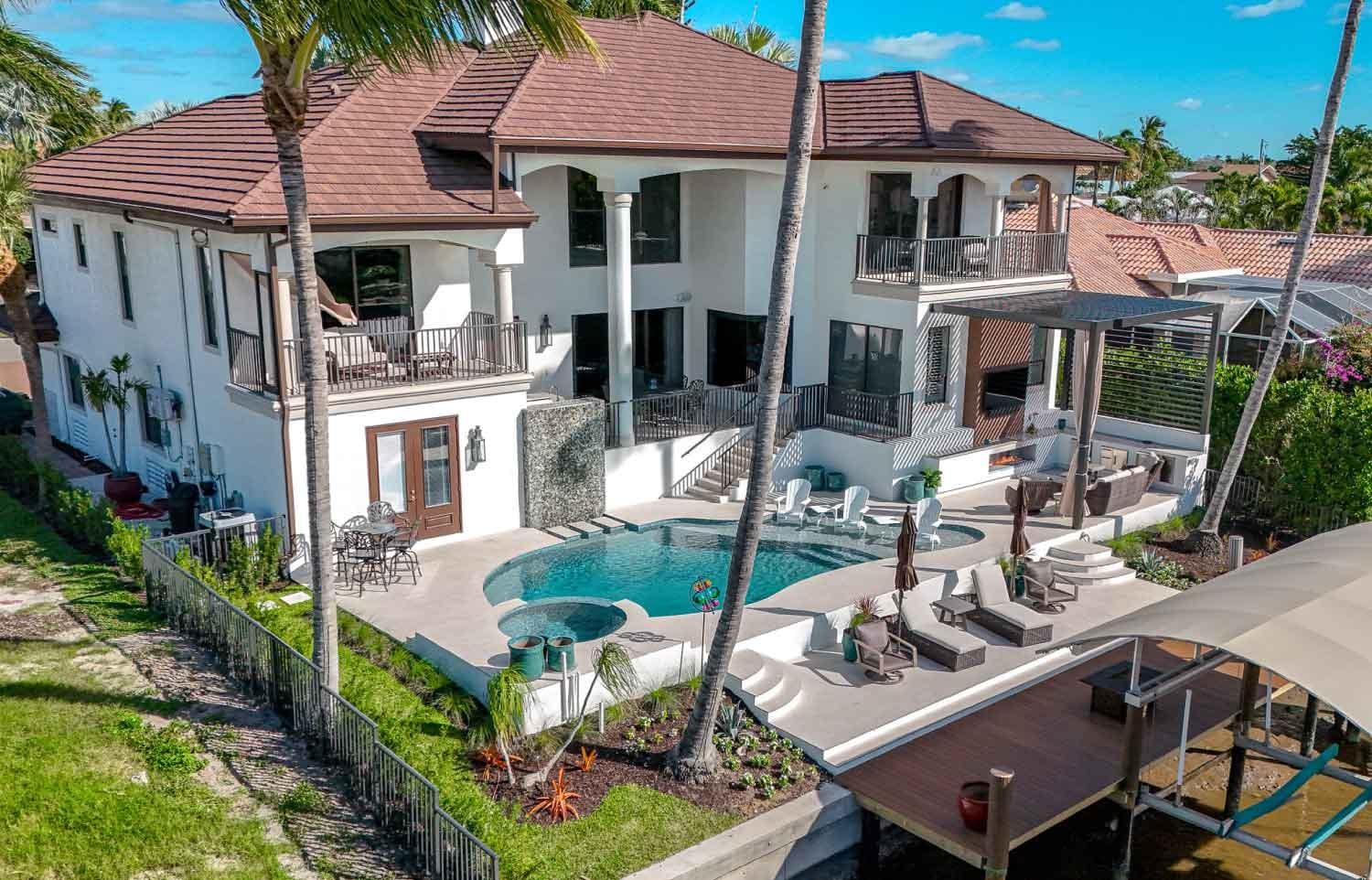
A pool deck carries more of daily life than the pool itself: chaises, dining tables, bare feet at midday, summer storms. In Southwest Florida it also has to handle intense sun and heavy rain, and on many lots it anchors a screen enclosure at its edge. Lombardo installs pool decks as part of new pools and renovations, and as replacements on existing pools in Fort Myers, Naples and along the surrounding coast.
This page is about how we build pool decks. For a full comparison of materials, with the strengths, weaknesses and upkeep of each, read our guide to types of pool deck materials.
- Materials
- Travertine, marble, shellstone, porcelain pavers, concrete pavers
- Scope
- New decks, deck replacement, overlays on sound slabs, coping
- Built for
- Drainage away from pool and house, wet-foot grip, full sun
- Coping profiles
- Bullnose, square or eased edge, drop face
- Pairs well with
- Screen enclosures, outdoor kitchens, fire features, landscape
01
The materials we install, and where each fits
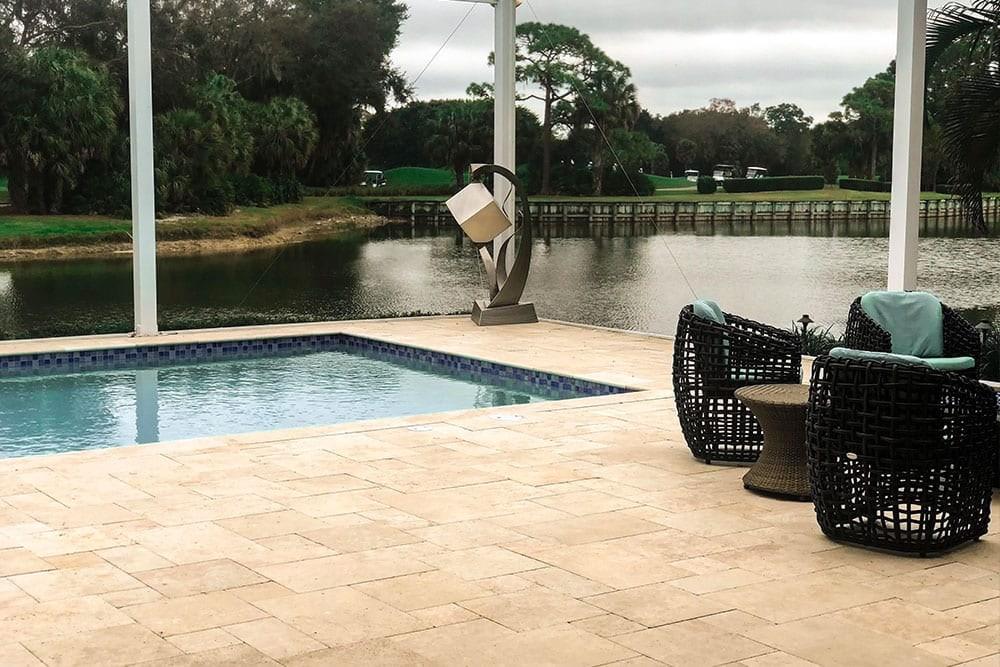
Travertine is a natural limestone that stays relatively cool underfoot and comes in tumbled, honed and brushed finishes. Its natural texture gives grip, and its warm, pale tones suit Mediterranean and coastal homes alike.
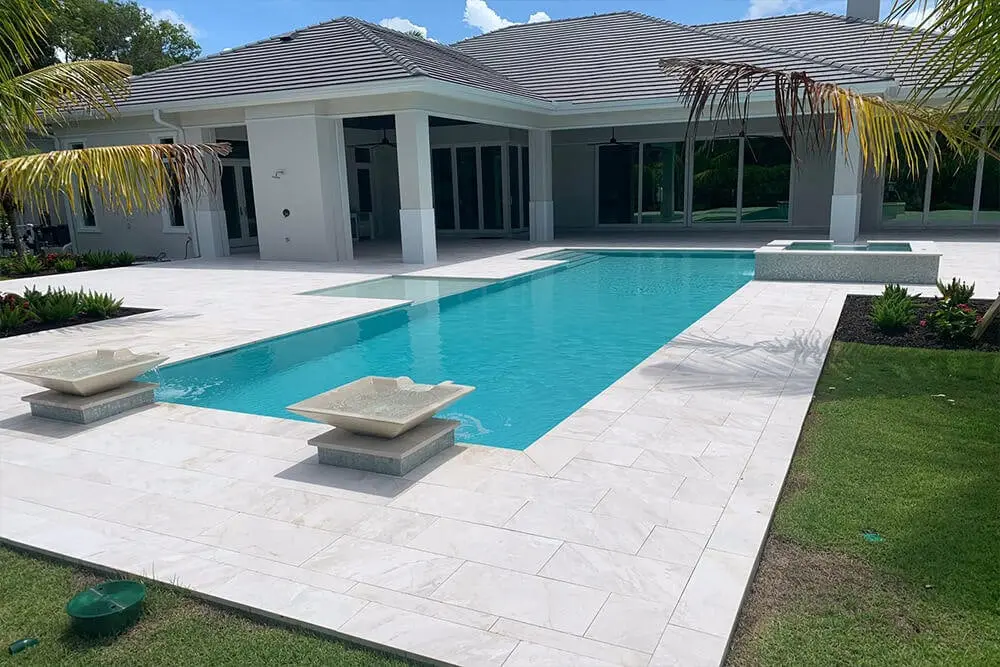
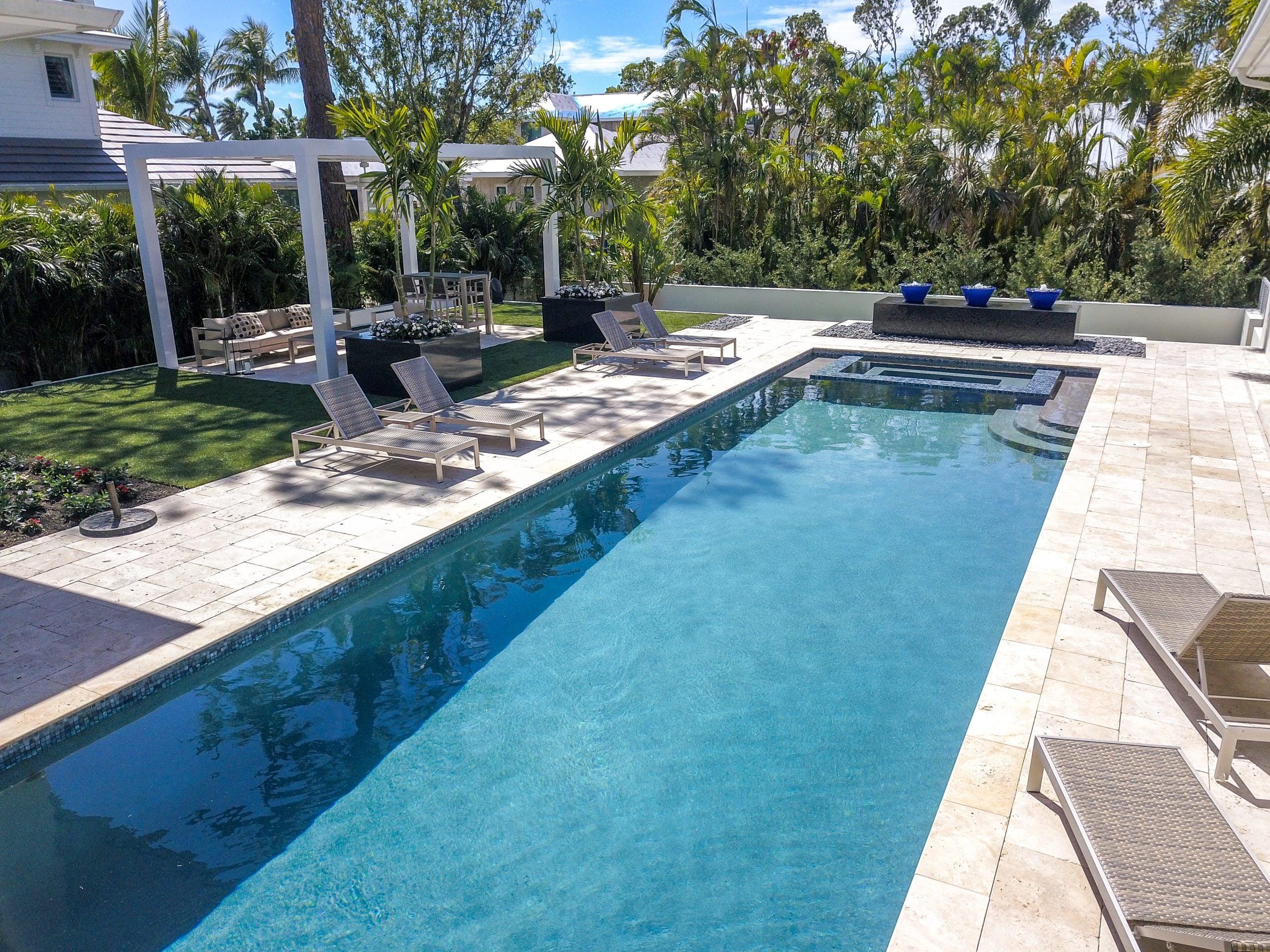
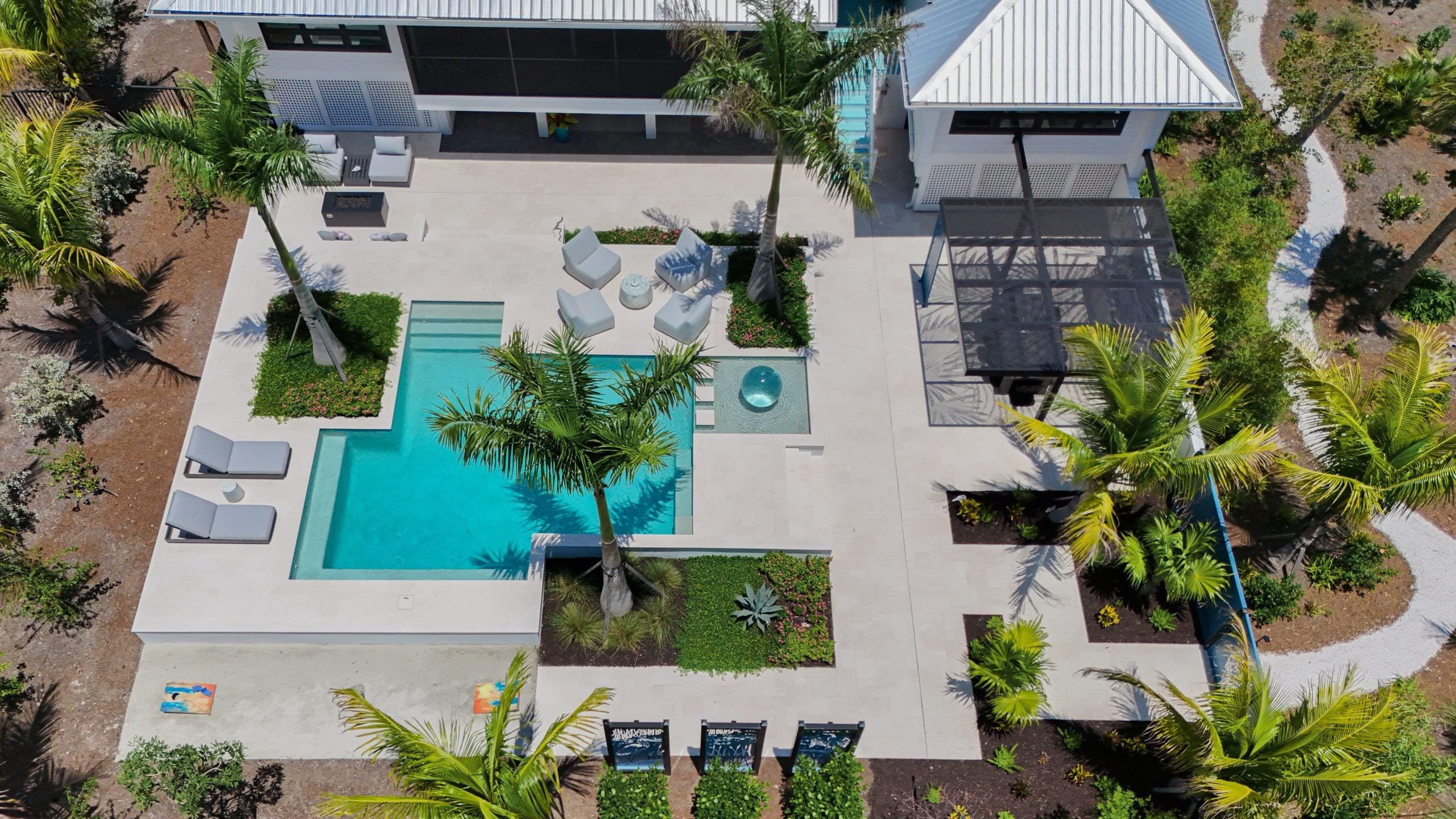
Marble pavers, like the white marble deck on the modern pool at the top of this page, give a crisp, architectural surface. Around water we specify honed, tumbled or brushed finishes; a polished finish does not belong on a wet deck.
Shellstone is a limestone formed largely from fossilized shell and coral fragments, visible in its face. It is light in tone and quietly textured, a natural fit for coastal and island houses.
Porcelain pavers are thick outdoor porcelain, which by definition absorbs 0.5 percent of water or less. They are dense, consistent and stain resistant, and they come with textured, slip-rated surfaces in stone and wood looks.
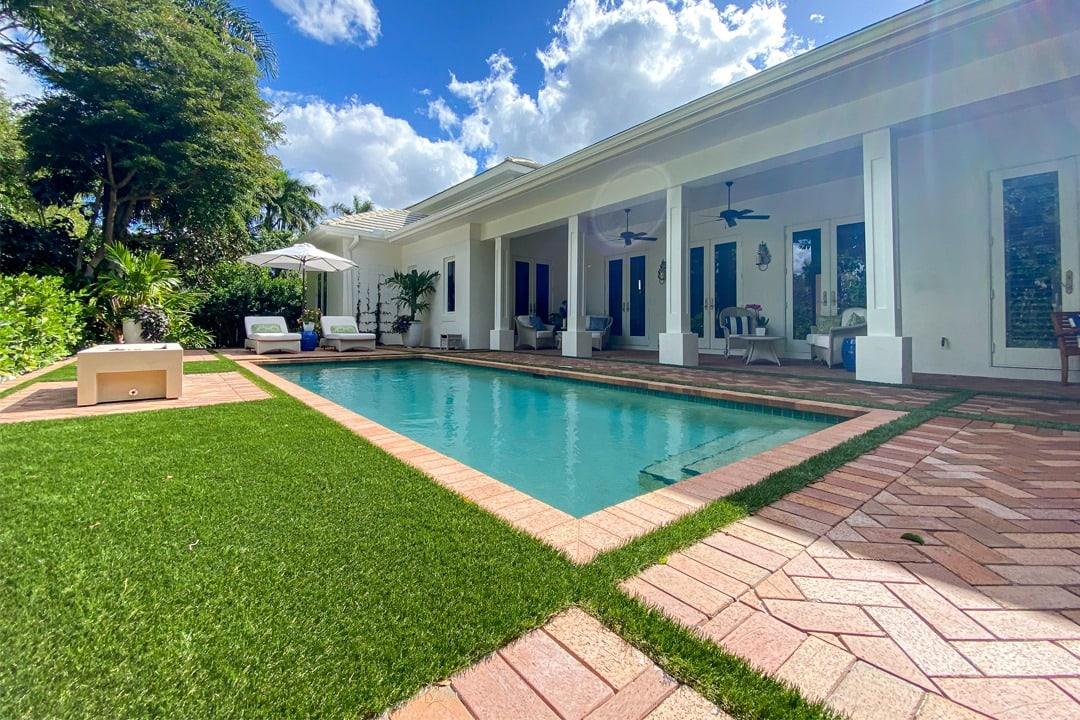
Concrete pavers are an economical option in many colors and patterns, and they can be lifted and reset if something beneath them needs attention.
02
Pool deck resurfacing in Fort Myers and Naples
Owners with a painted or textured concrete deck often ask whether stone or pavers can go straight over it. Sometimes they can. If the slab is sound, drains properly and leaves enough height at the doors, the coping and the enclosure, a paver or stone overlay set on the existing concrete can be the cleanest route. If the slab is cracked, settled or already too high at the threshold, it comes out and the deck is rebuilt on a new compacted base.
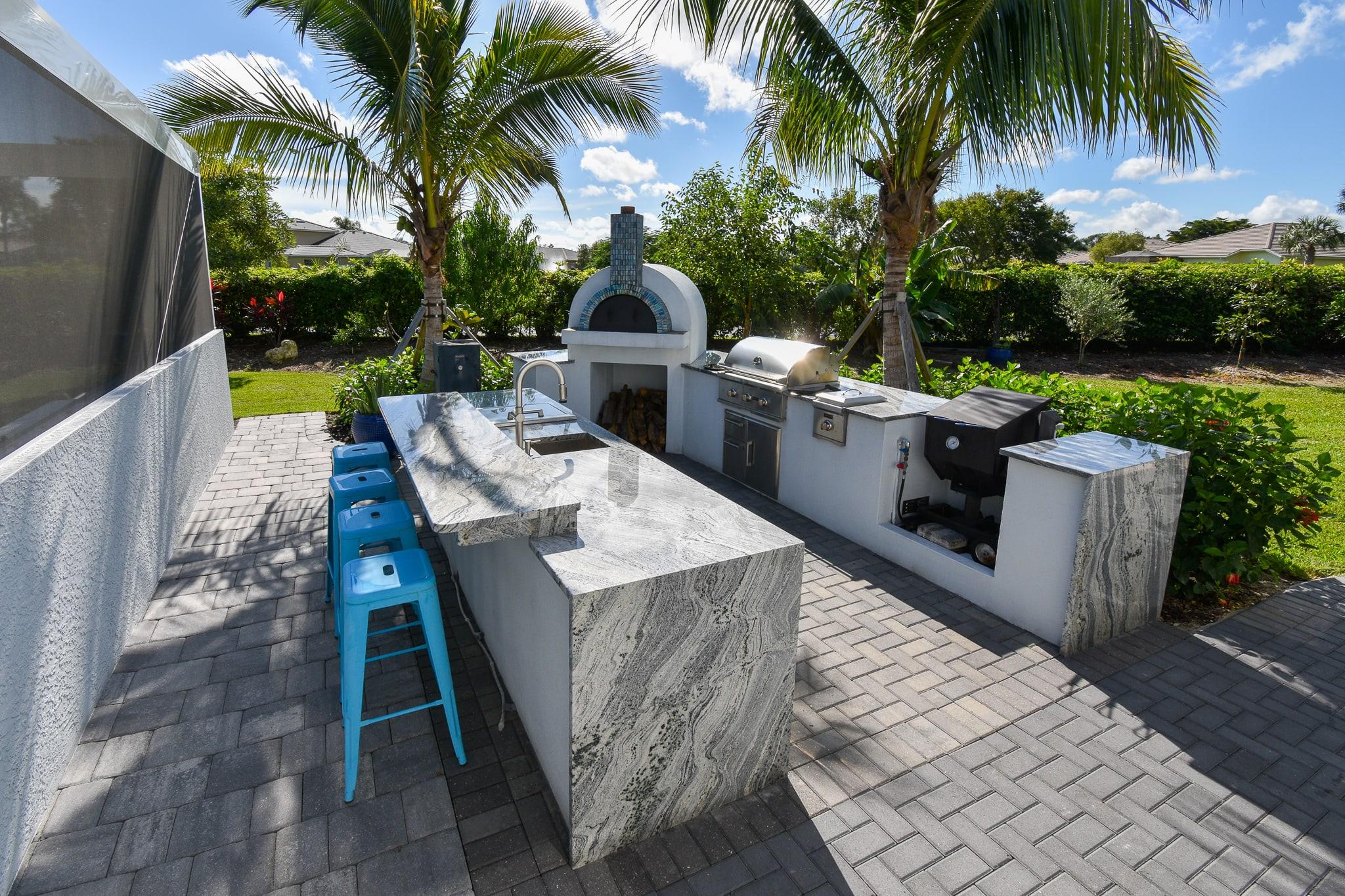
Pool deck resurfacing is also the time to correct what the old deck got wrong: too little room for furniture, steps that collect water, drains in the wrong place, coping that does not match. We lay the new deck out with the whole outdoor space in mind, so outdoor kitchens, fire features and planting beds are placed before the first paver goes down.
03
Heat, grip and water on a Florida pool deck
Three questions decide whether a deck is pleasant to live on. Heat comes first: lighter colors and porous natural stone generally stay cooler in direct sun than dark, dense surfaces, which matters on an unshaded deck at noon. Grip comes second: wet areas need a textured or honed surface, and for porcelain we look for a published wet slip-resistance rating rather than trusting appearance. Water comes third: every deck we build slopes away from the pool and the house, with drains where the grade needs them, so rain leaves quickly and does not wash debris into the pool.
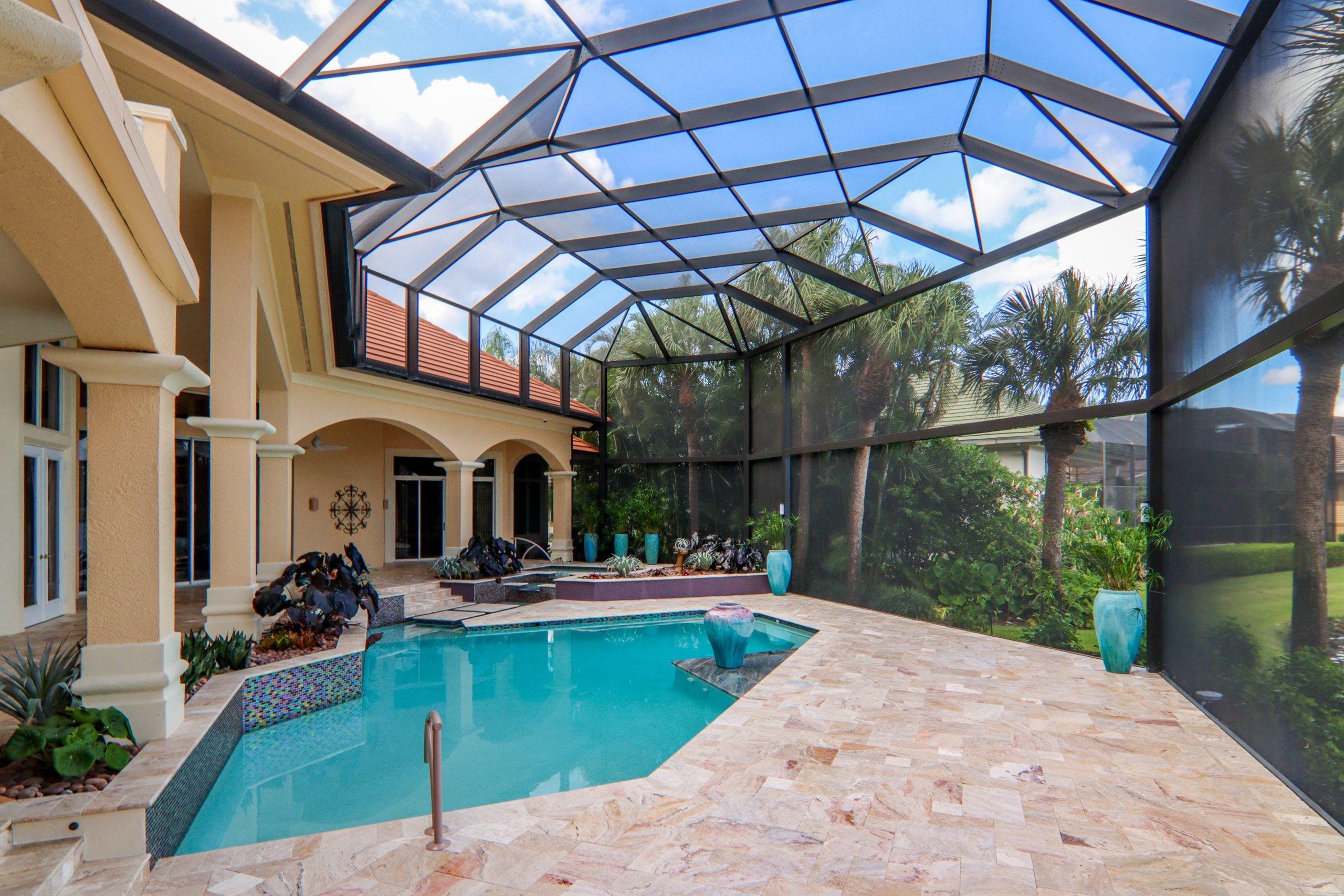
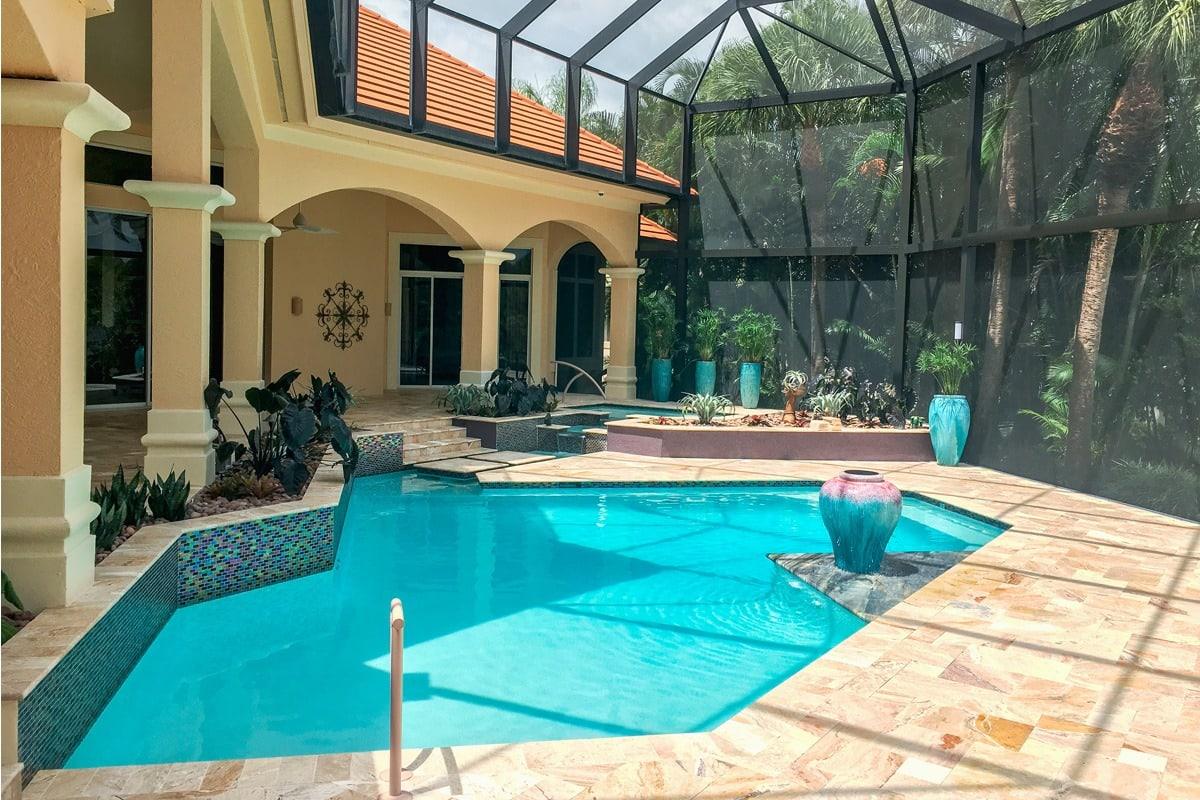
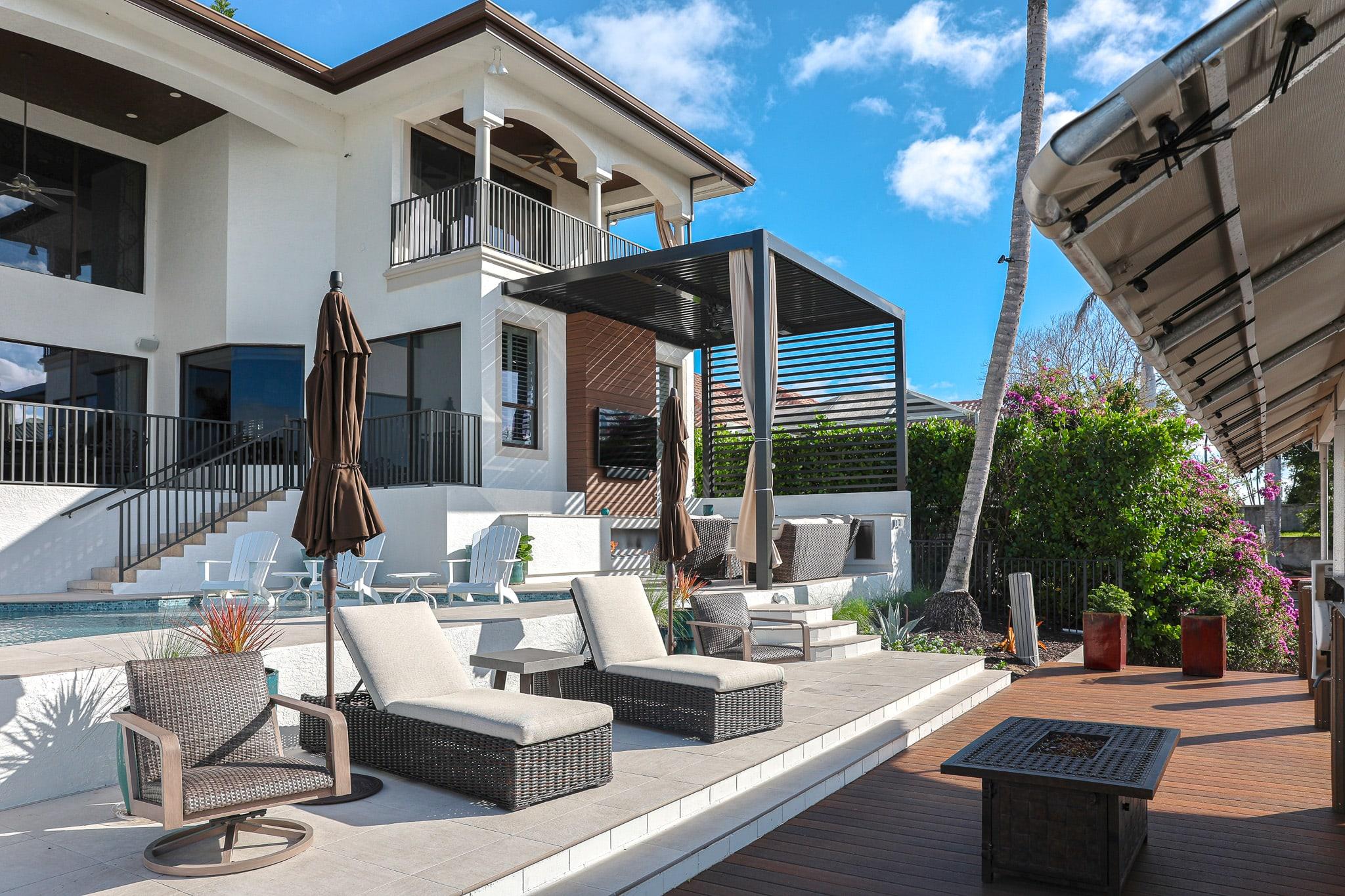
Under a screen enclosure, the deck and the enclosure footing are planned together, since the enclosure is anchored at the deck's edge. Our pool cage and screen enclosure work is coordinated with the deck for exactly that reason.
04
Coping: the edge where deck meets water
Coping caps the top of the pool wall, and it is the most handled and most looked-at stone on the deck. It can match the deck for a quiet, continuous surface or contrast with it to outline the water. The profile matters as much as the material: a rounded bullnose is kind to hands and feet, a square or eased edge suits modern pools, and a thicker drop-face edge gives a heavier, more architectural line.
Coping also has practical work to do. It throws splash onto the deck instead of behind the pool wall, it meets the waterline tile, and on raised spas and spillways it becomes a seat. When a pool is being resurfaced, replacing the coping and deck together lets every edge be reset cleanly.
FAQ
Pool Decks: questions
What pool deck material works well in Florida?
Light-colored natural stone such as travertine or shellstone, and textured porcelain pavers, all perform well in Florida sun. Travertine stays relatively cool and offers grip, porcelain is dense and stain resistant, and concrete pavers suit a tighter budget. The right choice depends on your architecture, your sun exposure and how much upkeep you accept.
Which pool deck material stays the coolest?
Light-colored, porous natural stone generally stays coolest, which is much of the appeal of travertine and shellstone around Florida pools. Color matters as much as material, since a dark paver of any kind gets hot in full sun. Shade from a pergola, palms or a covered lanai helps too.
Can pavers be installed over an existing concrete pool deck?
Yes, if the slab is sound, drains correctly and there is height to spare at the doors, coping and enclosure footings. Pavers or stone can then be set over the concrete. If the slab is cracked or settled, removing it and building a new base gives a deck that lasts longer.
Is travertine slippery around a pool?
Tumbled and brushed travertine are naturally textured and generally give good grip when wet. Polished travertine should not be used on a pool deck. Keeping shaded areas clean of algae and mildew matters as much as the stone itself.
Does a travertine pool deck need to be sealed?
Sealing is not required, but it is commonly recommended. A penetrating sealer helps the stone resist staining and makes cleaning easier, as long as it is suited to a wet, sun-exposed deck and does not leave the surface slick. Resealing is periodic and depends on wear.
Where we build
Pool Decks across Southwest Florida
- Pool builder in Naples
- Pool builder in Fort Myers
- Pool builder in Cape Coral
- Pool builder in Bonita Springs
- Pool builder in Estero
- Pool builder in Sanibel Island
- Pool builder in Captiva Island
- Pool builder in Marco Island
- Pool builder in Fort Myers Beach
- Pool builder in Boca Grande
- Pool builder in Punta Gorda