
Spas and hot tubs
Custom spas and hot tubs, shaped around the soak
A spa earns its place by being used. Seats, jets, heat and controls are designed so it is ready on a cool January night and pleasant on a July morning.
A hot tub in Fort Myers, Naples or Cape Coral can be an acrylic shell on a slab, or it can belong to the pool and the house: finished in the same tile and stone, run from the same app, and comfortable enough to be used several nights a week rather than admired from the kitchen. The second kind is what we build.
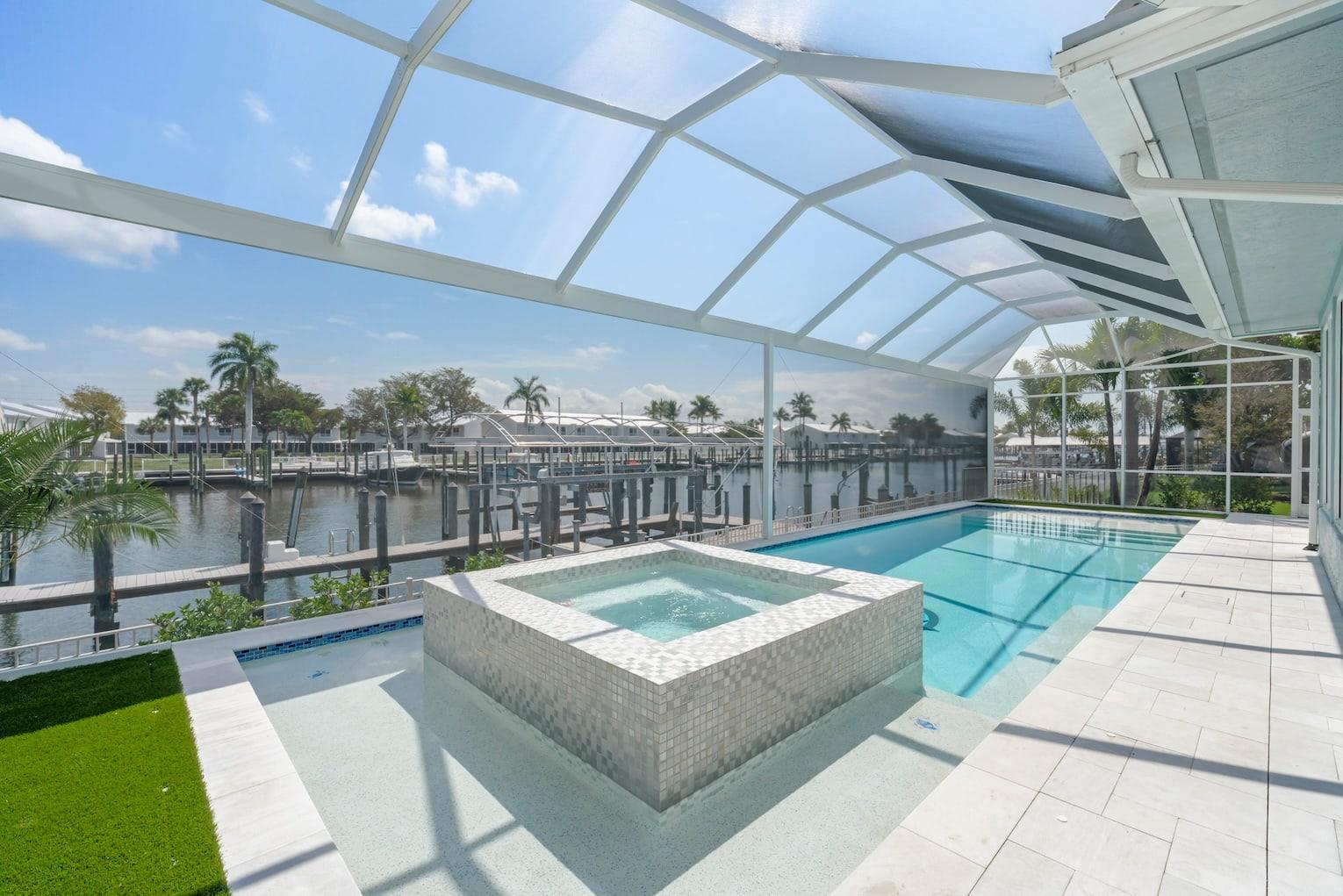
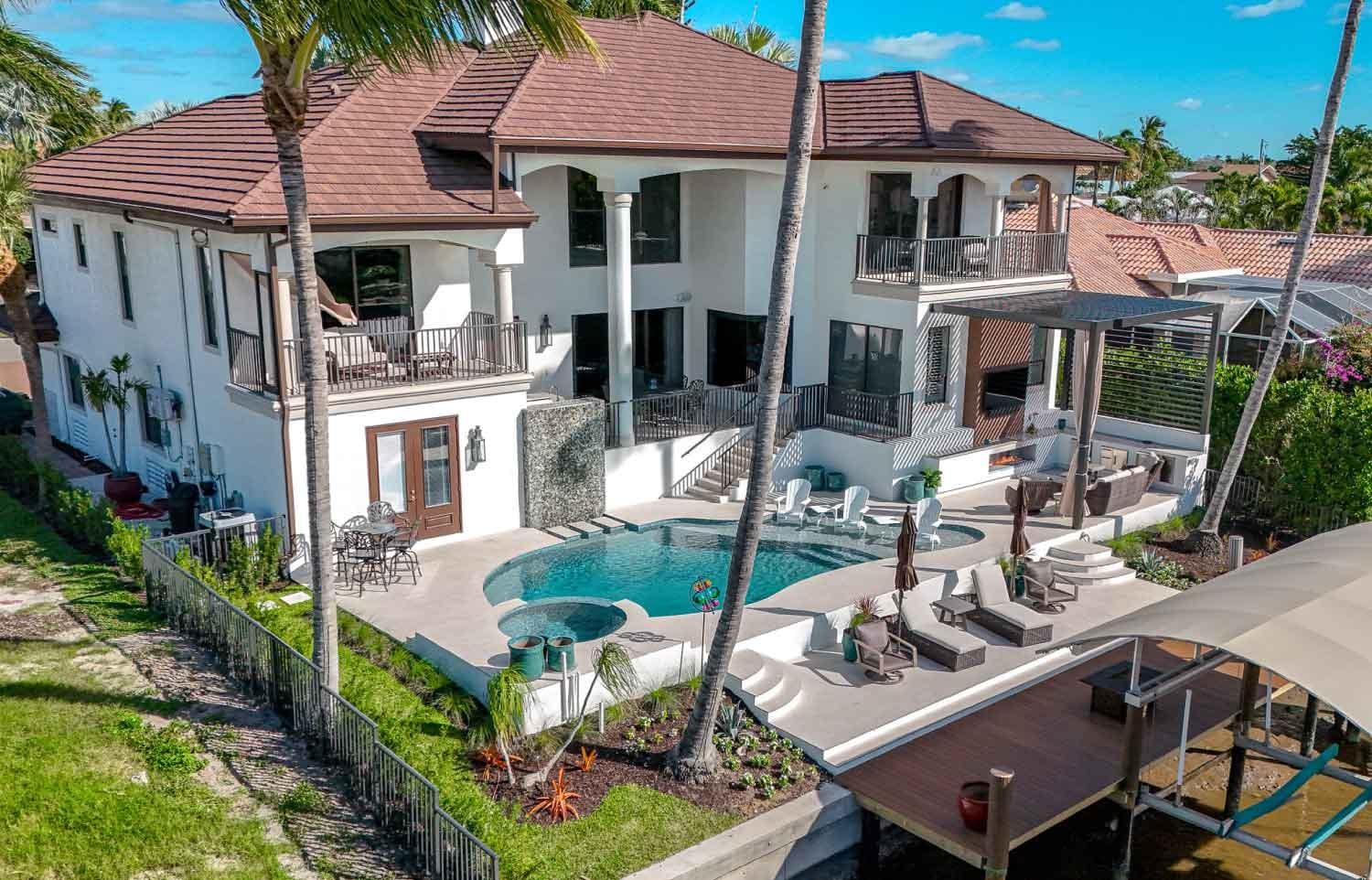
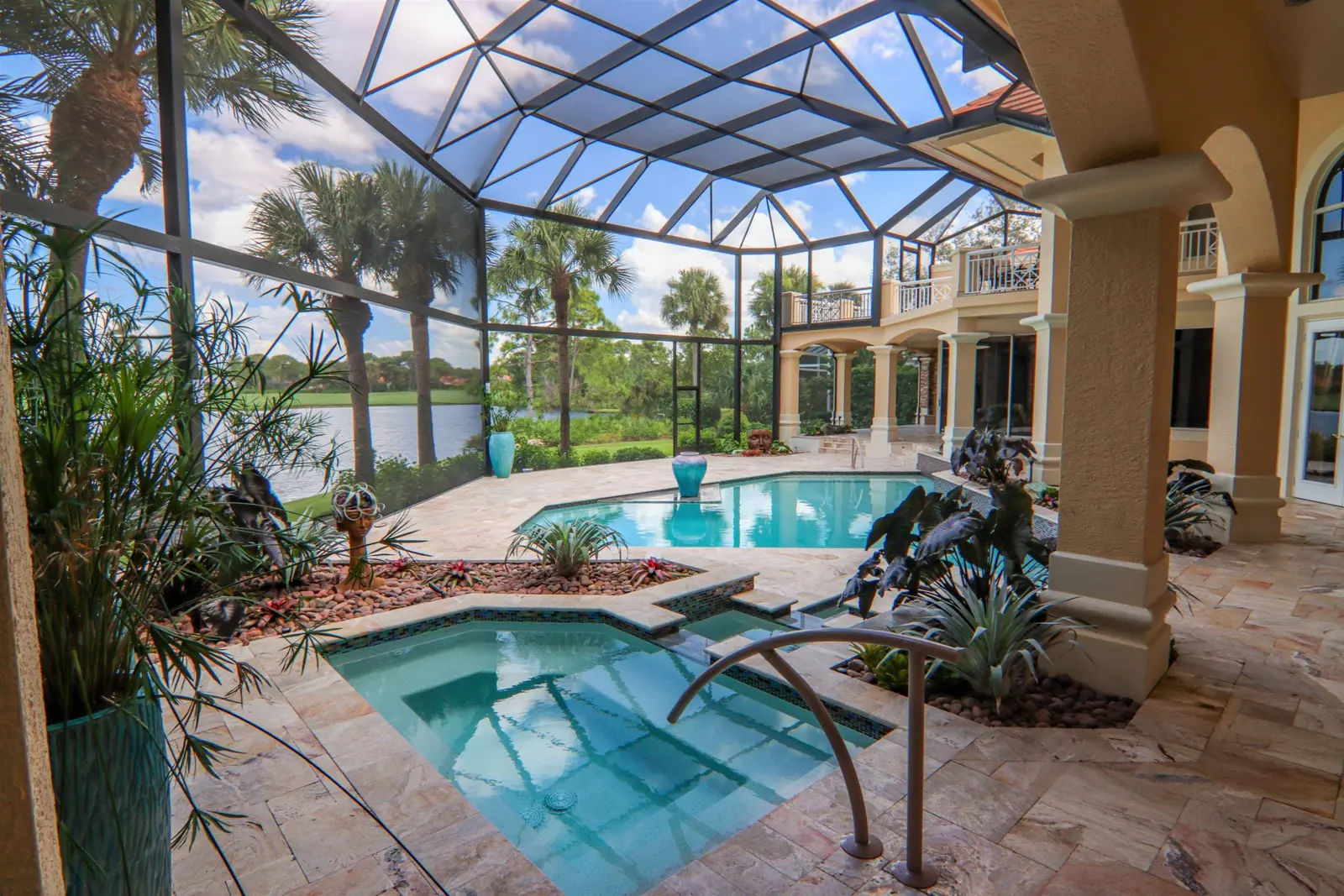
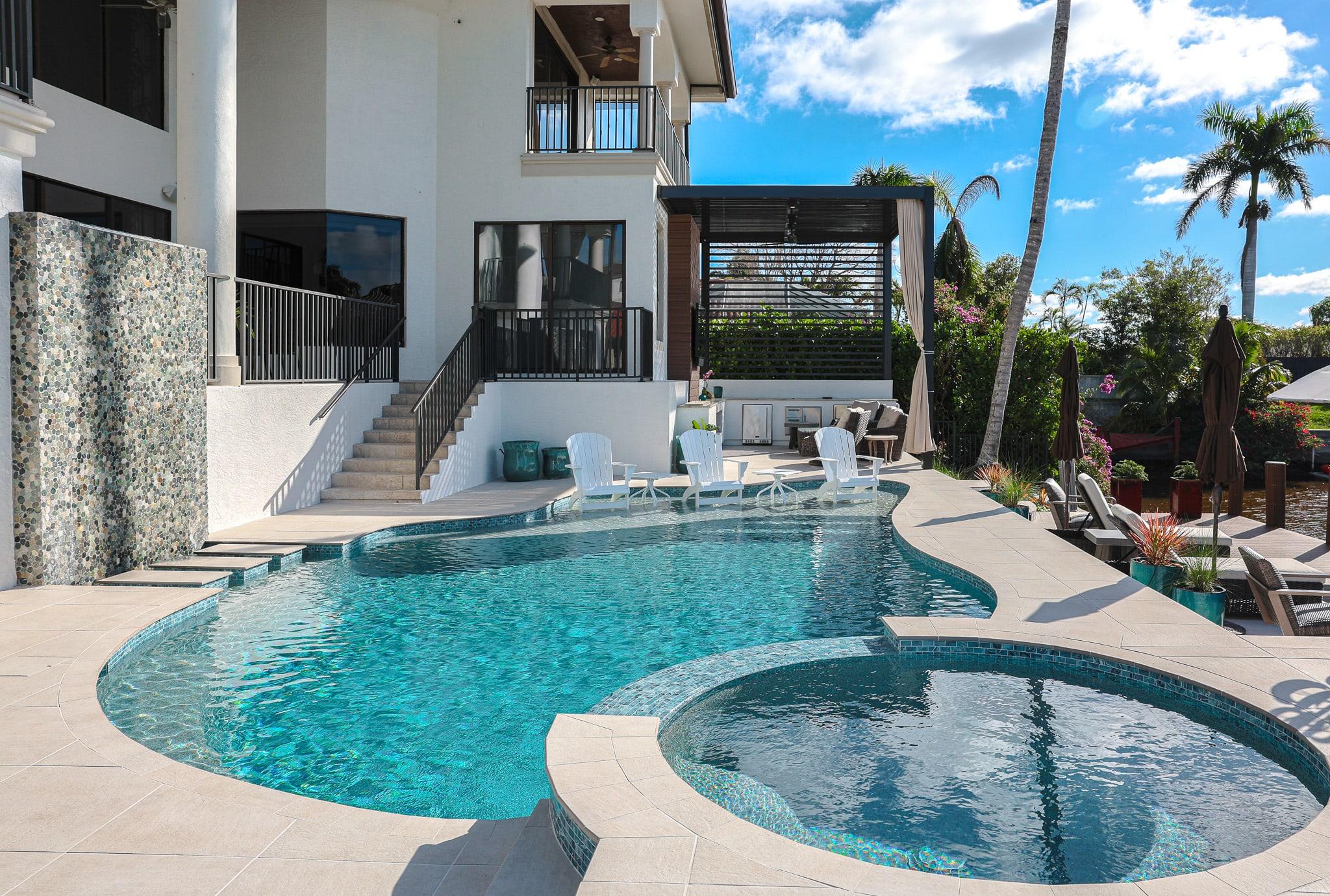
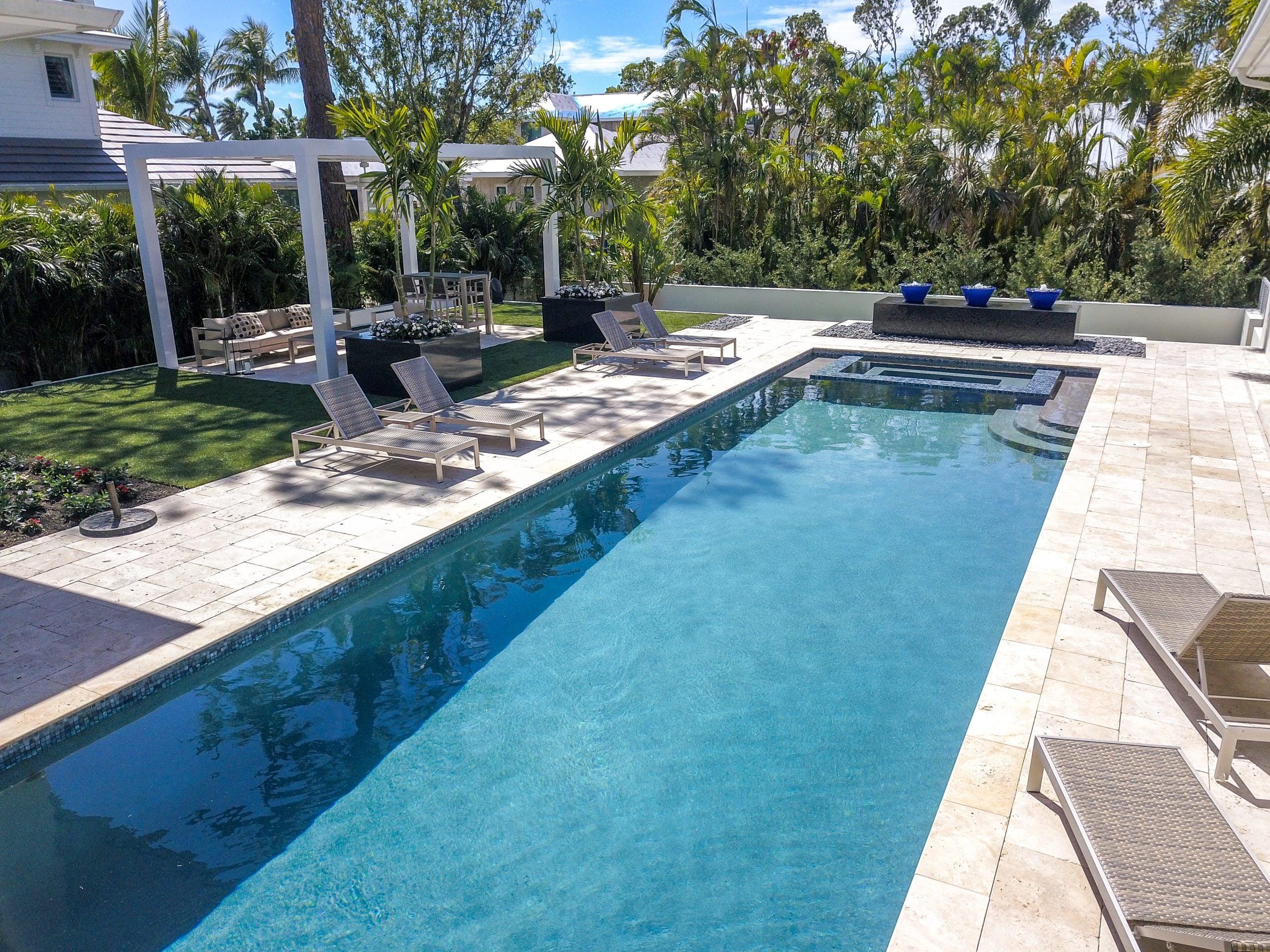
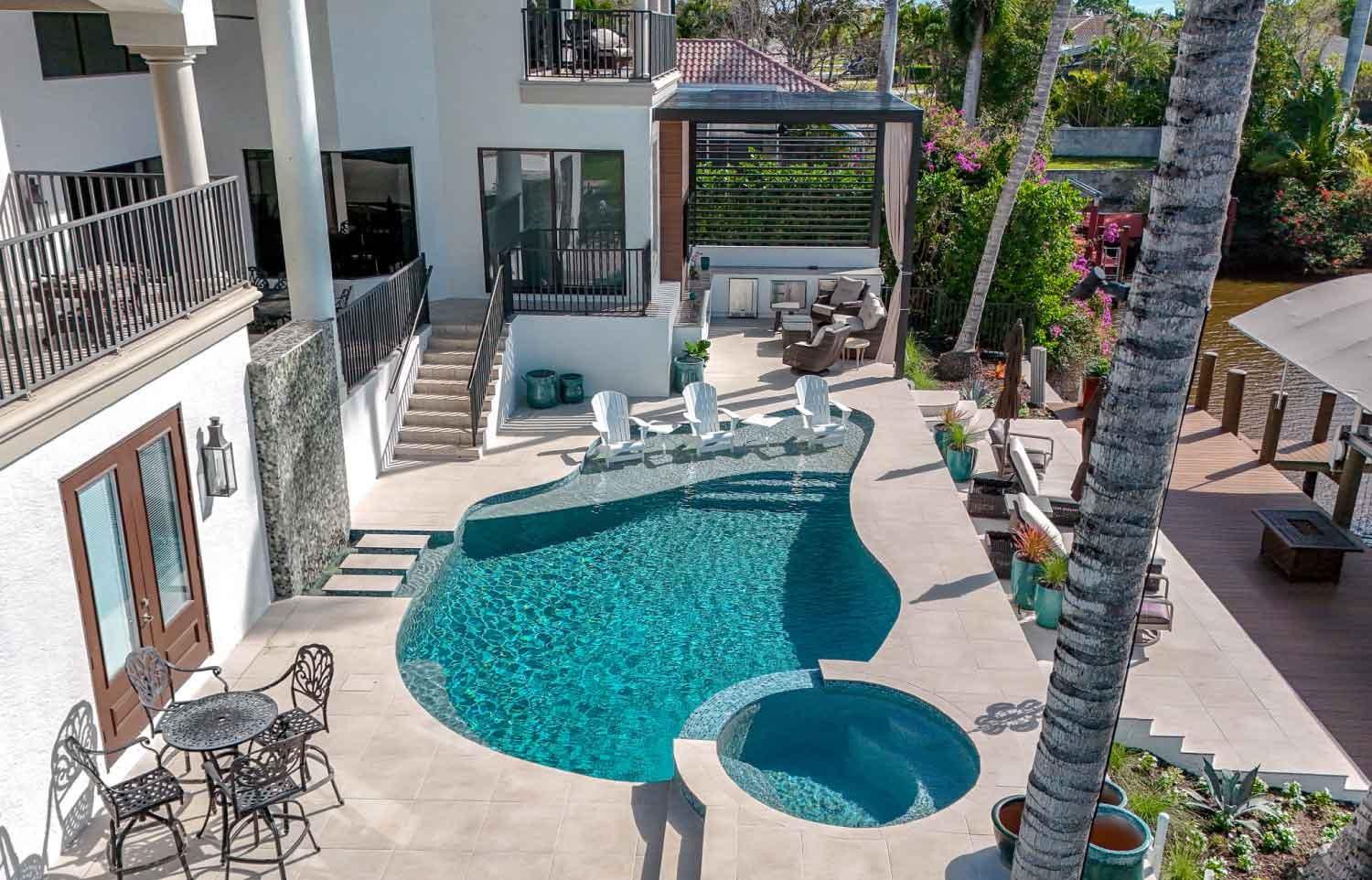
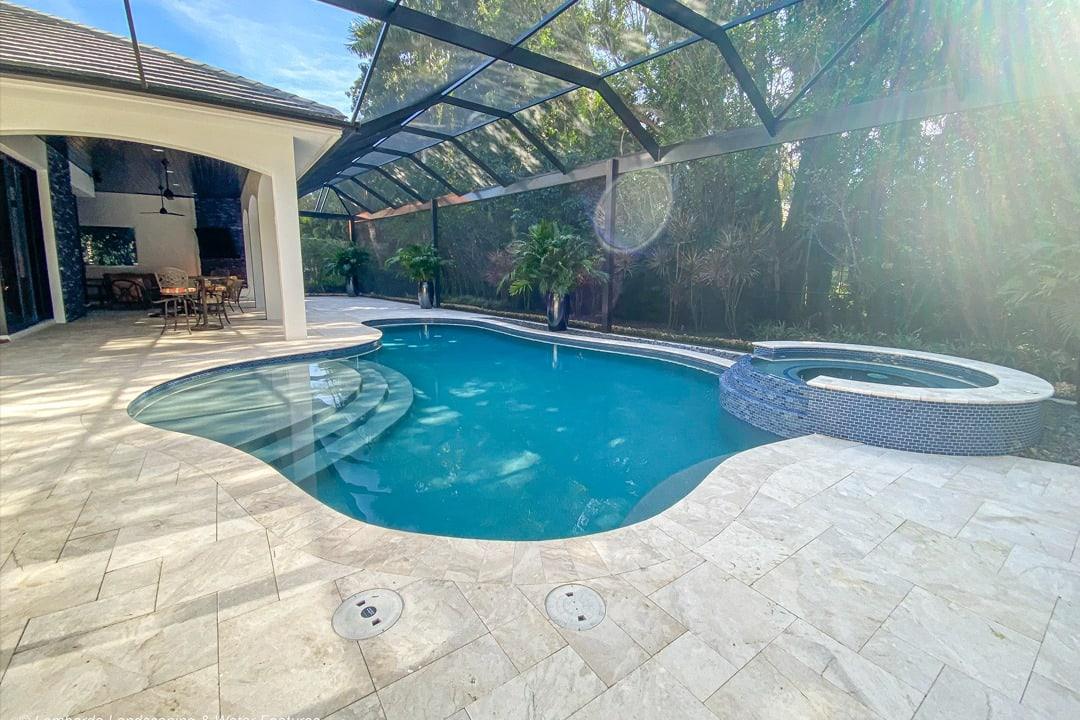
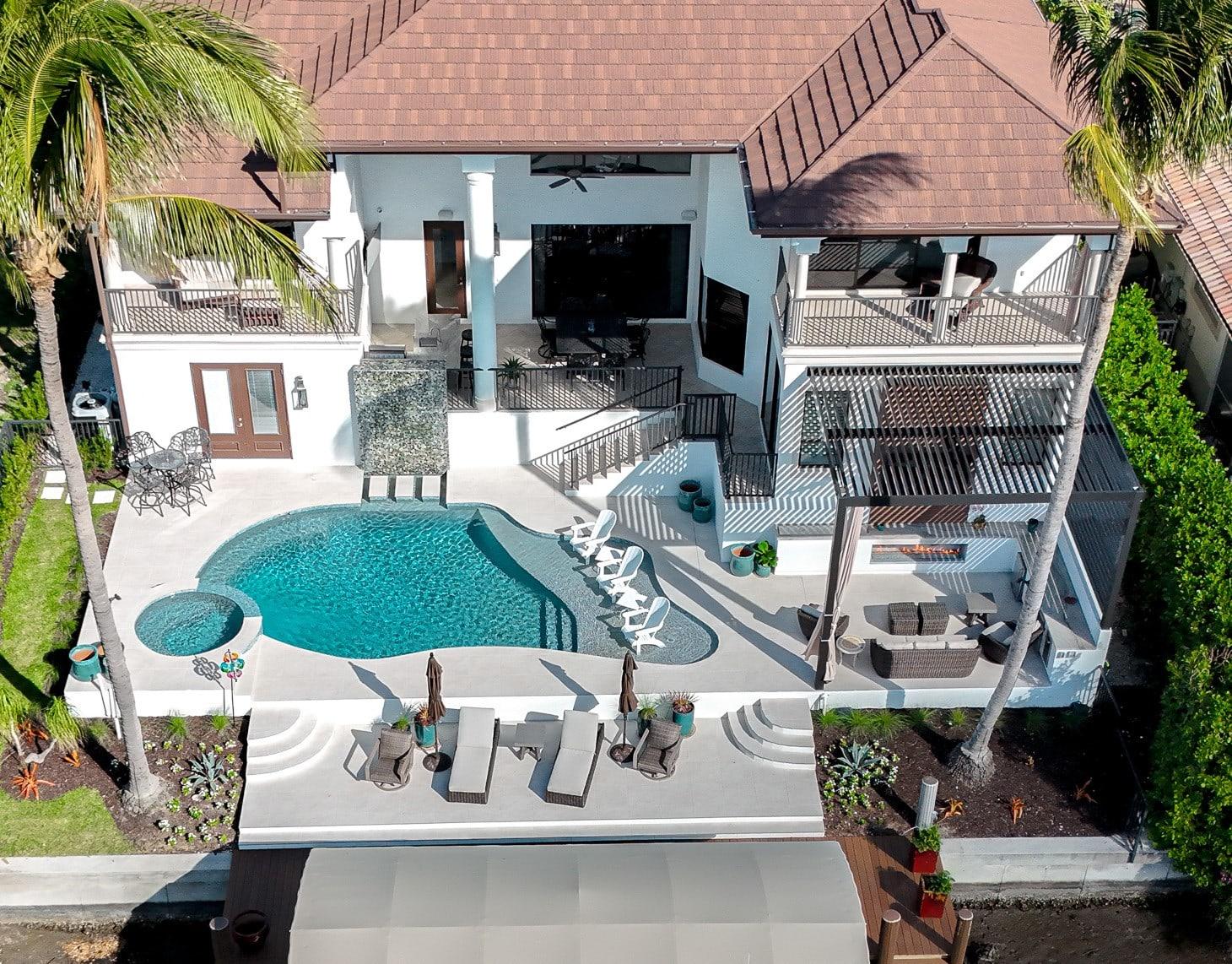
Lombardo Pools builds custom concrete spas as part of new pools, as additions during a pool renovation, and as standalone pieces where a full pool does not fit or is not wanted. The real projects behind this page include a raised spillover spa with a curved grab rail on a screened Mediterranean lanai, a raised round spa beside a freeform pool in Naples, and a raised tile spa set into a lap pool overlooking a canal.
As a spa builder with a Florida commercial pool/spa contractor license, we give the hydraulics the same attention as the tile.
- Spa types
- Spillover, raised, flush and freestanding plunge spas
- Construction
- Custom concrete with tile, stone or plaster finishes
- Heat
- Gas for fast spa heat; heat pump for steady pool heat
- Therapy
- Dedicated jet pump, adjustable jets, optional air blower
- Controls
- Pool and spa modes from the automation app
- Safety
- Florida Chapter 515 safety features, including cover options
01
Spillover, raised or freestanding: building a custom spa or hot tub
Spillover spas sit slightly above the pool and pour into it over a tiled or stone edge. They share the pool's filtration and heating, and valves switch the system between pool and spa. The spillover keeps the spa water moving and ties the two bodies of water together visually. The edge can be a straight weir, a sheer sheet, or a vanishing edge on every side.
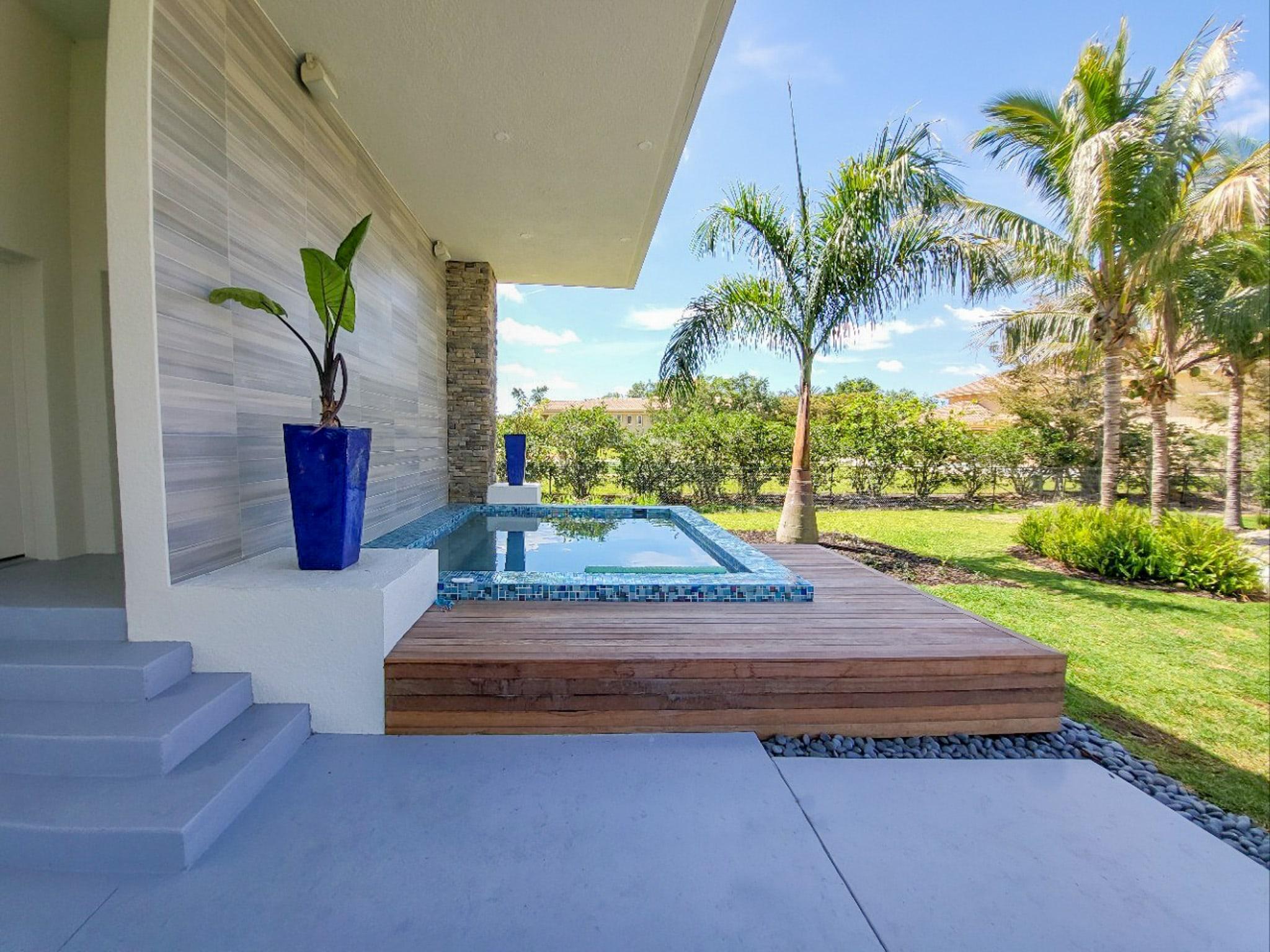
Raised spas stand well above the deck, so the spa wall becomes a perch for people sitting outside it and a surface for glass mosaic or stone. Square, round or freeform, a raised spa marks the hot water as its own room within the pool.
Freestanding and plunge spas are built apart from any pool: a compact concrete spa on a terrace or courtyard, or on a lot too small for a full pool. They have their own pump, heater and controls, and they are finished to match the house rather than the catalog.
02
Heat, jets and the hydraulics of a good soak
A spa that takes too long to heat does not get used. Gas heaters raise spa temperature quickly whatever the weather, which is why a heat pump for the pool and gas for the spa is a common pairing in Southwest Florida. Where there is no gas, a properly sized heat pump can hold a spa at temperature, though it recovers more slowly.
Strong jets usually need their own pump. Filtration pumps are sized to turn the water over efficiently, not to drive a dozen therapy jets, so a dedicated jet pump is what separates a hydrotherapy spa from warm water with a few bubbles. Jet placement follows the body: lower back, shoulders and feet, with adjustable nozzles at each seat. An air blower adds effervescence but cools the water, so it is used sparingly.
On a pool and spa combination, automation handles the change to spa mode in one command, turning valves, starting the jet pump and firing the heater.
03
Seats, steps and the details you feel
Comfort is measured in inches, so seat heights and depths are set in the design around the people who will use the spa.
- Seats at more than one depth, including one deep enough to cover the shoulders
- A reclined lounge seat where the spa is large enough
- Wide steps and a grab rail, which matter at night and for older guests
- A foot well or central floor deep enough to stand in
- Smooth tile or plaster where arms rest along the edge
- Its own lighting, on a separate color or scene from the pool
- A safety cover cut to the shape, especially where children visit
04
Cold plunges and hot-cold contrast
A cold plunge can sit beside the spa, with one caveat: tap water and pool water in Florida run warm much of the year, so a true cold plunge needs its own chiller, insulated walls and a cover, and it is plumbed and treated as a separate small body of water.
We are careful about claims here. The appeal of moving between hot and cold is easy to understand, but its health effects are still being studied, and anyone with a heart condition should ask a physician first. The same caution applies to heat: the U.S. Consumer Product Safety Commission advises keeping hot tub water no hotter than 104 degrees Fahrenheit.
FAQ
Custom Spas and Hot Tubs: questions
What is a spillover spa?
A spillover spa is a built-in spa set slightly higher than the pool, so its water pours over an edge into the pool. It shares the pool's pump, filter and heater, and valves divert water into the spa when you want to use it. The spillover keeps the water circulating and connects the spa visually to the pool.
Is a built-in spa better than a portable hot tub?
For a custom pool, usually. A built-in concrete spa can match the pool's finishes, share its equipment and automation, and take any shape or seating layout. A portable hot tub costs less and can be moved, but it rarely looks like part of the architecture.
How hot should a hot tub be?
No hotter than 104 degrees Fahrenheit, the limit the U.S. Consumer Product Safety Commission advises. The CPSC has also advised lower temperatures during pregnancy, and anyone with a health condition should check with a doctor before soaking.
Can you build a hot tub without a pool?
Yes. A freestanding concrete spa or plunge spa can be built on a terrace or in a courtyard with its own pump, heater and controls. Florida's Residential Swimming Pool Safety Act treats hot tubs and nonportable spas holding water over 24 inches deep as pools, so a new spa still needs an approved safety feature; our Florida pool regulation guide lists the options, which include an approved safety cover.
How long does it take a spa to heat up?
It depends on the heater, the spa's volume and the starting temperature. A gas heater brings a spa up fastest; a heat pump is slower but more economical for holding temperature. With automation you can start the heat from your phone before you get home.
Can you add a spa to an existing pool in Cape Coral or Naples?
Yes. Adding a spa to an existing pool is a renovation that involves new plumbing, often a heater upgrade, and tying the spa into the existing finish and deck. We do this work in Cape Coral, Naples and across Southwest Florida.
Where we build
Custom Spas and Hot Tubs across Southwest Florida
- Pool builder in Naples
- Pool builder in Fort Myers
- Pool builder in Cape Coral
- Pool builder in Bonita Springs
- Pool builder in Estero
- Pool builder in Sanibel Island
- Pool builder in Captiva Island
- Pool builder in Marco Island
- Pool builder in Fort Myers Beach
- Pool builder in Boca Grande
- Pool builder in Punta Gorda