
Interior finishes
Pool resurfacing, tile and coping for Southwest Florida pools
The finish is the part of the pool you actually touch, and the part that decides the color of the water. Replacing it is the moment to get both right.
Pool resurfacing replaces the interior finish of a concrete pool: the layer of plaster or aggregate over the shell that gives the pool its texture, its watertight surface and much of its color. Pools here work hard, in strong sun and for most of the year, and in time every finish wears, stains or roughens. When it does, the old surface is removed or prepared, the shell is readied, and a new finish is applied.
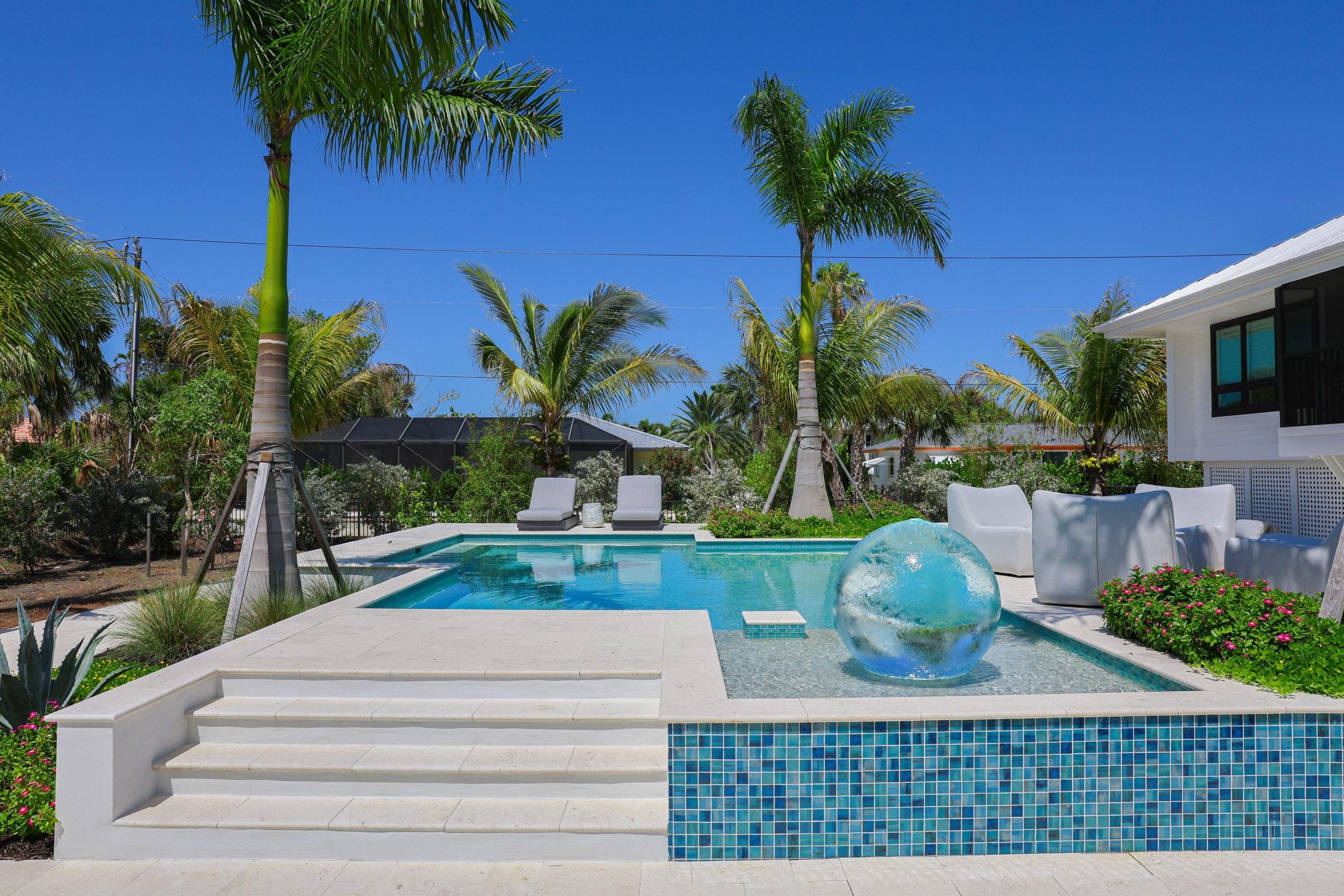
We resurface pools across Fort Myers, Naples and the surrounding coast. Because the finish, the waterline tile and the coping all meet at the water's edge, it often makes sense to replace them together. Some owners call the work refinishing or replastering; it is the same job. For a pool that needs more than a new surface, see pool renovations.
- Finishes
- Plaster, quartz aggregate, pebble aggregate, glass bead
- Often included
- Waterline tile, coping, step-edge tile, checks of lights and fittings
- Before work starts
- Pool drained, with groundwater conditions checked first
- Public pools
- DOH resurfacing notice and FBC 454.1.10 code upgrades
- Pairs well with
- Deck replacement, LED lighting, equipment upgrades
Finish studio
See how the finish changes the water
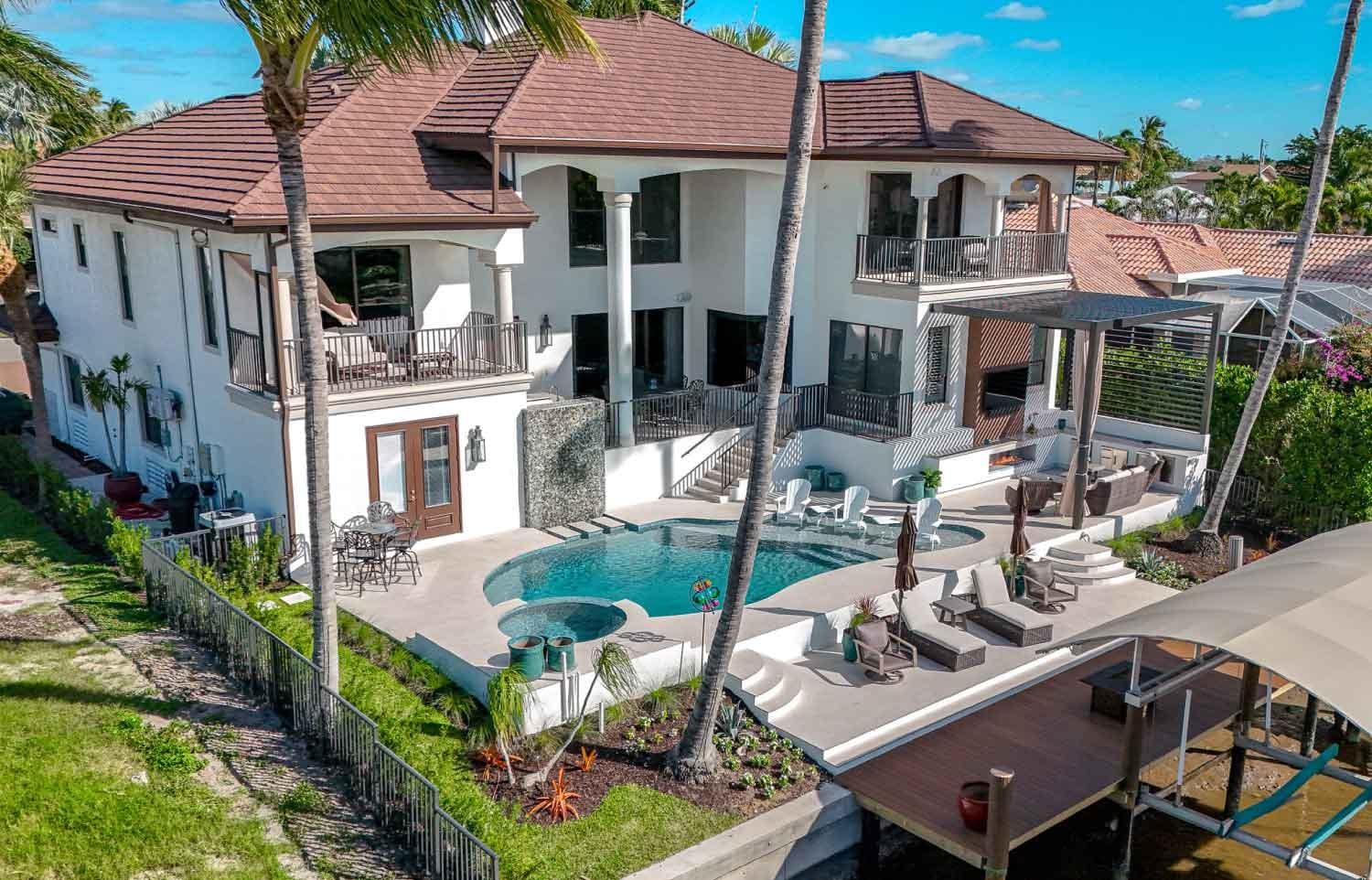
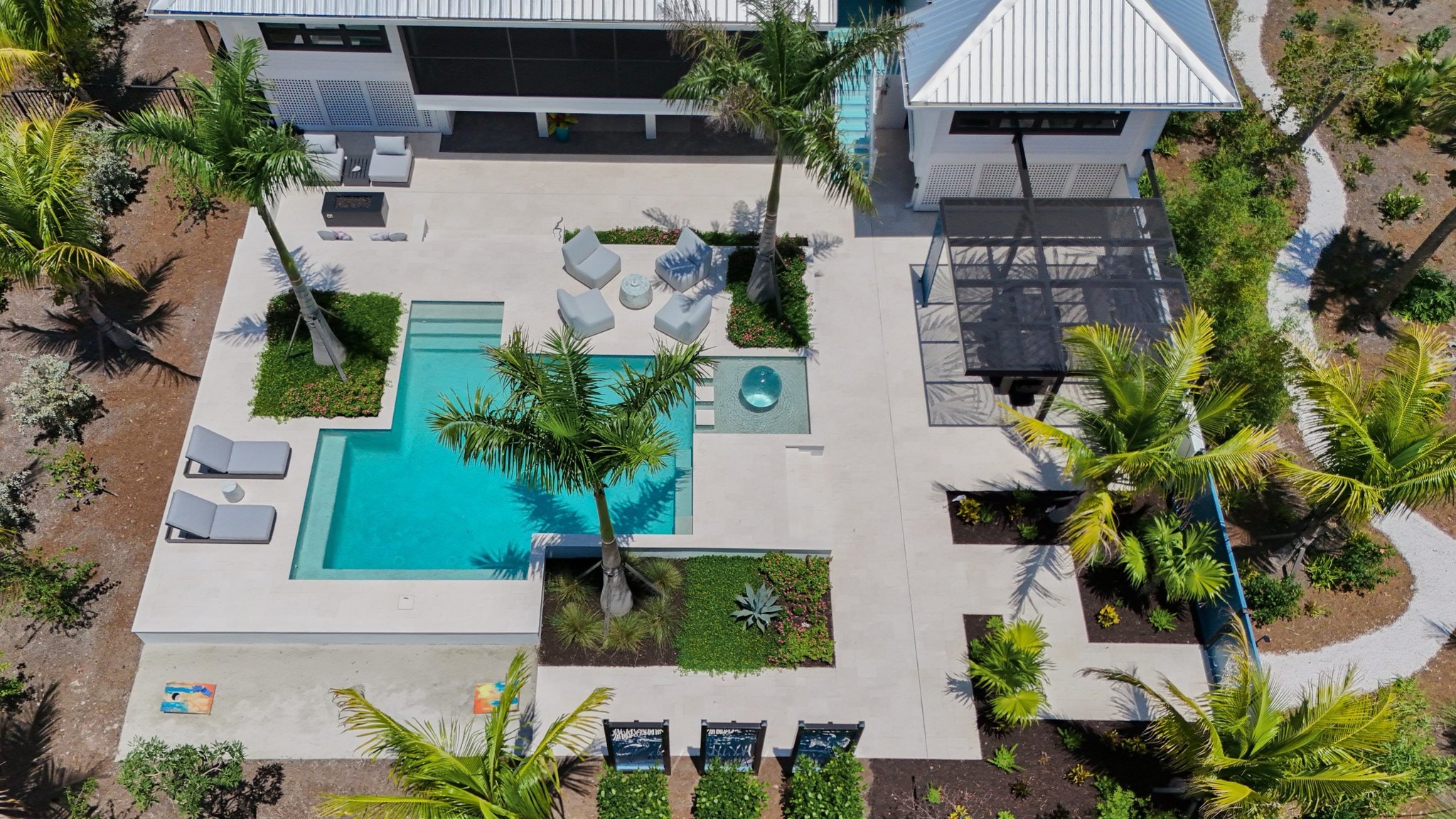
Interior finish color does more to the look of a pool than almost any other choice. Choose a tone to preview it on a real Lombardo pool on Sanibel Island.
An illustration, not a color match. Real water color also depends on depth, light, sky and the specific finish.
01
Signs it is time for pool resurfacing
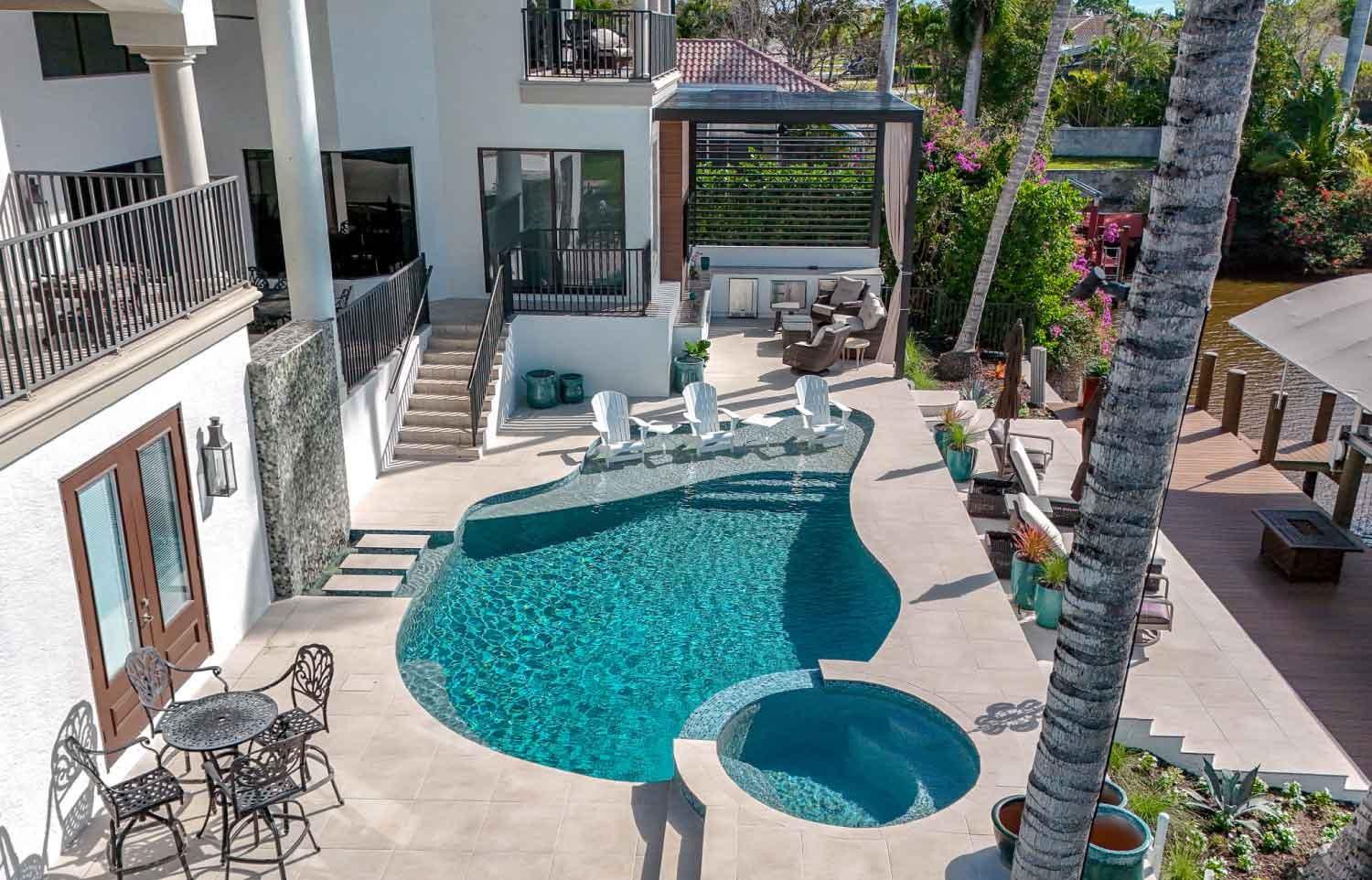
A finish rarely fails all at once. Cracks and hollow areas deserve a closer look before any new surface goes on, because they can point to movement or leaks in the structure, and a new finish over an unresolved problem will fail again. These are the signs we look for, roughly in order of seriousness.
- A rough, sandpaper feel on feet and hands, or swimsuits that snag
- Stains that do not lift with brushing or normal water balancing
- Etching, pitting or a blotchy, washed-out color
- Patches that sound hollow when tapped, or that have begun to peel away from the shell
- Chips and spalls that expose the gray concrete beneath
- Cracks in the finish, or waterline tile and coping that are loose or missing
02
Choosing a pool finish: plaster, quartz, pebble or glass bead
Interior finishes fall into a few broad families. Every manufacturer has its own product names, so it helps to understand the categories before looking at sample boards.
- Plaster. The traditional finish of white cement and finely ground marble, sometimes called marcite. Smooth to the touch and the most economical, but the least resistant to wear and staining of the group.
- Quartz aggregate. A cement finish with colored quartz blended in, adding durability and a wide color range while keeping a fairly smooth feel.
- Pebble aggregate. Small natural pebbles bound in cement and exposed at the surface, for example Pebble Tec. Textured underfoot, very durable, with a depth of color that suits lagoon and natural designs. Polished or fine-pebble versions feel smoother.
- Glass bead. Glass beads blended into an aggregate finish to catch light and add shimmer, often chosen for modern pools and spas.
03
How the finish color changes the water
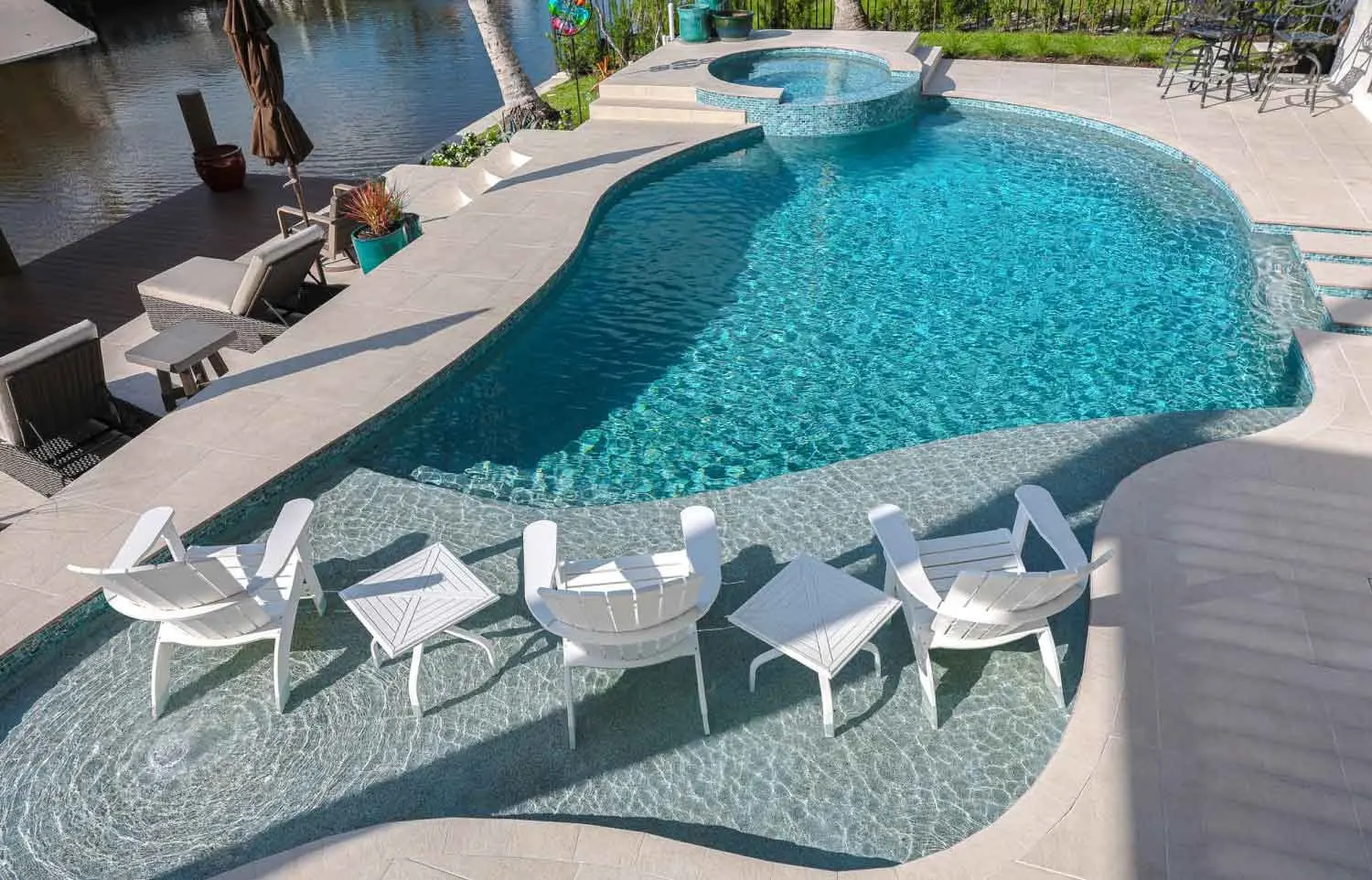
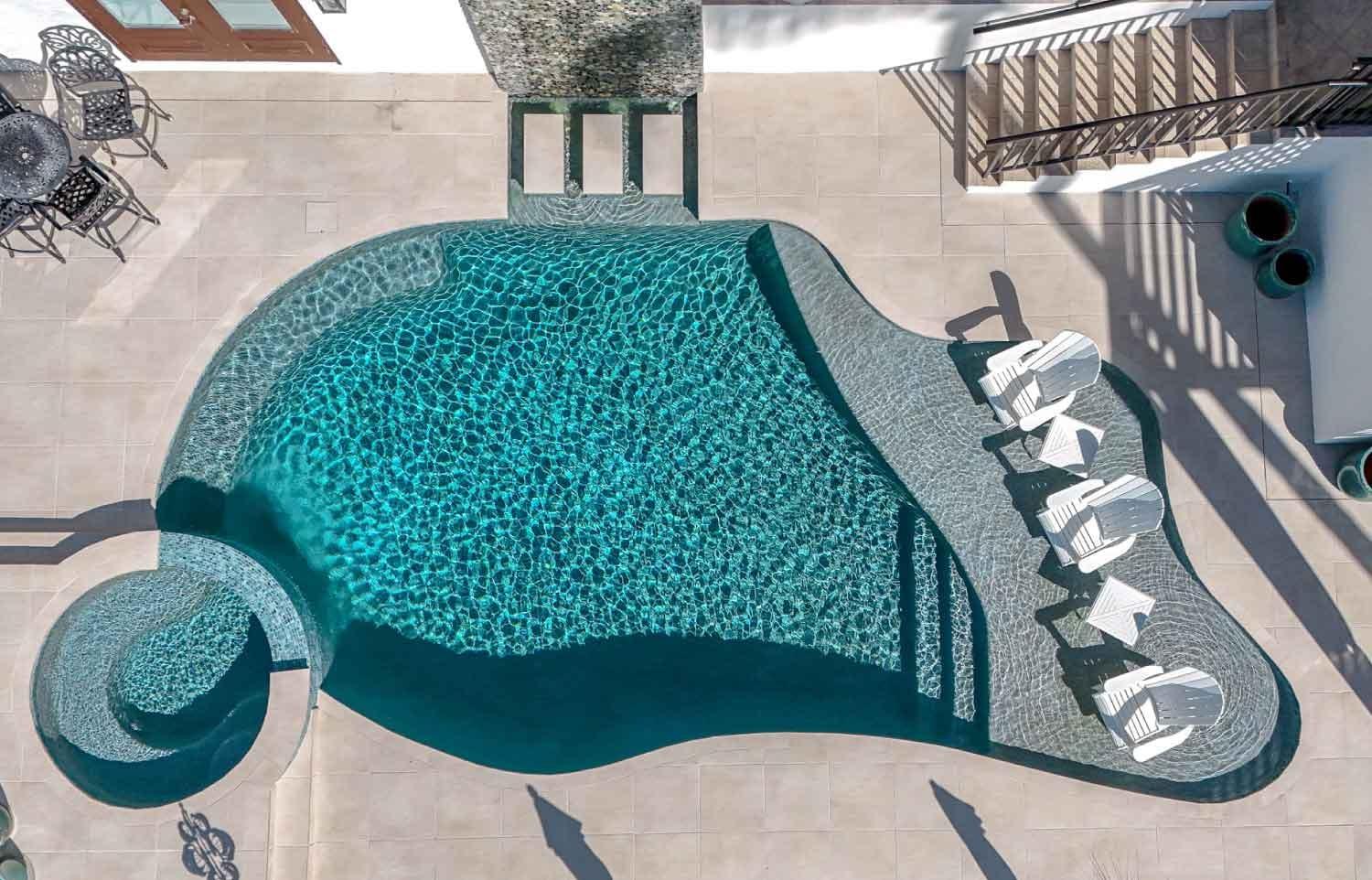
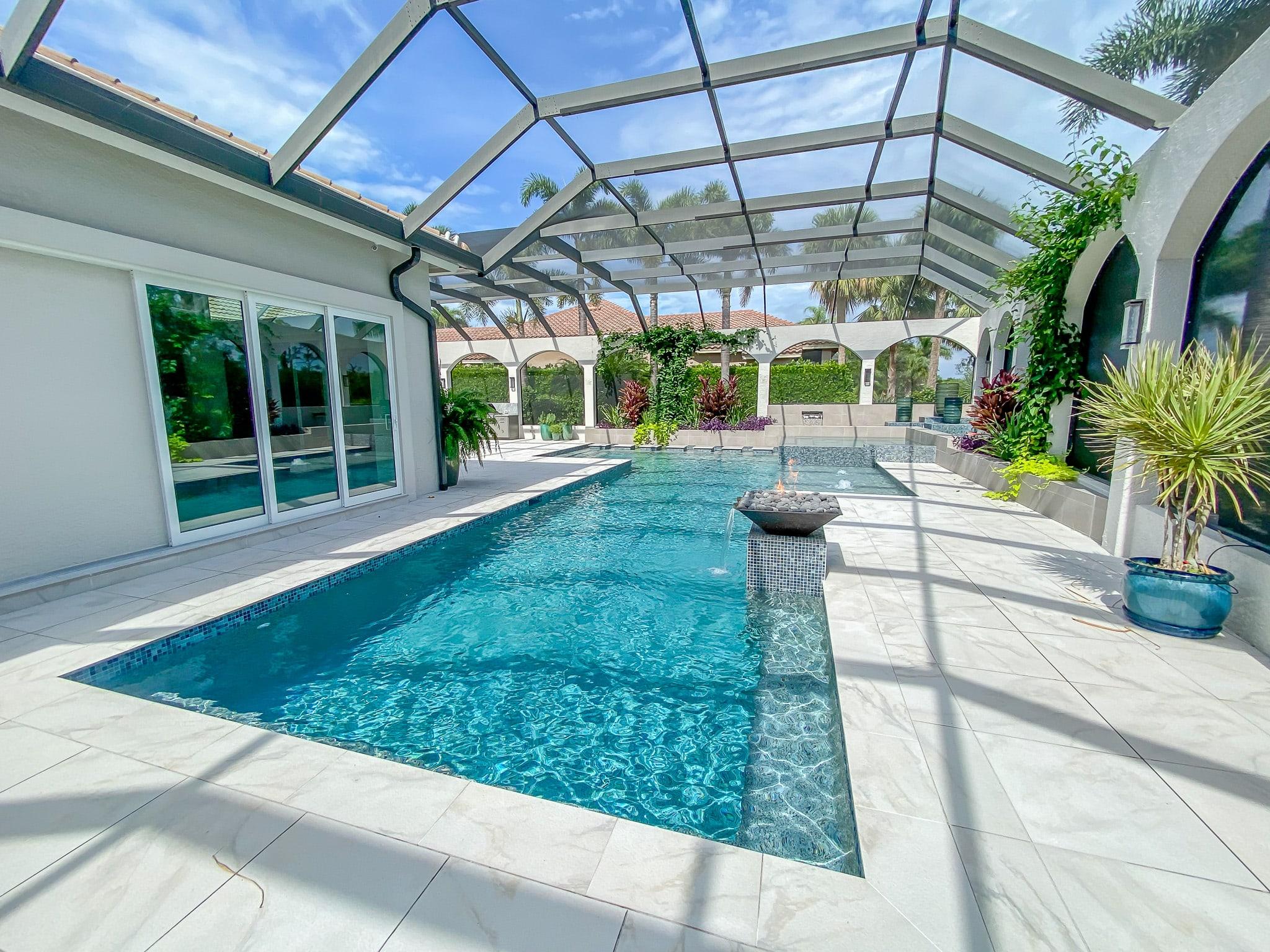
A finish never shows its own color under water; it sets the tone of the water. White and light finishes give a pale, bright aqua. Gray and blue pigments move toward a clearer, deeper blue. Dark finishes read as navy, teal or nearly black and turn the surface into a mirror for the sky and the house. Pebble and glass bead add variation, because each piece catches light on its own.
Depth, sunlight and surroundings then shift the result. Deep water reads richer than a shallow sun shelf in the same finish, bright sun intensifies color, and stone and planting around the pool reflect into it. We recommend judging finishes from wet samples in your own light rather than from a printed chart.
Dark finishes carry trade-offs: they show some natural color variation, and they make scale and debris easier to see. Public pools are limited to white or light pastel finishes by the Florida Building Code, a point covered on our commercial pools page.
04
Tile, coping and the waterline
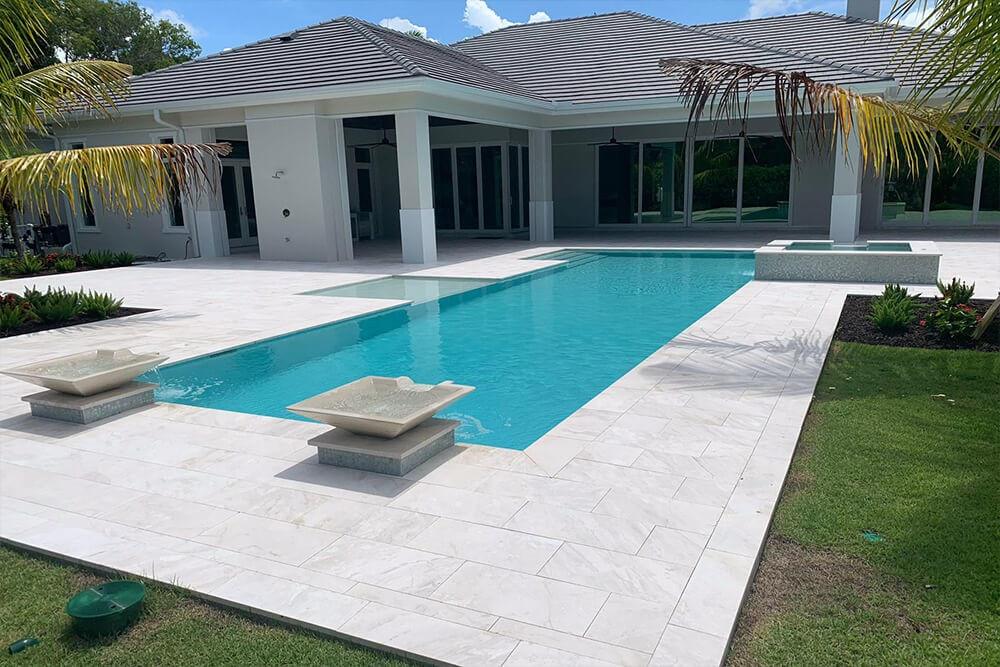
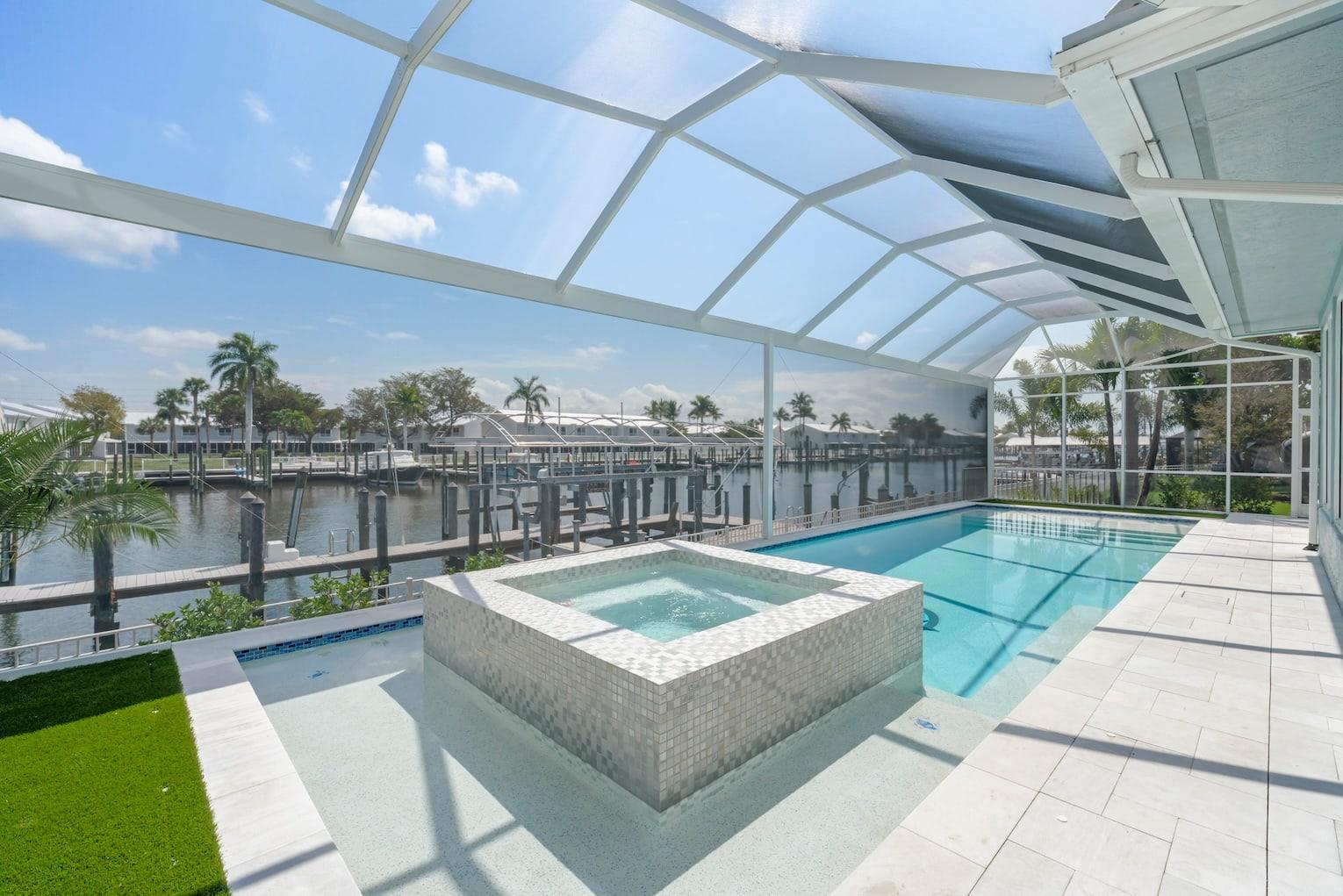
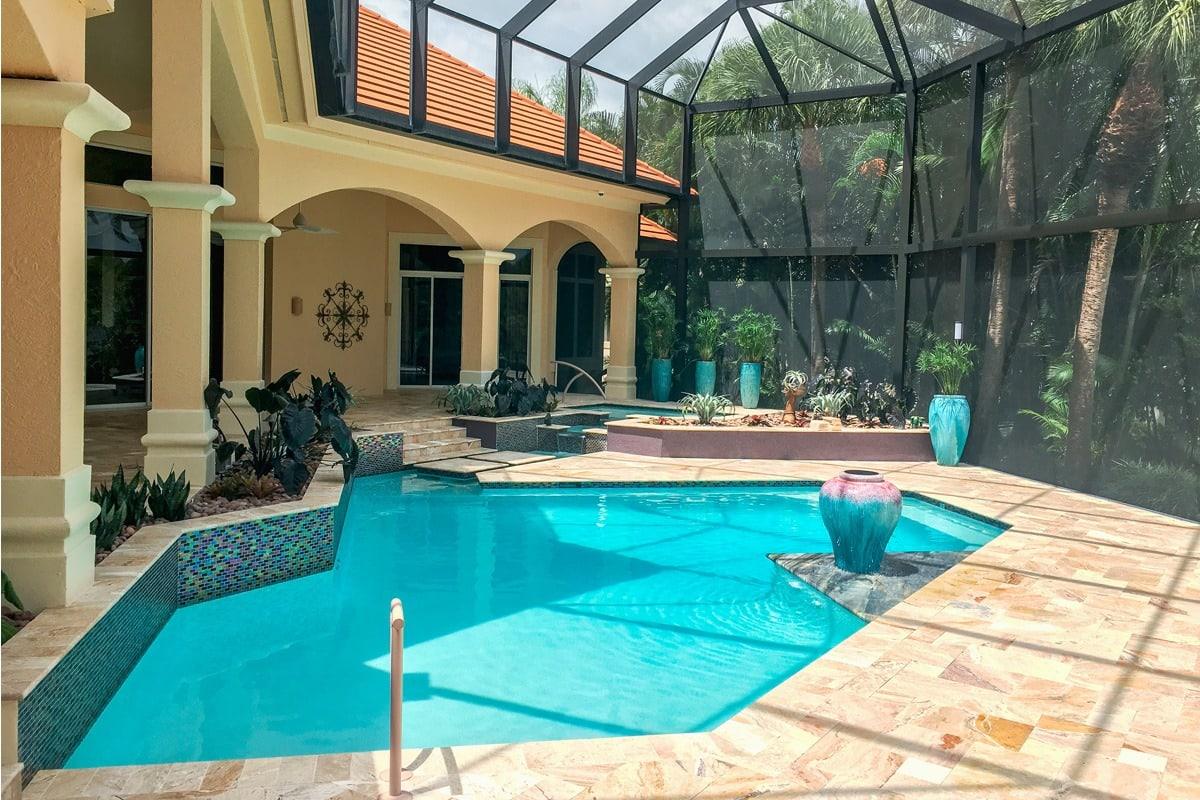
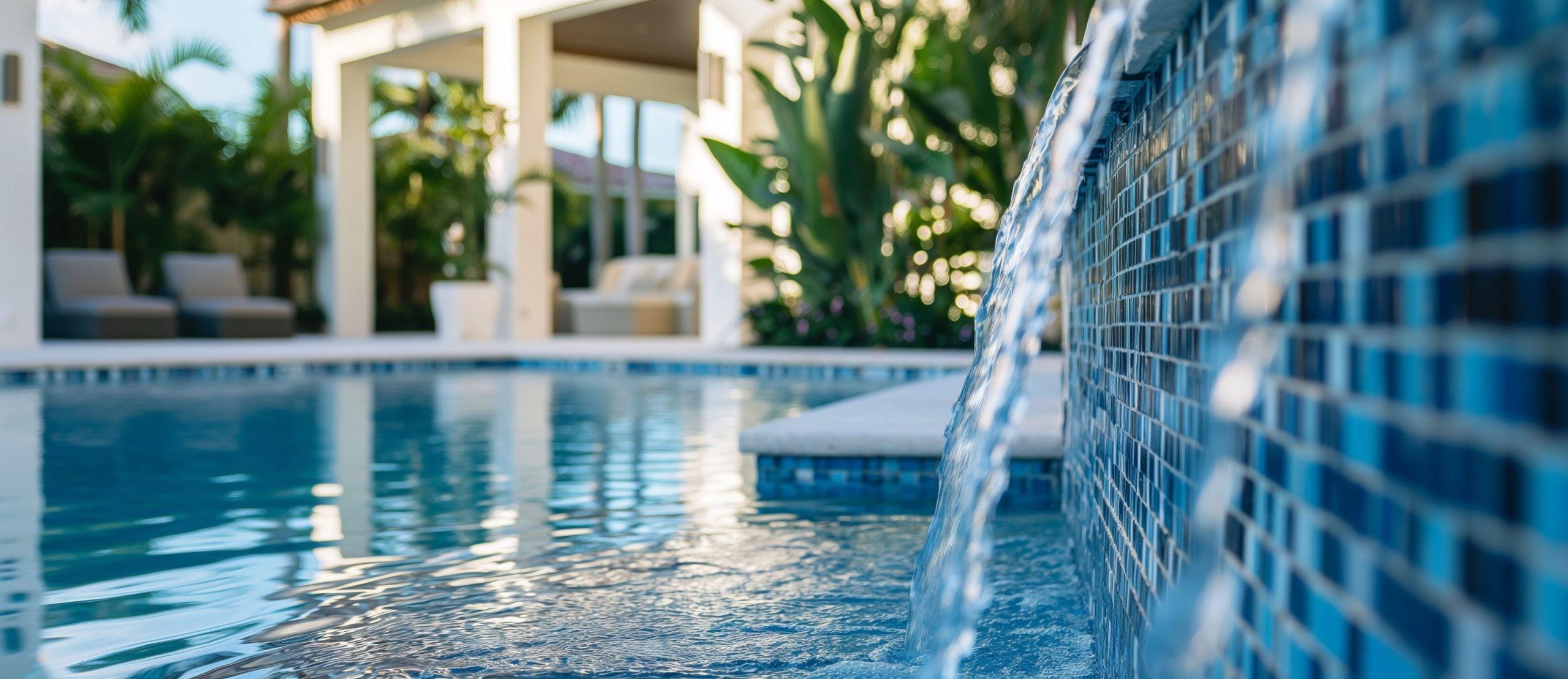
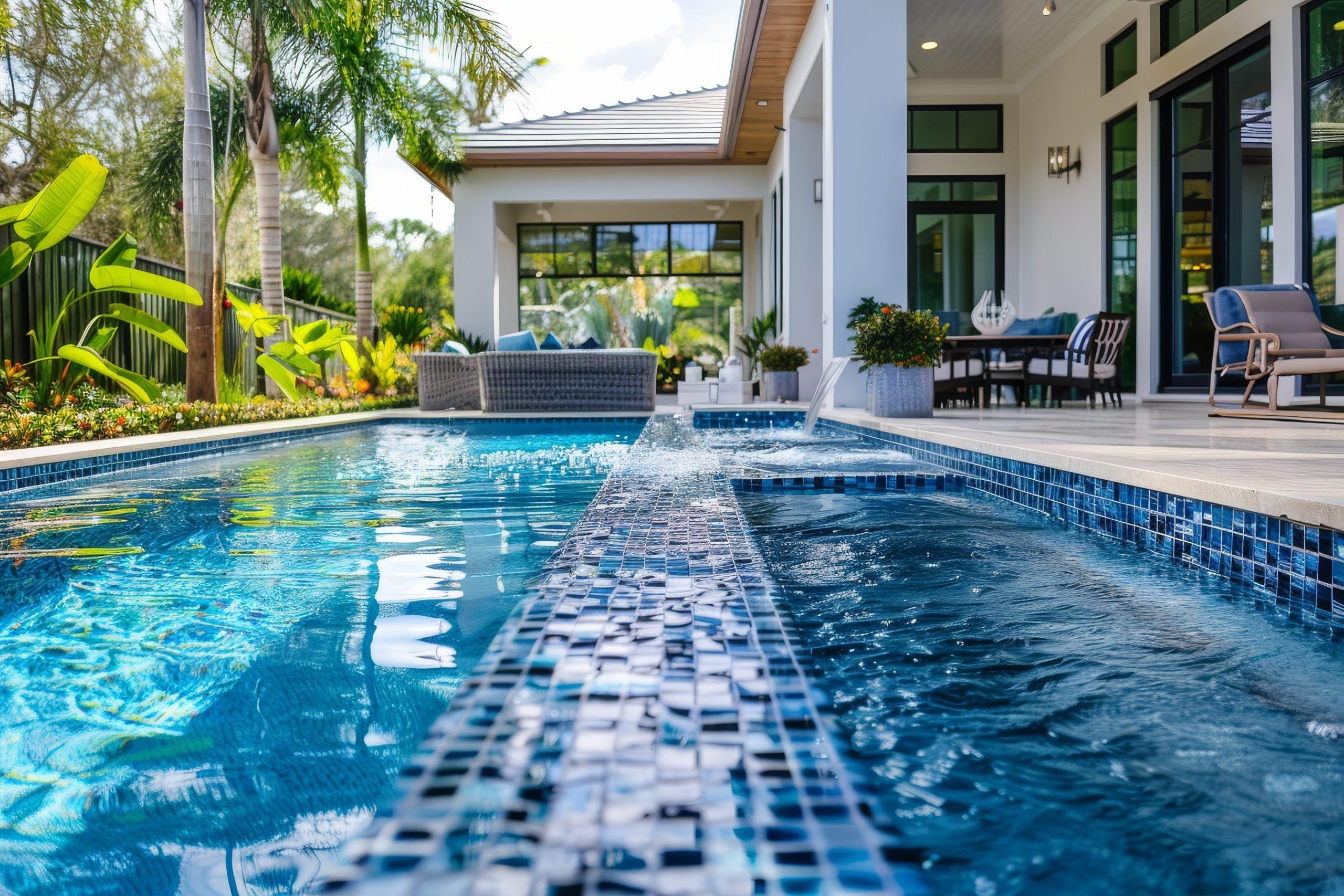
The waterline is where a pool shows its age first: tile loosens, grout stains, and coping stones crack or rock underfoot. Replacing tile and coping during resurfacing lets the new finish, tile and stone meet cleanly, and it is the moment to change the look of the whole pool. Glass mosaic, porcelain or stone tile at the waterline; travertine, marble or shellstone coping above it; a contrasting band on steps and benches so their edges read clearly through the water.
With the pool empty we also check what is normally hidden: light niches, returns, drain covers and the bonding of metal parts. When the coping changes, the deck often needs attention too, and our pool deck installation work can be folded into the same project.
After the new finish is applied the pool is filled and the start-up begins. Cement-based finishes are brushed often and their water chemistry managed closely through the first weeks, following the manufacturer's or the National Plasterers Council's start-up procedure. Our team looks after the pool through start-up and its first 30 days.
FAQ
Pool Resurfacing: questions
How often does a pool need resurfacing?
When the surface fails, not on a fixed calendar. Lifespan depends on the finish type, water chemistry, sun exposure and how well the start-up was handled, and aggregate finishes generally outlast standard plaster. Roughness, staining, hollow spots and exposed concrete are the signals to act on.
Which is better, replastering or resurfacing?
They are usually the same thing. Replastering means applying a new plaster finish, which is one type of resurfacing, while resurfacing also covers quartz, pebble and glass bead finishes. The better choice depends on the feel, durability and water color you want.
Can a pool be resurfaced without draining it?
Not with a plaster or aggregate finish. The old surface has to be removed or prepared and the new one applied in the dry. In Florida, draining should be managed by the contractor, because groundwater can lift an empty pool shell.
What pool finish color makes the water look blue?
White produces a light aqua, and gray or blue pigments produce a clearer, deeper blue. Dark finishes push the water toward navy or teal. Depth and sunlight intensify whatever you choose, so look at samples wet and outdoors.
Is resurfacing a condominium or HOA pool different?
Yes. Resurfacing a public pool in Florida requires a notice to the Department of Health and brings code items with it, including step-edge tile markings, depth and no-diving markers, ladders and handrails, and a white or light pastel finish. Those upgrades belong in the scope from the first estimate; see commercial pools.
Where we build
Pool Resurfacing across Southwest Florida
- Pool builder in Naples
- Pool builder in Fort Myers
- Pool builder in Cape Coral
- Pool builder in Bonita Springs
- Pool builder in Estero
- Pool builder in Sanibel Island
- Pool builder in Captiva Island
- Pool builder in Marco Island
- Pool builder in Fort Myers Beach
- Pool builder in Boca Grande
- Pool builder in Punta Gorda