
Automation and lighting
Pool automation, LED lighting and heat, run from one app
The equipment pad is where a pool's comfort and running costs are decided. We specify it with the same care as the tile.
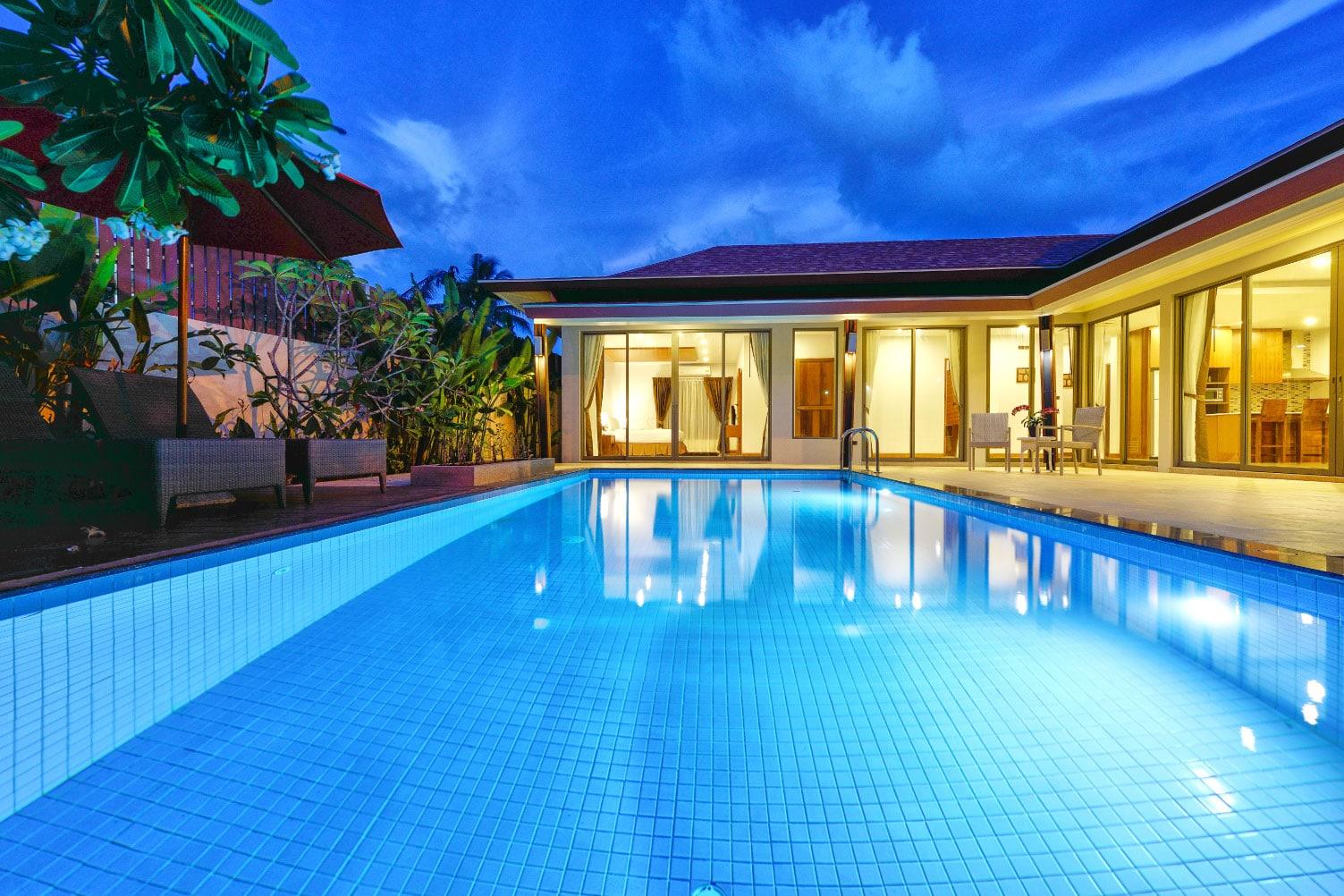
Pool automation is the difference between a pool you manage and a pool that is simply ready. One controller runs the pumps, heater, salt system, valves, lights and water features, and an app puts all of it on your phone. Set the spa to heat at six, the lights to come up at sunset, the sheer descents to run through dinner, and filtration to follow a schedule built around how the pool is actually used.
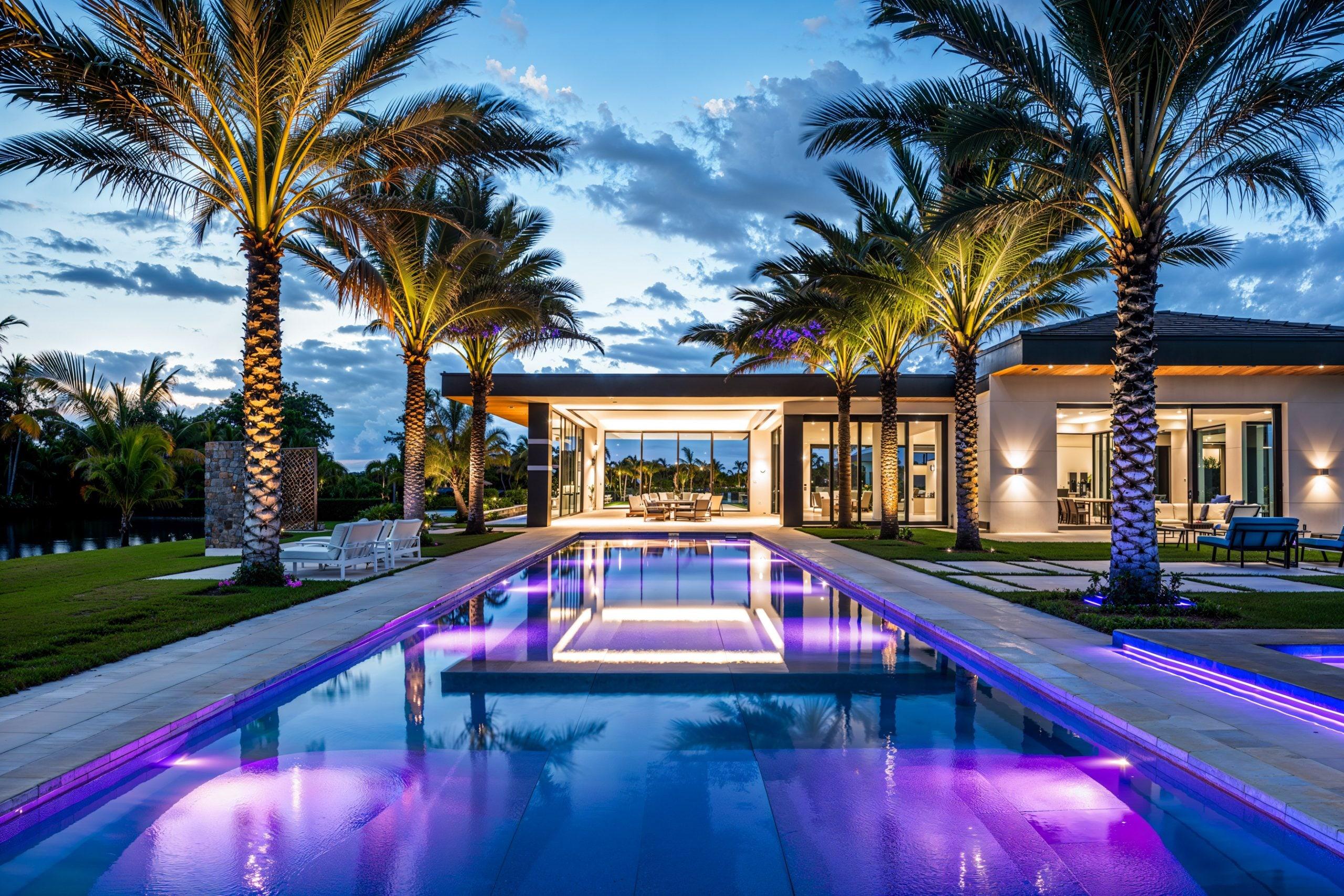
For a second home it matters even more. Many Southwest Florida owners spend part of the year elsewhere, and a connected system lets them see water temperature, equipment status and alerts from anywhere, then arrive to a pool that is warm and lit.
Lombardo Pools installs automation, LED lighting, heating and salt systems on new pools and as upgrades during a renovation. Equipment is described here by function rather than brand, because the right system is chosen for each pool.
- Control
- Automation controller and app with schedules, scenes and alerts
- Lighting
- LED pool, spa, step and feature lighting in white or color
- Heating
- Heat pump, gas (natural or propane), or both
- Sanitation
- Salt chlorine generator or conventional chlorine
- Pumps
- Variable-speed filtration and feature pumps
- Retrofit
- Available as upgrades to existing pools
01
One pool automation system for pumps, valves, heat and features
A modern controller is a small computer at the equipment pad, wired to each device and connected to your home network. Valve actuators let it switch between pool and spa, send water to a feature or bypass a heater. Schedules and scenes tie actions together: an evening scene might set the lights, light the fire bowls and slow the pump for quiet.
The value is in the programming. A controller left on factory settings wastes much of what it can do, so schedules are set with you at handover, the app is explained, and settings should be revisited as the seasons change.
- Pump speeds and schedules for filtration, cleaning and features
- Pool and spa modes, heater set points and freeze protection
- Salt chlorine generator output and status
- Pool, spa, step and landscape lighting scenes
- Water features, fire bowl ignition and deck jets
- Alerts for faults, low flow and temperature
02
LED pool lights and lighting design
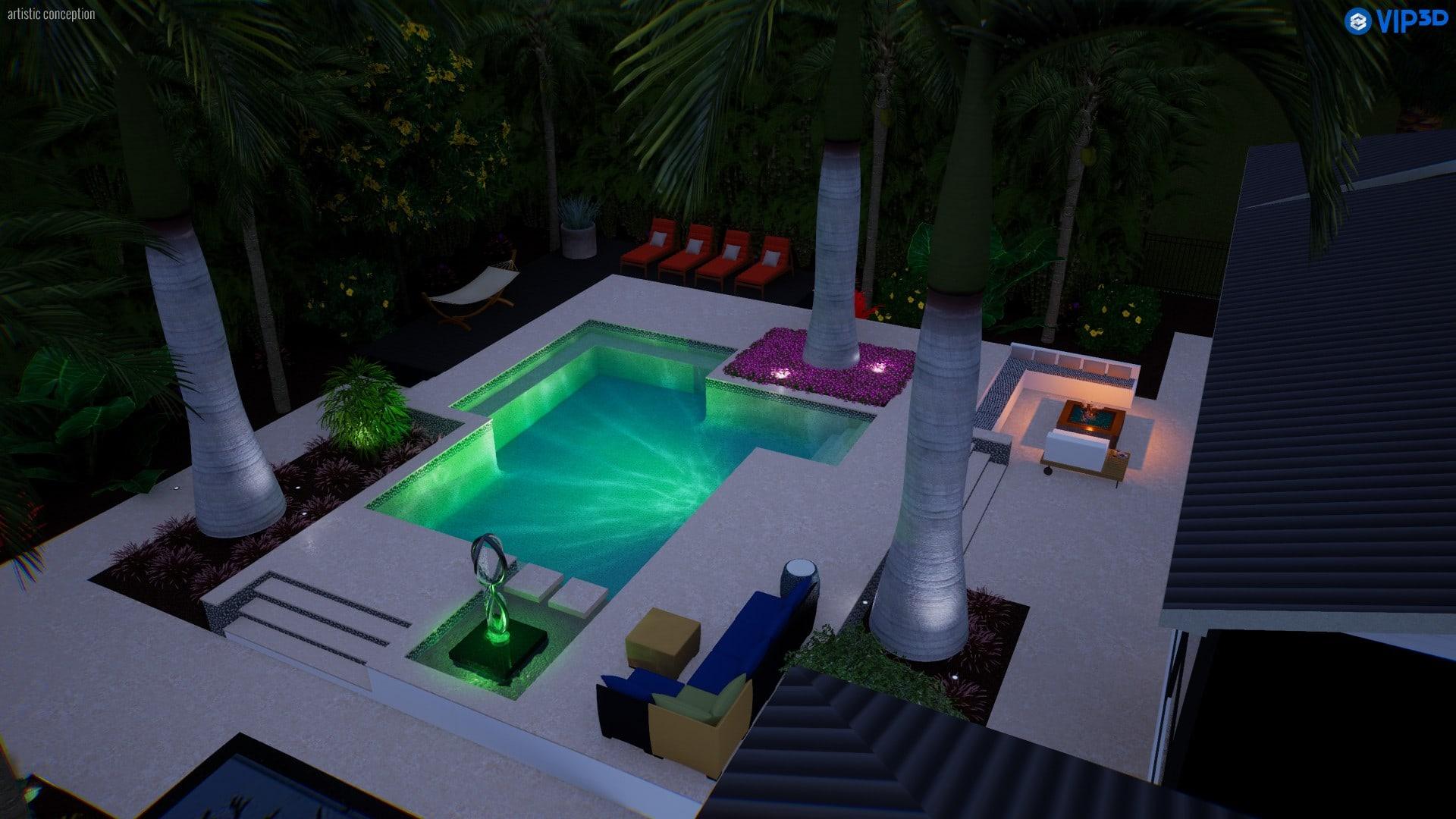
LED pool lights have replaced incandescent and halogen fixtures because they draw far less power, last longer and can change color. Many current fixtures run on low voltage through a transformer, which adds a margin of safety in and around the water.
Good pool lighting is designed, not scattered. Fixtures are placed so light washes the floor evenly without glare toward the house, with separate circuits for the spa, steps, sun shelf and features. Color is used with restraint: a soft white or a single blue for most evenings, with color shows saved for occasions. Underwater light is coordinated with the landscape lighting so the garden reads as one composition, which is simpler when our sister company, Lombardo Landscaping, is part of the project.
Retrofitting LED fixtures into an older pool is often straightforward where the existing niches and conduit can be reused.
03
Pool heaters in Fort Myers and Naples: heat pump or gas
A pool heater in Fort Myers works a lighter season than one farther north, but it still earns its place through the cooler months, and every day for a spa.
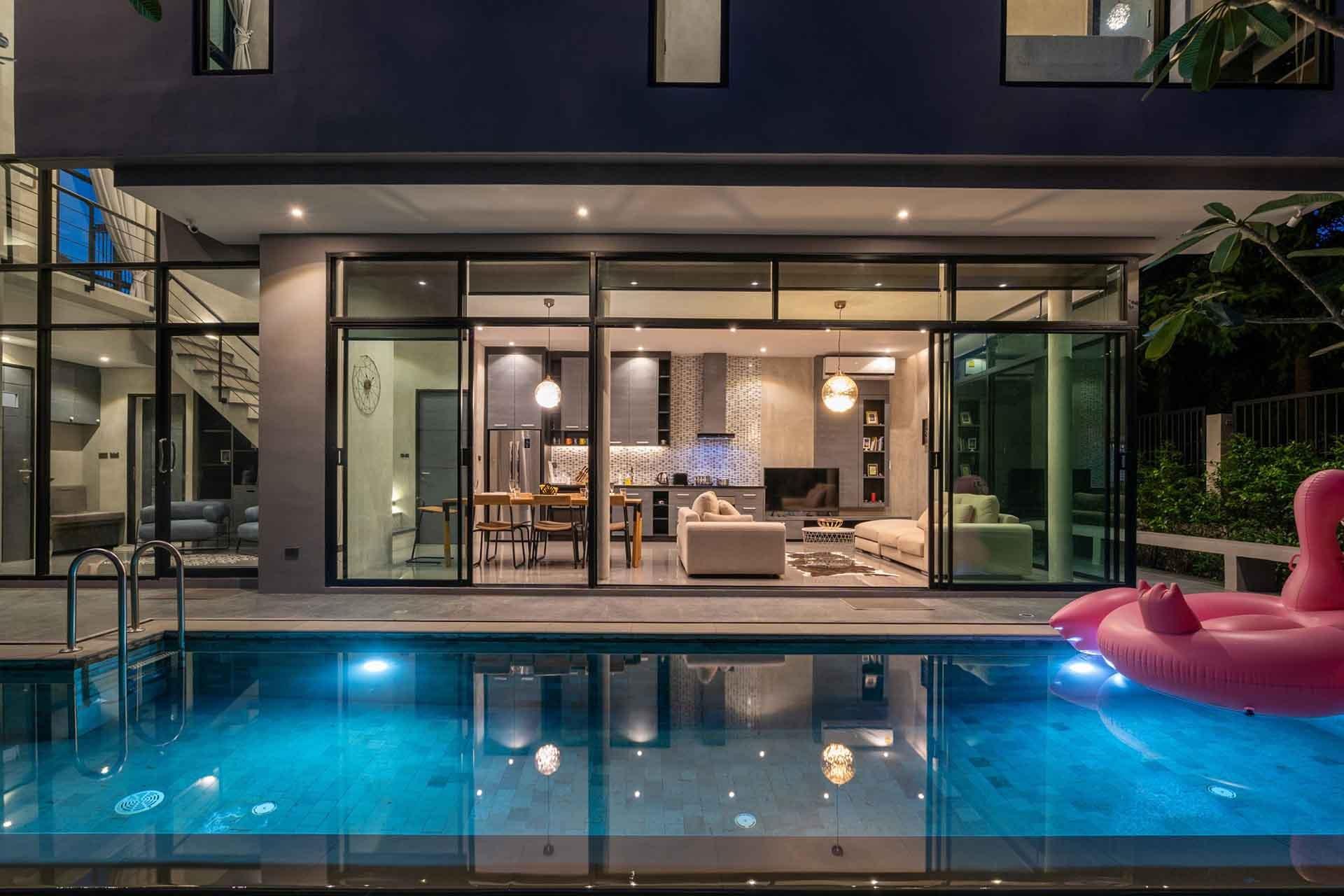
Heat pumps move heat from the air into the water. Their output depends on air temperature and humidity, which suits Southwest Florida, and they generally cost less to run than gas for holding a pool at temperature. They heat slowly and lose output on the coldest mornings.
Gas heaters, on natural gas or propane, heat quickly regardless of the weather, which makes them the natural choice for a spa and for pools used only now and then in winter. They usually cost more per degree.
A common arrangement here is both: a heat pump for the pool and gas for the spa. On any heated pool, a cover cuts overnight heat loss, and solar heating is an option where roof area and orientation allow.
04
Saltwater pools and salt chlorine generators
A saltwater pool is still a chlorine pool. A salt chlorine generator passes lightly salted water through an electrolytic cell that produces chlorine on site, so you buy salt instead of handling chlorine. The salt level is a small fraction of seawater's, levels stay steadier, and many swimmers find the water gentler on skin and eyes.
The tradeoffs are worth knowing. Cells build scale and need periodic cleaning and, eventually, replacement. pH tends to drift upward and needs watching. Salt is also hard on some natural stone and certain metals, so coping and decking beside a saltwater pool are chosen and sealed with that in mind; our guide to pool deck materials is a good place to start.
05
Variable-speed pumps and Florida's energy rules
The pump is usually the largest energy user on a pool, and variable speed changed the math. Running slower for longer moves the same water with a fraction of the energy, because power drops much faster than speed. Florida's energy code requires most residential filtration pumps to run at two or more speeds, with the low speed no more than half the motor's maximum, and federal efficiency standards for pool pumps have applied since July 2021.
On a pool with features, spa jets and a salt cell, speed control does more than save power. Each mode gets the flow it needs, the pump runs quietly most of the day, and the heater and cell still see the minimum flow they require.
FAQ
Pool Automation and Lighting: questions
Is a heat pump or a gas heater better for a pool in Florida?
For holding a pool at temperature in Southwest Florida, a heat pump is usually the more economical choice because it works well in warm, humid air. For a spa, or a pool you want warm on short notice, gas is faster. Many pools here use a heat pump for the pool and gas for the spa.
Are saltwater pools better than chlorine pools?
They are not chlorine-free, but many owners prefer them. A salt system makes chlorine from dissolved salt, which gives steadier levels and no chlorine to buy or store. The costs are cell cleaning and replacement, and more care with natural stone and metals around the pool.
Can I control my pool from my phone?
Yes, if the pool has an automation controller connected to your home network. From the app you can change pump speeds, heat the spa, switch lights and features, and receive alerts. Older pools can usually be upgraded without replacing every piece of equipment.
Can LED lights be added to an existing pool?
In most cases, yes. LED fixtures are made to fit common existing light niches, so a straight replacement is usually simple. Adding fixtures in new locations is more involved, since it needs new niches and conduit, and is usually done as part of a renovation.
Do I need a variable-speed pool pump in Florida?
Florida's energy code requires most residential filtration pumps to operate at two or more speeds, and federal pool pump efficiency standards have applied since July 2021. A variable-speed pump is the usual way to meet both, and it costs far less to run than an old single-speed pump.
Where we build
Pool Automation and Lighting across Southwest Florida
- Pool builder in Naples
- Pool builder in Fort Myers
- Pool builder in Cape Coral
- Pool builder in Bonita Springs
- Pool builder in Estero
- Pool builder in Sanibel Island
- Pool builder in Captiva Island
- Pool builder in Marco Island
- Pool builder in Fort Myers Beach
- Pool builder in Boca Grande
- Pool builder in Punta Gorda